Wednesday 31 March 2010

Blackberry for all, or none at all is stupid

'There are also other concerns expressed by academics. Will teachers flee for greener pastures? Will quality higher education become the exclusive privilege of the rich? Surely, these questions must be reflected upon before Sibal pushes through his reforms.'

I picked that out of an Outlook article on the Foreign universities Bill.

I wonder who these academics are who've expressed such concerns. May I venture to say, despite having raised 'pertinent' questions, the questions are also a reflection of their lack of understanding of the world of business.

Consider the questions.

The first one's about academics fleeing for greener pastures. I wish the academic who raised this question knew how factors of production behave in markets that allow for mobility. In such markets, factors go to wherever the returns are greater. For example, if you had capital to invest where would you consign it to? Into a venture that gives greater or lower returns? Labour too like capital, will seek those engagements that pay better. Of course, pay may not be the only consideration. But whatever the considerations are, labour will engage with those activities and institutions where it believes its returns will be enhanced.

The second question's about quality education being the exclusive privilege of the rich. The answer's pretty simple. That will depend on what the giver of that quality education is going to price it at. If it's going to be a premium price, of course it will be accessible solely to the rich. But lets assume there are stiff admission criterion set. The entry then will be available to the rich but intelligent ones. Let's again assume the banking industry is willing to finance studies in such institutions knowing fully well their graduates will be able to secure jobs that can pay back the education loan taken. Then maybe the middle class, intelligent kid who's taken a loan may also find access.

I'd recommend minimum sentiments when it comes to debating the Foreign universities bill, because sentiment clogs up rational thinking. Foreign universities aren't and mustn't be about anything other than more institutions that sell education services in this sector. The fallout of which is buyers will benefit, despite there being few.

Remember, the Blackberry is not accessible to all because of its pricing. But that's no reason for it not be sold. If some can buy the Blackberry, congratulations, if some can't, that's okay. Because they've got other basic mobile phone models they can buy from. Insisting Blackberry be available to all or not be available at all is simply stupid.

Yeah, simply stupid.

Sphere: Related Content

To Rumor is Human

'Our journey together on this earth is characterised to one degree or another by uncertainty. We see only in part, not the whole. Rumor-shared sensemaking- is one element of our collective response to this component of the human condition. Indeed, rumor is the people's shared sensemaking activity par excellence. It attends all of life's activities. It has been around for as long as humans have lived with uncertainty. It reflects the fundamentally social and sense-making character of the human race. Rumor activity therefore represents something basic, central, and significant about who we are.'

- Nicholas DoFonzo, 'The Watercooler Effect'.

Sphere: Related Content

Tuesday 30 March 2010

Vote so they can vote to control us

Its now been almost ten hours without electricity. The power bid us goodbye at around ten in the morning and made its reappearance a few minutes ago. The time's now eight in the evening. I guess by now I've done more for the earth hour than all of the continents put together. After all they switched off for an hour. We've been out for ten hours. And this is just the beginning of a long summer without power in Bangalore.

I guess now, Planet Earth owes me, and not the other way round.

Anyway, this post ain't about the lack of electricity. Its about what the Karnataka government is mulling post BBMP elections. The poor voter turnout has prompted them to consider compulsory voting.

My reaction? How hilarious!

Imagine the irony. Politicians will now legislate so they can force us into voting booths. So we can vote them back to legislate on how they can control our lives even further. Of course, I am ready to go to the booths. But the party I want to vote for must be one that promises lesser control over my life. Which means the politician will have to legislate to reduce his control over us.

Now, what does your common sense tell you? Who's the politician who's ready to vote reduction of his control over us?

You got it. None.

Again, I am not an advocate of zero government. But I am one who wants lesser government, so I can left to my own devices. But then that's an oxymoron. I vote, so government can vote to leave me alone? Wishful thinking, I'd say.

Remember the best government to vote for is one that promises not to meddle in our lives. After all it isn't an easy life for me or for you. During the power cut I looked out of my window on to the road that passes by. What I witnessed struck me as fascinating. People on the roads were essentially hurrying on to two engagements. There were vehicles rushing people to work (note, Bangalore's ITES industry works at night), and others rushing them home. The ones going to work were rushing to be part of a production/service process, so they could earn a livelihood for themselves. The ones rushing home were doing so, so they could be with their families and also play their parts out as consumers. Because back home as consumers we enjoy what we buy using what we earned.

Which means the two roles that we play out judiciously almost everyday is that of producers, that help us earn money, so we can essay our roles as consumers. Like I said this isn't a life that's easy. And therefore we deserve every penny we earn. It also then justifies our life as deserved consumers.

The government's role in all of this is in effect to disrupt this normalcy of production and consumption so they can take our money and spend it on hair-brained schemes conjured up under the guise of social upliftment. And in between they also find time to force us into voting booths.

What supreme irony. Our money so we can be told how to live our lives.

Hey, you game?

Sphere: Related Content

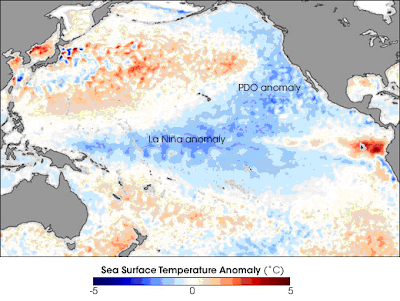
Global Coolin's A-Comin'


Fig. 2 - IPCC predicted Warming

Fig. 3 - Measured cooling


Fig. 4 - PDO indices, 1900-2008 with predictions to 2040.

Read more about Global Coolin' here and here.

Sphere: Related Content

Monday 29 March 2010

The Zoo-Zoos is money down the drain

A visit to the Vodafone service center followed countless messages on the phone saying I would have to submit documents proving who I was. I acquiesced knowing we live in times where security is paramount. I wouldn't want anyone misrepresenting me when it comes to my phone, and so despite the fact it would be a pain going to the Vodafone center, I did.

At the Vodafone service center I am given a token number so I can wait my turn at the counter, as part of a sequence. There aren't too many chairs so I plonk onto a ledge and wait for what seems like an eternity. The service personnel seemed to be attending to customers the way they would've toured Disneyland. Nice, slow and easy is the way they were doing it. Mercifully I get my turn and I give in the required documents to the lady at the counter.

While at the center I spied the now famous Zoo-Zoo pictures on the wall. These cutesy little things had become quite a favourite amongst TV viewers with even a facebook account that had drawn many. But the sight of the Zoo-Zoos wasn't cutting much ice with me. Weathering a wait, I was prompted to think of the monumental waste that was Zoo-Zoos. Sure it was good viewing till some time on TV. But the fact is, they had done nothing to change what I felt about Vodafone's poor service. If they did want someone like me to feel good about their services they should have canned the money they wasted on Zoo-Zoo commercials, and instead put it where it really mattered. Into their service centers which were far more responsible for consumer attitudes.

Sure I agree, communicating via commercials is required so the brand remains alive in consumer memory. But what Vodafone forgot or maybe doesn't know is, should I as a consumer encounter superlative service at their service centers, the brand would have, through that one act of 'delight' seared into my long term memory, and stayed there till kingdom come.

Tell you what, the likes of Zoo-Zoos are a waste of money. What really gives a brand a payback is its treatment of consumers.

Treat 'em right and your overflowing coffers will be a source of delight.

Sphere: Related Content

Why Women don't want Macho Men

'The big question that comes of the study is this: Is it possible that modern medicine—and by extension modern life—inadvertently devalues masculinity? Possibly. Is the Marlboro Man, that smoking-hot icon of American manhood, under threat of being extinguished? Given American women's apparently strong masculinity preferences, the answer is no. We are not ready to get rid of our macho men. (Then again, we also have yet to improve our health index ratings.) Yet there are some smoke signals that suggest change is just over the horizon.

As the social environment shifts, so may women's mate preferences. While Stone Age forces once wired women to associate strong cues of masculinity with their children's chance of survival, times are changing. The promise of improved health care in America could be one example of a shift.'

- Jena Pincott, 'Why Women Don't Want Macho Men '.

Sphere: Related Content

Sunday 28 March 2010

Sweden's Free Market Renaissance

Sphere: Related Content

What the Pope can learn from Toyota

Why I admire Pope Benedict XVI (Joseph Ratzinger) is because of his unwavering commitment to conservative christian principles, unlike his predecessor Pope John Paul II who was quite the liberal. Despite his tough and righteous stance on many issues, Pope Benedict XVI finds himself facing the anger of his flock. The reason's clerical abuses, one of which is now being tied back to a decision taken by the Pope when he was cardinal.

Is this scandal going to go away? No. Is the world citizenry outraged at what's happened? Yes.

What must the Pope do?

Exactly what the likes of Toyota did. When Toyota identified a problem with its cars, it went in for a recall. The Pope too should now systematically though his office identify errant priests and without mercy defrock them, and also leave them to the civil courts for trial and punishment. In addition to recalling cars, President Akido Toyoda of Toyota Motor Co. made a public apology and swore that his company would do everything to win consumer confidence back. Again, that's exactly what the Pope must do. Offer a public apology and swear commitment to true christian principles, which are about service and sacrifice.

Now how should brands come to a decision on such explicit public displays? The answer lies in how much damage negative publicity has done. Both Toyota and the Catholic Church have been at the receiving end of terrible publicity. The fall-outs have affected consumers and the faithful. The only way to restore confidence of stakeholders in either of these institutions is by first admitting there's a problem, then doing something about it, and finally stating a commitment to the who's most important, of course, consumers and the faithful.

For the Church's sake, I hope the Pope does what Toyota did.

Sphere: Related Content

Saturday 27 March 2010

He was a Steppenwolf

Sphere: Related Content

Awaiting the next Eco-scare

As I write this with my lights on, I am being reminded via the media of need to conserve. I wish I could remind them of the need to produce. If there's a shortfall in power, the answer is not an exhortation to conserve. Instead it must be one that prompts greater production.

At the risk of sounding greedy I must say, greater production and consumption is what will benefit the masses, than caps on production and limits on consumption. Rationing never did any body any good. The last I heard they were starving in the erstwhile Soviet Union.

Now for all those who've had their lights off when mine were on, do take the time to read this,

'The striking fact about Earth’s temperature is its stability over geological stretches of time, without any sudden ups and downs. The Earth has seen Ice Ages — but they never reached the equator. It’s seen volcanic explosions, asteroid impacts, changes in the Earth’s tilt toward the sun. The Earth may have seen big variations in sun spots and cosmic radiation.

And yet, over the 200 million years of mammalian evolution the temperature hasn’t changed enough to kill the mammals. Mammals could not survive fast, cataclysmic temperature shifts of ten, twenty, thirty degrees. Instead, temperature changes have been slow enough and small enough to allow for migration and adaptation. Extinctions happen, but enough species survive to carry on the same basic DNA, proteins, cells, and organ systems over hundreds of millions of years. That is amazing. The most basic fact of biology is its stability over geological stretches of time. Life is not fragile, contrary to all the propaganda. Earth isn’t fragile. Life and the planet are amazingly robust. Think of it: hundreds of millions of years of essential stability.

Chances are that the Earth has many self-regulating feedback loops to keep things this stable. We have this convenient exchange with the plants — we breathe out what they breathe in, and vice versa. That leads to rock-solid stability, not wild swings in the necessary conditions of life. Catastrophic scenarios are more Planet Hollywood than Planet Earth. Al Gore may look ready to burst, but the planet will survive.

The Earth hasn’t blown up since animals and plants came into balance a billion years ago, give or take. But why not? Well, why don’t your brains boil over on a hot day in June? Because your body has a lot of self-regulating mechanisms that make for stability even in the face of moderate changes. You sweat more on a hot day, and your dog breathes faster with his tongue out. You can stay in the shade and drink more water. Self-regulation is the story of life. It keeps us alive: the same blood pressure, same temp, same O2 and CO2. Think of it as the Mother Gaia hypothesis of the earth. Moms are also designed to survive.

The real catastrophe of global warming is the human disaster: the deep rot in the sciences that’s been going on for decades by now, aided by corrupt politicians. Still, climate modelers are still fiddling with their models even if they have to bet on outgassing from the other end of the digestive tract. Is global flatulence the next eco-scare? The EPA can tax and regulate any physiological function, just like the medieval Church. Some day this will all sound really funny, but first we have to drive the crooks and the frauds out of science.'


Read the complete article here.

Sphere: Related Content

Friday 26 March 2010

Why no publicity is good publicity

The worst thing about good publicity is the enhanced possibility of lousy publicity. The Tata Nano is a case in point. When it came to communicating the car to audiences around the country and the world during launch, publicity worked. Every other media publication and channel carried the story of the miracle Nano. It was all hunky dory then.

Now the picture's altered dramatically. The very same media outlets are now picking up a story of the Nano going up in flames and beaming it worldwide (case in point, Pasadena Star-News). What a lousy bout of bad publicity for the car! Has its image been dented? Though these are still early days my gut tells me the damage's being done.

Will the Nano bounce back? It can and it must. That means no more going up in flames and hopefully media stories on how well the car's doing. Also no bad-mouthing by users. Is that a tall ask? Sure it is, but that's the only way out for the Nano. For its sake, I hope that's the way things turn out.

The lesson in the flaming Nano?. Its one of minimal publicity. At times its better to release a brand with minimal fanfare. Now that means no publicity. Which is good because the initial testing period with real consumers will be a quiet one, and should mishaps happen, the firm can correct the brand without a dose of negative publicity.

The moral of the story is, it pays to be quiet. Quite well.

Sphere: Related Content

Don't Go Green

'The phrase “go green” seems harmless enough — what’s so wrong with being more efficient and looking for new ways of producing energy? It’s true, there’s nothing wrong with looking for new energy sources. But going green has been promoted as the answer to all of our energy needs, the idea being that if we “go green” we can save the earth and still produce plenty of energy and create new jobs. This is part of the lie.

What you must always keep in mind is that the only goal of the environmental movement is to save nature from you. There is no other reason for its existence. The environmental movement does not care what happens to your job, your family, your future, the future of your children, this country, any country.

Another subtle mission of the “go green” slogan is to have you participate in their war without you knowing it. In a very real sense “go green” is the war cry of the environmental movement — vilifying a gas we can’t live without to arm their anti-civilization war machine...

“Go green” stands for reduced economic activity. The idea is to change the world — scale down the world’s economies to save the climate and the world from prosperity seeking humans. Why else would all these eco-groups demand we meet the now defunct Kyoto Protocol carbon emission reductions? Why else would they demand we reduce carbon emissions by 80 percent by 2050? Because they know the only way to meet those carbon reductions is to radically change everything. The environmentalists fully intend to beat down the economies of developed nations and to stamp out any hopes of the third world.

The next time you see or hear or read “go green” remember it means “go back” — to a time when people lived half as long as today. To a time when humans were at the mercy of nature.

Don’t fall for it.'

Art Horn, The True Meaning of ‘Go Green’.

Sphere: Related Content

Thursday 25 March 2010

I ain't puttin' my lights off, Abhishek can!

Let me get one thing straight. I ain't puttin' off any lights on the 27th the way Abhishek Bachchan would want it, as part of this duncey little movement called Earth hour. He can put his lights off if he wants to. Mine stay on.

The hypocrisy of such 'enlightened' movements just blows my head off. I wonder what kind of carbon footprint the likes of Abhishek run up every day. Bet he sleeps in an airconditioned room when I sweat it out under the fan every night. Bet he's got a dedicated generator that comes on everytime there's a power cut, when I slave it in the dark. Bet he drives a car that gulps down precious fossil fuel when the likes of me worship fuel efficiency, as that keeps petrol bills down.

Once again, what's the solution he proposes to save us from bankrupting planet earth? We put our lights off for an hour! Like I said he can yank his airconditioner off the wall, or play football with his generator or donate his car to charity. Should he do that, maybe I'd be willing to listen.

Listen folks, the earth's going nowhere. The doomsday theories are perfect for those in the lap of luxury. Because it gives them an opportunity to moralise to us ordinary folks. Remember, products and services are a result of man's ingenuity. They are to be bought and enjoyed. In fact, that's your right as a consumer. And there's no shame in that. As to whether we affect planet earth adversely, leave it to our own ingenuity. Unlike what the doomsday prophets proclaim, the future's only going to get better. With even more ingenious products and services.

And for the umpteenth time, the globe's not warming. That was a pack of lies from the likes of Gore and railway engineer Pachauri. Take my advice, keep your lights, fans and TVs on. Enjoy the hour. You've worked hard for it.

You deserve it!

Sphere: Related Content

Why America hates Universal Healthcare

'Now, I really don’t care if you overeat, smoke like a chimney, hump like a bunny or forget to lock the safety mechanism on your pistol as you jam it in your waistband. Fine by me. And as a laissez-faire social-libertarian live-and-let-live kind of person, I would never under normal circumstances condemn anyone for any of the behaviors listed above. That is: Until the bill for your stupidity shows up in my mailbox. Then suddenly, I’m forced to care about what you do, because I’m being forced to pay for the consequences.

What I don’t like about the very concept of universal health care is that it compels me to become my brother’s keeper and insert myself into the moral decisions of his life. I’d rather grant each person maximum freedom. I’d prefer to let people make whatever choices they want, however stupid or dangerous I may deem those choices to be. Just so long as you take responsibility for your actions, and you reap the consequences and pay for them yourself — hey, be as foolish or hedonistic or selfish or thoughtless as you like. Not my business.

But if the bill for your foolishness shows up in the form of higher taxes on me, then I unwillingly start to care what you do. And, trust me on this, you don’t want me turning my heartless judgmental eye on your foolish lifestyle. Because I’d have no qualms criticizing half the stuff you do.

Do you want that? No. Do I want that? No. And that’s the point. Instituting a single-payer universal health-care system, or even a watered-down version as the government is now proposing, compels me to become a meddlesome busybody in your personal choices. And it will compel you to become a meddlesome busybody in everyone else’s personal choices. It forever douses the beautiful flame of individualism — freedom to act without interference, just so long as you are ready to accept the consequences, whatever they may be.'


- Zombie, 'Why America Hates Universal Health Care: The Real Reason'.

Sphere: Related Content

Wednesday 24 March 2010

A Gag in fact speaks more

The problem with the University of Ottawa is the problem of Marketing ignorance. Or if I were more specific, a lack of understanding when it comes to the concept of publicity.

In gagging Ann, the University has propagated her message even further. The news story is on Drudge and by this time almost every other media vehicle would have carried it. And come tomorrow, the blogosphere will take it even further.

Its pathetic that liberals can't stand up to Ann Coulter's persuasive messages. And so they take the Commie route of gags. Which from a marketing communication perspective is just perfect. Because like I said, it spreads the 'message' even further.

Sphere: Related Content

Sach? Sach's a toothpaste?

Agreed retailers can dally around with their own private label brands. After all, its their space that manufacturer brands take up in the store, and so why not have your own brand jostling with them. But then its also important to note that should you as a retailer want to get into a category that's ruled by established brands, it must be done with infinite care.

That infinite care, according to me is the ability to build a brand that can stand on its own, and not just exist because it uses space in a store from its own parent company. The Kishore Biyani led Future group now has a toothpaste brand on its shelves. And its been christened 'Sach'.

The name Sach is drawn from cricketing legend Sachin Tendulkar who's supposed to be a co-creator. I am not sure if that's a stroke of branding genius, though I know the Future Group hopes people will stick 'Sach' into their mouths because they are in awe of the cricketing legend. I for one ain't hopeful. Personally, I think its a lousy choice of name plus banding Sachin and Oralcare together is as smart as praying for rain in the Kalahari.

The choice of a celebrity in the brand building process stems from what their association can contribute. Celebrity endorsers bring with them either credibility or attractiveness. Sachin scores zilch on credibility (note, am talking oralcare) but big on attractiveness driven by the factor of 'likeability'. Will that be enough to sell toothpastes, I doubt it. Of course the Future Group will give Sach the pride of place in its stores and run promos to encourage consumers to buy. And maybe they will. But tell you what, soon they will back onto what they've gotten used to for decades. I mean the Colgates, Pepsodents and the Close-Ups. And again, what about the likes of me that don't shop at Big Bazaar?

What is I see for Sach is an uphill battle. Sure, the brand will stay around and even make some money. But if the gameplan's a ride to the top, I'd recommend better methods at Brand building. A start would be to know cricket and pearlies have nothing to do with each other.

Sphere: Related Content

Monday 22 March 2010

The Statist's Vision

'I understand the reasoning behind Obamism and am familiar with the feel-good, this-is-our-moment rhetoric of egalitarianism. But please at least spare us the fictions and simply be honest: Obama wants a state-run America, somewhere to the left of France or Denmark, a United States unexceptional and merely one of many nations at the UN. This vision follows an existing, decades-long encroachment of government. And it requires all sorts of highly credentialed overseers monitoring and at times justifiably attacking the upper middle class for its deplorable treatment of those below it.

This new America is ultimately predicated on the notion that we were born equal and must die absolutely equal as well. And this is entirely within our grasp, if we just understand that individual responsibility, talent, natural endowment, chance, merit, luck, tragedy, and a dozen other variables far too complex for government to imagine, much less solve, in fact, are not the real obstacles to ensuring equality.

Instead, it is simpler than that: greed, selfishness, racism, sexism, classism, and not niceness on the part of a few really are the culprits. Thank God that a few rare souls like Obama fathom that. And thank God, again, that it will take a singular humanitarian and genius like Obama to make us denser folks see it and do something about it.

That’s about where we are.'

- Victor Davis Hanson, 'We’ve Crossed the Rubicon'.

Sphere: Related Content

Destroying America from Within

'A nation is not built from cyclopean stone. It is a fragile tissue of shared assumptions about the nature of its history, its social consensus, its cultural and political coherence, and its implicit sense of destiny which is always subject to the threat of unraveling into a tangle of loose strands. This is a process that has been gathering momentum for some time now. It did not begin overnight. We can trace this gradual dénouement (or unknotting) from the “progressive school” of education in the 1920s and 30s with its child-centered deprivileging of hard content in favor of method and personal experience, through the student revolution of the 1960s, to the affirmative action enterprise and self-esteem movement of the latter part of the last century, to the postmodern attack on the concept of verifiable, objective truth and the politicizing of the universities we see today...

Perhaps America deserves Obama, the creature of a blinkered and self-deluded electorate, as we Canadians deserved our Mackenzie Kings, Trudeaus, Clarks, and Chrétiens. Nonetheless, we somehow managed to outlast the Beckian “idiots” we propelled into office. Maybe we just got lucky. But the world is a different place now and I am terribly afraid the United States may not be so lucky. Barring the unforeseen, what America’s enemies have not been able to do, America may do for them. The vultures gather round while the president and his minions are distracted by the campaign they are waging against their own country...

But one thing is for sure. If Obama is not stopped in his tracks and the measures he is proposing effectively parried, a “great reckoning,” to cite Shakespeare again, is heading this way “when a man’s good wit [is not] seconded with the forward child understanding.” Then we would find, like the Bard’s effete, deposed Richard II, that we are “sworn … to grim necessity.” But of course, we do not need to read Shakespeare to understand or describe the predicament we are in. We need only open our eyes and read the proximate world around us.'

- David Solway, 'Destroying America from Within'.

Sphere: Related Content

America's gravest mistake

The current American president is arguably the gravest mistake the American electorate has ever made and one it may not survive intact. It will inevitably come to regret its decision. This is not the place to run through the chronicle of Obama’s blunders, backslidings, broken promises, outright lying, despotic tendencies, shallow education, historical falsifications, ludicrous policies, betrayal of allies, and economic bungling (assuming this is not deliberate) — the record is accessible in all its details to anyone who wishes to consult it. What strikes me as most ominous, however, is that the American people have elected a president for whom the critical battleground in the world is not the Middle East or Iraq or Iran or even Afghanistan. For this president, the war he is declaring is to be fought right here on American soil against a late-awakened majority of his own countrymen, on whom he wishes to impose a political structure alien to their history, culture, economy, and feeling of exceptionalism. This is a president who is foisting a radical, far-left agenda on a center-right country and who will not be deterred from ramming his project into existence.

Indeed, one must really wonder, as Nancy Morgan has written, whether Obama is trying to bankrupt America, “adopting a strategy outlined by Cloward-Piven: overwhelm the system until it fails, and then replace it. … Based on Obama’s actions to date, reasonable people must allow for the possibility that the change Obama promised may include destroying the free market economic system in order to replace it with an economy regulated by government entities.” Similarly, if the Democratic liberal-left is so smart, Tom Blumer asks rhetorically, why are we so broke? And answers: “because they want us to be.” And as Nancy Coppock writes at American Thinker, “It is not alarmist to identify this situation as a coup d’état.”


- David Solway, 'Destroying America from within'.

Sphere: Related Content

USA, Bankruptcy beckons!

The Health care bill awaits the President's signature.

Hark the herald, Socialist America and soon to be bankrupt United Sates of America beckons.

The one who's going down big time with the arrival Government Healthcare?

Who else, but the consumer!

Pity!

Sphere: Related Content

What we do for others is what we do for us

I am not too sure if this is quite the discovery, but I must say there's a tinge of revelation to it. I figured, what we do for others in fact is more about what we do for us.

I've tried to dissect most of what I've done that seems altruistic. And I find that though the act was crafted to be one that's helpful, within it I see a design that's intended for me. I mean in the act of caring for others what I've actually done is look out for me. I know this is hard to admit. After all it isn't easy facing up to an act that on the surface seems one thing but in reality is another.

True care means sacrifices must be made and no returns sought for, actively or otherwise. That's a tall ask and doesn't come easy because as human beings we are inherently built to seek our own good. Now I see no harm in it. It only gets my goat when the do-gooders pretend otherwise to make us feel as if what they did, they did us.

As consumers, the brands we take to are the brands that look out for us. The ones that promise our own betterment. I am reminded of a bank in India that has as its slogan, 'Relationships beyond Banking'. I say, what bunkum. Like they care. But then the slogan's a smart idea. Because it shows that the bank's trying to present itself as one that cares. Remember, marketing means everything's about your consumer. Your product, even your identity centers around the consumer. Of course, every business concern, like us people, is trying to make a buck for itself. To do that with success for a firm, means to do everything to make us consumers feel like we are the ones who are important.

Now I know the world I've painted seems like one starved of 'real care'. Well, what can I say, that is the truth. Though I must add there's this case that may not be spoken much about, but exists.

Of true care.

Note Romans 5: 6-8; "For when we were yet without strength, in due time Christ died for the ungodly. For scarcely for a righteous man will one die: yet peradventure for a good man some would even dare to die. But God commendeth his love toward us, in that, while we were yet sinners, Christ died for us."

Sphere: Related Content

Saturday 20 March 2010

Wednesday 17 March 2010

What's it with going to a game?

There's something common to my three year old, and fans at an IPL match. Both, the way I see it, turn out to be avid participants in the shows they watch.

Jaden's hooked on to Ben 10. And every time the show comes on Cartoon Network, he demands that I get him his Omnitrix. He insists on watching Ben 10 do his stunts while wearing the watch. In fact at times I see Jaden waving his hands the way Ben does. In doing what he does, Jaden's trying to participate. Its much more fun that way. Its greater fun participating than being just a passive viewer.

Now its the same with the guys who go to a game. I sometimes wonder who in their sane senses would pay money to watch what I believe is one the most boring games on planet earth, namely cricket. But then I get it. Getting into a stadium and screaming your lungs out gets you to be a participant. Guys like me who face the telly are just passive recipients. There's nothing much we can do than down the popcorn and watch. But for the guys at the game, they can participate in the jamboree.

There's marketing lessons to be learnt from what Jaden and the fans do. Its a lesson of 'participation'. Turing a consumer into a participant from just being a passive recipient goes a long way in delivering an experience far beyond the bland. Imagine if a salesperson were to ask us how they can improve on what they do, how good we'd feel. I bet we'd turn pink with pleasure should we know someone's keen to have us participate in what they do. Even in the business of business. I remember while I used to work at the Taj hotels, the month before Christmas. There would be a fruit mixing ceremony for Christmas cakes and our guests would be invited to participate in this mixing. Boy, did they love it!

For a marketer to deliver an enhanced experience that leads to a lingering memory, the consumer must be turned form a passive recipient to a participant. For Jaden its the Ominitrix, for the fan, its the screaming and the placards, for the consumer it could be anything from a feedback, to an invitation to be a part of product design.

Whatever, remember its the participant who leaves with a delightful experience. And that is the recipe to a crafting a lingering memory.

Sphere: Related Content

Sunday 14 March 2010

If Ranbir represents the youth, I must be the Pope

I guess I must count myself lucky to have caught what 'broke' on Headlines Today. The breaking news was from the India Today conclave that had among its participants, Ranbir Kapoor. Ranbir had grandly declared at the gathering that he represented Youngistan, the youth of India.

I guess I almost fell out my chair knowing now that Ranbir represented the youth of India. But then I wondered which set of youth was he talking about? The kind that roam malls across metros? Or the kind that are holed up at the campus of a University waging battle for what they term 'Telengana'? Or was Ranbir talking about representing the girl who's been on a fast for ten years wanting the Government of India to withdraw the Armed Forces (Special Powers) Act, 1958?

Who did Ranbir really represent?

The answer's pretty simple. Not the youth, at least not all of them. What Ranbir represents is the dazzling guile of a marketer who's coined a term not to band the youth of India together, but to sell soft drinks. Now do I take umbrage at that? Of course, not! In fact I am fascinated by how the marketer creates identities for brands he sells by using the likes of Ranbir, and then gets an urban demographic to connect to it, thanks largely to the kind of words like 'Youngistan'.

Youngistan is not the story of the youth of India, instead represents marketing communication at its finest. Yet, amongst this winning marketing story, there's another, of caution. No marketer must assume the demographic he targets across the country behaves alike. If there are kinds wandering the concrete malls of Urban India, there are others preparing for battle at a University campus. Reaching and connecting with the latter may well require more than slogans like Youngistan. It would require a drastic change in Marketing tactics. It may even mean abandoning the segment for now, for an opportunity in the future.

Ranbir represents a section of the youth that takes to slogans like Youngistan. The 'real' youth of India is far more diverse to have a slogan representing them. And in that lies a challenge like no other for the marketer.

Sphere: Related Content

Maria Magdalena

Sphere: Related Content

Friday 12 March 2010

Its a Question of a Question

Note the difference.

'Is X the answer to question A'?

'What's the right answer to question A?'

The first manner of questioning is used when we desperately need the answer to be what we have written, say, in an exam paper. This kind of questioning comes close to what's termed a 'confirmation bias'. We pre-decide what the answer is, and set out to prove it.

The latter style to questioning exhibits a desire to know what the answer is, without any preconditions. The questioner in this case wants to know what the answer is, despite what he may believe it be.

The latter's the 'healthy' questioning mindset. Its a joy to face such questions in the classroom from students who really want to know. These are not students who've already decided what the answer must be, and therefore only seek confirmation.

The difference between the former and the latter is the difference between a marketer and a seller. A seller sells what he believes consumers must buy. Never mind what consumers need. They must buy what he sells. A marketer is the seeking kind. He first understands what is it that consumers need or may need (latent needs), and then goes about designing and delivery a product that's a solution.

In the business world, the seller stumbles, often. The marketer, on the other hand is better placed at garnering sales. Despite our belief that the current business world's populated by marketers, the truth's otherwise. Its sellers who abound. Stumbling all the time.

Pity.

Sphere: Related Content

My Soft Drink's me, or is it?

The other day someone tells me our choice of a beverage says so much about us. I guess I agree, though I need to add something more to that. Our choice of a beverage also may say nothing about us, instead say more about the the context and its effect on us.

Let me illustrate both these scenarios. Soft drink manufacturers make the effort to build a personality for their brands. For example, Thums Up, the leading cola brand (owned by Coca-Cola) in India takes an identity of dare-devilry. Which I believe suits it fine. People who either see themselves as dare-devils or fantasise about being one, take to Thums Up. But then its also important to note that this choice plays out in manner that's conspicuous. I mean the kid who sees himself as the daredevil buys a Thums Up while with friends and downs it, thus making a statement about himself, in the open.

Now contrast this with my buy of a Soft Drink brand. My buy doesn't see me downing the drink at a store, Instead I buy it for future consumption. I intend to take it home and have it, maybe at meal time or whenever I feel thirsty. So I go to the store and ask for a 2.25 litre Sprite. The store guy tells me Coke's stopped the 2.25 ltr. bottle and instead is sticking to the 2 ltr. one. I am not too happy, as the 2.25 ltr. bottle gave me an the extra .25 ltr. at a 2 ltr. price. But then I understand its summer and so the company is trying to make hay while the sun shines. Note, pun intended. The store now tells me the 2 ltr. Sprite bottle's priced at Rs. 55. I am pissed as the 2.25 used to come at Rs. 52. I am tempted to say, hell with it, I can stick to water. But then I succumb to the need for an icy cool soft drink as a thirst quencher, while the sun beats down mercilessly almost all day long. And so I ask the store guy how much 7 Up's (a competing uncola brand from Pepsi) priced at. He tells me they've stayed at Rs. 52, at least for now. Now that's better news and so what do I do? I switch to 7Up.

Note.

As much as the kid's choice of Thums Up says something about him, my choice of 7Up says nothing about me, except for my need for a soft drink at a lower price point. Knowing this difference becomes imperative for the marketer, as, for the kid they may need to go the extra mile to build a cock-n-bull story about dare devilry so Thums Up sells. As for me I'd say, save the advertising dollar and plough it instead into a promo. That way, I may buy. And note, I am important, as I am the one who's giving the marketer the volume sale.

Plus I am the one who's making the more sensible buy, therefore no cock-n-bull stories for me.

Get it?

Good.

Sphere: Related Content

Thursday 4 March 2010

Liar, Liar!

'Society would quickly collapse were it not for the dozens of tiny lies we permit ourselves every day. Mostly we use this for simple good manners. For instance, when breaking up with a partner, we reassure them that "It's not you, it's me", when in reality it most certainly is them.

We all learn to lie at such a young age: every parent will recognise the moment where a child first puts their hand to their mouth before stating a blatant lie. From that moment, we get steadily better at lying as we grow older, gradually refining our technique until by full adulthood we are all experts in the art of deception.

Of all human social behaviours, it is perhaps the hardest to detect.'

- James Borg, 'How to lie and not look as though you are lying'.

Sphere: Related Content

Tuesday 2 March 2010

Taking time off

Hello Everyone,

I will be taking some time off the blog so as to dedicate more time to my academic pursuits, and so will post intermittently.

Cheers.

Sphere: Related Content