Tuesday 30 June 2009

Forget Social justice, Nano's about Marketing

'In the peculiar and self-serving vocabulary of our times, to the new middle class, the Nano represents ‘freedom’ and a ‘me-too’ model of consumer justice. At the same time, the Nano model of industrialisation is being presented as the only way to resuscitate our ailing agrarian economy that has been driven to desperation out of sheer neglect. However, we must see the Nano for what it truly represents. On the one hand it represents the Indian maturation of the seductive allure of the assembly line. On the other hand, it represents a particularly insidious coming together of state and market forces that greatly imperils the best of our values.

More than making the case against the Nano in economic and ecological terms, we must not accept the dangerous claim being put forth that automobile ownership must not remain an entitlement of the rich alone. We must not accept this specious notion of equity. Confronting the power of the global assembly line will require us to draw upon our deepest resources. Here, Gandhi offers us salutary lessons and some answers that will require us to look within and make some hard, serious choices.'

Of course, my first response is to call into question this peculiar phenomenon of academics in the best of institutions (in this case the IISc. & IIM) possessing a streak that borders on believing that socialism's got the answer to the mass' misery. That the industrial complex is out to fleece the poor man. But then I resist. Because I have heard this line of thought too many times. And though there isn't a whit of data to show that anything works better than market forces themselves, the oft repeated government driven social justice canard just goes on and on.

I think its high time we recognise that no one can plot our prosperity than we ourselves. And our definition of prosperity is ours alone. What Venu and Deepak don't realise is, the argument that the Nano can herald 'equity' is being presented only to counter another that says that its the harbinger to greater pollution in our cities. A social justice reason to counter an environmental one. The former in favour of the Nano, the latter against.

The truth, if I may call it that, is far beyond all these. The Nano's a product that's been created for a target set of consumers. That's pure marketing for you. Nothing more, nothing less. And we must leave it that. Why the Nano's garnered all the talk is because its the first one off the blocks to provide a transportation solution to a segment that's been neglected by all marketers. And that is indeed laudable. If the Nano works, you can surely expect other entrants into this space.

Bringing in catch terms like 'seductive allure of the assembly line' is all fine. But the harsh reality is, consumers evaluate brand on merits that they deem relevant. And if the brand doesn't match up, the consumer shows it no mercy. The consumer doesn't buy. And then the Assembly line comes to a grinding halt. No seductive allure, no nothing.

The Nano joins millions of brands around the globe in pitching its wares to target consumers. For the marketer's sake, I hope brands make it with consumers. I wish the Nano too the best of success with consumers. About ecological implications of the Nano I couldn't care less as long as its passed what's been legislated as an environmental standard. And from what I've heard, it has. As for the academics who are concerned, I guess they can walk or do whatever it is they think is good for whoever. For the rest, if you think the Nano works for you, I recommend a buy.

Sphere: Related Content

Monday 29 June 2009

Why I am commited to being irked

When Joe Sugarman taught the business world about 'consistency' being a great trigger in enhancing sales, he also helped me understand why when something irks me, in all probability I would take it further and be irked by issues that I wouldn't otherwise even bother about. I mean, if my psychological state of mind takes a commitment towards being irked, I would be hassled by almost everything. The 'bother' was started by something trivial at home. Soon it spread to the way I reacted to subsequent engagements. It was infectious. In normal times, such issues wouldn't have bothered me a bit.

Now, why is this important, especially in the present times? Simply because the recession has seen consumers not making too many purchase commitments. Therefore it becomes imperative that if they do, the marketer must capitalise on that mood of commitment and upsell as much as possible. Remember, it isn't easy to come by someone who wants to buy a lifestyle brand. But should he make that commitment inside you store, respond swiftly and ply related category brands and see if you can make an enhanced sale.

Let me illustrate. Titan's a brand that's been hit by the consumer's refusal to spend on something like wrist watches. But lets assume their store gets a customer who's interested in buying a timepiece. Try and sell him shades too. His consistency towards engaging in a purchase, though primarily tuned towards the watch can now be used to sell him an eyepiece. He would surely exhibit a consistent behaviour, ie., consideration of a purchase, because the commitment's already there.

Its the only way to keep your toplines afloat.

Sphere: Related Content

Pitfalls of Public Options

Even if one accepts the president’s broader goals of wider access to health care and cost containment, his economic logic regarding the public option is hard to follow. Consumer choice and honest competition are indeed the foundation of a successful market system, but they are usually achieved without a public provider. We don’t need government-run grocery stores or government-run gas stations to ensure that Americans can buy food and fuel at reasonable prices.

An important question about any public provider of health insurance is whether it would have access to taxpayer funds. If not, the public plan would have to stand on its own financially, as private plans do, covering all expenses with premiums from those who signed up for it.

But if such a plan were desirable and feasible, nothing would stop someone from setting it up right now. In essence, a public plan without taxpayer support would be yet another nonprofit company offering health insurance. The fundamental viability of the enterprise does not depend on whether the employees are called “nonprofit administrators” or “civil servants.”


- Gregory Mankiw, 'The Pitfalls of Public Option'.

Sphere: Related Content

Saturday 27 June 2009

Michael Jackson


Saluting the genius that was Michael.

Sphere: Related Content

Friday 26 June 2009

The King Is Dead

Its rare to have someone whose music connects with people across the world. Yes, the language of music is eternal, but genres vary and and so don't find universal acceptance. Michael is one who beat those rules. His music connected and reverberated around the world.


Maybe it was the times, maybe it was the music. Maybe it was just the man. Whatever, Michael rewrote the rules of marketing where you say, products have to be targeted at specific consumer segments. Michael's music in being universal had gotten global masses to buy in. Didn't matter where they came from or which culture they belonged to. Part Michael was the maverick musical genius, part the master, at marketing.

It won't be easy again to come by another artiste who breaks cultural barriers and finds the kind of acceptance Michael did. And that distinctly unique quality of his, ensures him a place amongst the legends. The mystery surrounding his death will only add mystique to the legend.


R.I.P.

Pic: The Drudge Report

Sphere: Related Content

Thursday 25 June 2009

Leave Trig alone

Leave Trig and Sarah alone. Its one thing for the liberals to be critical, its another to be downright crass.

Goes to show the kind of electrifying effect Sarah's had on 'thinking' Americans. Of course, liberals hate that.

Sphere: Related Content

No space for MySpace

Hollywood screenwriter William Goldman once famously remarked about the entertainment industry: “Nobody knows anything.” It turns out the axiom applies to the Internet, as well. The brief history of the World Wide Web—and mankind’s valiant efforts to wring profits out of same—is replete with confirming evidence of Goldman’s axiom, a kind of unified field theory of cluelessness that has yet to be disproved...

The latest proof of Goldman’s axiom is the sad story of MySpace. In 2005, it was acclaimed as the planet’s hottest social-networking site. Today it is widely considered an ailing property, having slashed overhead to confront the new reality in which it will no longer have Google to prop up cash flow: The search giant is pulling the plug on a reported $300 million in annual payments for the privilege of using MySpace as an advertising platform.

- Lloyd Grove, 'How MySpace Blew It'.

Sphere: Related Content

All I care about is me. Me, me, me!

Marketing's all about the consumer. Not about you or your products and services. Though this may sound rather simple, it isn't easily understood. No matter how many times you say it, the biggest mistake firms make is in trying to communicate product features, not benefits. Consumers couldn't care less about your features, till the time they deliver benefits. And for consumers, taking the position of seeking benefits comes naturally, as the only entity they are obsessed with, is themselves. This goes even for the 'altruistic' ones out there.

Take Obama's healthcare plan for a moment. Its interesting to note that a majority in the US. want an overhaul of the healthcare system as long as it doesn't affect their personal status. Sure, they say, fix the healthcare system so everyone benefits. But not at my cost. That is, I am not willing to pay more in taxes so my neighbour without healthcare can benefit. Find the money to fix his healthcare from elsewhere. Don't touch my coffers. I ain't giving.

Note research results on Healthcare reform in the US.;

'The NBC News/Wall Street Journal poll asked a series of questions probing just how far folks would go in lending a helping hand to those without coverage. Would they approve the concept of raising taxes on those making $250,000 or more? Sure. How about requiring everyone to have insurance but letting government help pick up the tab for people with "low and moderate incomes." Why not?

But when asked if they'd be willing to pay more in taxes, either on their current health care plan or in general, respondents quickly pull back. Just 33 percent agreed with the idea of taxing health care benefits for those with "generous" plans. The Diageo/Hotline poll found just 26 percent of voters supported a tax on health care plans. And a Kaiser poll reported that only 41 percent of Americans were willing to pay more either in taxes or health care premiums to cover the uninsured.

A CNN/Opinion Research survey and a poll taken for the Republican group Resurgent Republic both asked the question on taxes this way: "Would you prefer a health care reform plan that raises taxes in order to provide health insurance to all Americans, or a plan that does not provide health insurance to all Americans but keeps taxes at current levels?"

CNN's poll, conducted in mid-May, found the public split between the two at 47 percent. The Resurgent poll, released on Monday, showed stronger opposition to tax increases (39 percent) and more support for keeping taxes at the current levels (52 percent). Still, both suggest raising taxes to pay for health reform is not a popular position.'

Why am I not surprised?

Sphere: Related Content

Why Textbooks matter

Talking to Anita yesterday, I was reminded of how Textbooks matter even outside classrooms. She uses her prescribed IMC textbook at times as a guide to the kind of work she does. Ditto for Rahul. A few weeks ago he told me how the Strategy textbook works for him at his place of work. Especially since his present responsibilities involve designing a growth strategy for the Banking firm he works at.

Seth's got a point. Surely, no textbook out there's complete and comprehensive. There are bound to be errors of omission. But textbooks help too. They act as a guide to structure your thoughts, till you practice the structured approach so many times, it almost becomes a way of life and then you don't have to refer to them anymore. Again, no textbooks say the approach they teach is gospel. Its just one smart way. At any time you are free to abandon the route advocated by a textbook and go with your gut feel. In fact as an academic I recommend you do that. At times.

Note why HBS professor, Greg Mankiw writes texbooks. My gut feel tells me, students tend to look at textbooks as irrelevant either because they can't work hard enough to read and master what's in there or they are intellectually challenged and so take the easy way. State the textbook is irrelevant in the real world.

How convenient.

Sphere: Related Content

Tuesday 23 June 2009

Will the real Shia Lebouf please stand up?

When I first read about what Shia LeBouf had said, I thought to myself, 'What a jerk!'. When saner sense prevailed, I realised that Shia had done what any brand would have, in his place. That is do whatever it is to connect with one's consumer audience. The irony is, the saner me still thinks he's a first class jerk for having talked the way he did. Is 'class' forever dead?

Shia's audience around the world, I bet, consists of the youth brigade. The kind who think Obama's god's gift to mankind. All emotion, not much of reason. (Ok, that's a tad unfair, I admit, young Conservatives may be part of that fan base.) Anyway when one's young, one tends to either be rebellious, or compliant and yet secretly desire rebellion. This is turn ensures that one's affinity towards brands that live that rebellion is pretty strong.

Shia's talk is one that builds an image of rebellion. An image that sees him being perceived as one who doesn't care too much for rules, has lived a life on the edge, has had brushes with the law and so on. Of course, for all you know, it may be true. But then again, his articulating what should be seen as irresponsible, in fact has the exact opposite effect with the youth brigade. Its instant connection, identification or maybe even deification.

Shia's done what marketers do or must do. That is, communicate an image that hits home. In other words, ensure purchases. No wonder Shia's asking rate's rumored to be a hefty $17 million. And note, that's when he is all of 23 years old.

Smart!

Sphere: Related Content

Monday 22 June 2009

Textbook rant

Seth opines 'assigning a textbook to your college class is academic malpractice'.

Should I risk agreement? (I am a Seth fan, so I plead lack of 'objective judgement'!)

Note the responses he got, to his view.

[Update: got more mail about this post than any other post ever. People pointed to Flatworld and to Quirk, and so far, more than 94% of the letters aggressively agree with me. Most of the people are either students, parents of students, former students or other disgruntled customers that are tired of being ripped off by a senseless, broken system. I also heard from a handful of people who said that I was jealous, that the union won't permit the system to change, that textbooks are really good, that professors are underpaid, that professors are too busy or (possibly and) that I'm delusional. I'll note that not one of these letters came from a textbook user.]

Sphere: Related Content

Why Obama’s realpolitik is flawed

1) If the mullahs win, they will have greater contempt for our timidity; 2) if the dissidents win, they will not forget our realistic fence-sitting; 3) you can never believe (ever) anything the mullahs say or do. Negotiating with them is like signing a pact with Hitler. They are afraid of US voiced support for the dissidents, not the dissidents themselves who ask for our solidarity. If anything, the theocrats grasp that their own do not want a nuclear confrontation with Israel in which the people would be sacrificial pawns. Again and again, the dissidents have repeated that they are tired of being hated in the world as Ahmadinejad’s Iranians, not that they wanted Obama’s America to be less critical of Ahmadinejad.

-Victor Davis Hanson, 'Why Should Obama Speak Out on Iran? Let Me Count the Ways'

Sphere: Related Content

The 'Fatherless' personality

Rand O'Brien, a licensed social worker, says fatherlessness can lead to two personality types, both of which seem fairly well-suited for politics.

"When men lose a father early, two major things happen. First, they can be vaunted into the 'father' role early and looked to by the mother to make 'male' decisions and become parentified, thus taking on decision-making and 'cajoling' the leadership early on and therefore having a lot of practice in leadership. Becoming 'the man of the house.'

"Second, where there is not the model of maleness in the house, then the stereotypical images of being a man become the model,” he continues. “So the man becomes what is seen on the TV, movies, books: He becomes what the society wants as a man…When he gets ready to be the candidate, he is packaged ready to go as the 'man' society wants.

"Of course, today, this model applies to fatherless girls/women as well, in a different way,” O’Brien points out.

- Lisa Carver, 'Washington’s Fatherless Elite'.

Sphere: Related Content

The Myopia risk in Realpolitik

Taking my post on 'Realpolitik and Marketing' forward, note what courageous Iranian student activist Ahmad Betebi has to say about Obama's response to Iran.

"His (Obama) lack of response will not be regarded lightly. We will watch for how much his response will help the people or the regime. We will know more this week... Obama can hold talks with the regime in Iran if he wants. Is it morally correct for Obama to support the regime? Does he actually believe the people of Iran will appreciate that? The social movement requires support. If the world really wants the advent of terrorism to disappear in the Middle East, if they want peace with the Palestinians and Israel, if they want nuclear technology to be developed for peaceful things and not nuclear weapons... They only need to support the people of Iran right now. This regime has the most dangerous of ideologies. They're killing the opposition."

Listen to the complete Ahmad Betebi interview here.

Sphere: Related Content

Winning the Battle, Losing the War

I guess the Record labels that sued a 32-year-old mother who had willfully infringed on their copyrights by downloading and sharing 24 songs on the Kazaa peer-to-peer network, may have won the battle. The courts have awarded them $1.92 million in damages. But what they have lost, is the war. The war for consumer sentiment. They have lost it by alienating consumers who feel the record industry charges prices that simply are too high.

Can consumers retaliate, especially since there isn't any semblance of a mass movement against the 'overcharging' labels? I think they can. Especially by acquiring music through means other than a legal buy of songs and albums. Is that possible? With the Internet ensuring that anything that's digital's copied and made available on a tangible device, it's possible to get hold of music without having to pay.

But beyond the question of legality lies the question of perception that dictates consumer sentiment. For the record labels nothing could be worse that being perceived as greedy corporates. The ensuing negative sentiment may not have immediate fallouts in terms of reduced sales. But over time, it will. Maybe consumers won't stay away from buying, today, but surely they will, tomorrow.

Sphere: Related Content

Sunday 21 June 2009

The world of Marketing & Realpolitik

(Wikipedia) Realpolitik (German: real “realistic”, “practical” or “actual”; and Politik “politics”) refers to politics or diplomacy based primarily on practical considerations, rather than ideological notions. The term realpolitik is often used pejoratively to imply politics that are coercive, amoral, or Machiavellian. Realpolitik is a theory of politics that focuses on considerations of power, not ideals, morals, or principles. The term was coined by Ludwig von Rochau, a German writer and politician in the 19th century, following Klemens von Metternich's lead in finding ways to balance the power of European empires. Balancing power to keep the European pentarchy was the means for keeping the peace, and careful Realpolitik practitioners tried to avoid arms races.

The last time I heard the use of Realpolitik was when Shekhar Gupta on a political discussion program on TV advocated its use in dealing with the unrest in Myanmar. His view was for India to stay disengaged. Speaking on that very same program, a lady, a Burmese dissident, based out of the United Kingdom, expressed views in contrast to that of Shekhar's. She asked for India to intervene and said if it didn't, which meant tacit support to the Junta's actions, when one day Myanmar would be free, they would surely remember the nations that helped and that didn't.

The latest round to a call to an application of Realpolitik is the Iranian unrest. Obama, though has called for a stop to violence against civilians, is dithering to a dilemma. Wanting to engage Iran on the nuclear issue requires he not meddle in the current situation. Obama's stance on Iran is in direct contrast to that of Bush's, who termed Iran as part of the 'Axis of Evil'. If Obama intends to negotiate with Ahmedinejad on the nuclear issue, he has to stay clear of current events. Staying clear will definitely portray the President as a weakling who can't stand up to defending what's morally right, that is, Human rights. Of course, Obama's implied defence would be Realpolitik.

Now I think Realpolitik is smart. But its application is what's the difficult part. Most Realpolitik driven decisions seem to look only at the present, discounting what could emerge in the future. I agree, the future can't be predicted too well. But then does that mean, Myanmar will never be free? What I mean is, the way Realpolitik is practiced today, seems to remind me of the classic Marketing folly termed, 'Marketing Myopia'. 'Missing the wood for the trees'. Letting the present blind you to the implications of the future.

In Marketing too, Realpolitik is called for. Albeit without the Myopia. For example, take a case of negative publicity. Should a Brand react and try and contain it or should it stay clear, stay silent? After all, isn't public memory short? Engaging or staying away from a bout of negative publicity would again, like politics, depend not just on the impact of the present but of the future too. Let me explain. Should bad publicity result in only negative perceptions (note, I said, perceptions) against the brand, I would advocate a disengaged policy. After all perceptions don't last. But if you predict that those perceptions will take a down-the-road journey to turning into negative 'attitudes' against the brand, I would recommend immediate engagement and a campaign to arrest the bad publicity. Attitudes are what comes closest to the formation of a particular consumption behaviour. Negative attitudes result in a decision to not buy. Negative perceptions, on the other hand, can only stop purchases for the present, till the time the perception stays. Over time, everything's forgotten. The brand can then start its campaign of communication after the period of lull, where it stayed quiet, so as to build positive attitudes towards it.

About Iran, should the US intervene? My call's a Yes. This is a watershed moment in History. America's actions will be remembered. And remembered for a long time to come.

I say, Stand up and be counted. Speak up and engage. After all, what's more important to anyone than FREEDOM? And now, it beckons.

Sphere: Related Content

Saturday 20 June 2009

Friday 19 June 2009

True Brand Loyalty's about Faith

According to the Pew Forum on Religion and Public Life, which recently published a study on the correlation between church attendance and economics, its been proven that there's no link between how an economy fares vis-a-vis church attendance. That is, if an economy is spiralling downwards, there still aren't any extra takers who think maybe God can help. And this finding's based on data for the past 20 years.

Sounds good. To me. And it also tells me something important about people who believe and those who don't. People of faith and those without. The former's faith in God isn't based on any notions of 'help'. That is, they don't frequent churches and worship because they believe God's someone who can help them better their lives. If it were that way, then during times of prosperity church attendance should have been down and the opposite would play out during times of recession. It isn't so. Church attendance stays steady. Note, the study's about Evangelicals. The non-believer too has stayed put. He hasn't rushed down a church aisle just because his job's in trouble. He too doesn't think God can help, albeit in a manner different from the believer. The believer knows God can help, but he isn't at a church because he wants that help.

The lesson here? The steadfastness of a believer and a non believer. Both either stay in churches or away despite the change in economic conditions. True Brand loyalty is something akin to that. In fact, I christen it 'Brand faith'. It wouldn't matter what's happening around, a consumer who stays put with a brand is a true loyalist. He's the one with faith. And that brand's almost god like.

Faith in brands is a result of a psychological connect that can't be dissected on lines of reason. Its like faith in God. If you were to ask why, you wouldn't really know what the reason is. Its almost impossible to decipher. Its like brand Rajnikanth in Tamil Nadu. The hysteria that he generates is not decipherable. Its a fallout of a psychological connect.

Crazy? You decide. I call it faith.

Sphere: Related Content

The mind of the Indian consumer

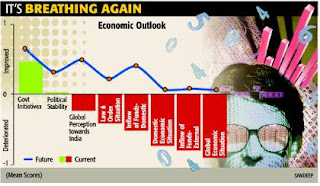
A survey conducted by IMRB among 2,440 households across urban and rural areas has revealed that consumers have cut expenditure on high-end products and entertainment in order to survive in the current crisis. The survey shows that consumers have a negative outlook on the future of the economy. However, most consumers feel that there is no change in their financial health so far. Though the current picture is gloomy, there is a ray of hope. But as things are expected to improve in future, the degree of improvement may be lesser.


Read the complete ET article here.

Sphere: Related Content

Thursday 18 June 2009

Ugly? Sold!

'The nightmare for product managers is working for months on a new product launch only to see their brainchild fail because the market says, "Ew, are you kidding me? That's ugly!" I think this is the reason why so many things we buy are just 'nice': They are perfectly fine products that focus on their functional appeal while borrowing their aesthetic from some other successful thing on the market...

The real trick is to resist navigating consumer taste and understand the emotional sources for taste so that you can to them instead...

So ultimately, don't all these things sell by tapping into a person's sense of what is meaningful? I would suggest that they do. That's why some ugly stuff sells, and some beautiful stuff sells more.'

- John Edson, 'Why Ugly Sells'.

Sphere: Related Content

Building a windmill


When he was just 14 years old, Malawian inventor William Kamkwamba built his family an electricity-generating windmill from spare parts, working from rough plans he found in a library book. To power his family's home, young William Kamkwamba built an electricity-producing windmill from spare parts and scrap.

William's who you call a hero. An intellectual, too.

Sphere: Related Content

Judging Consumption

'When we try to understand the motivations of the Indian consumer, we realise that he is pulled in two directions and trying to satisfy seemingly conflicting motivations; his traditional Indian values are pulling him towards a safer, controlled outlook towards spending and life in general, while the other part of him is embracing consumerist and western values, of wanting MORE! So, while he is comfortable more with the fresh and homegrown, he needs convenience to meet his current lifestyle; while he talks the fashionable language of today's health aficionados, he actually gives in to his real desire for indulgences; and finally, while he wants to splurge on new experiences and products, he has not lost his traditional cautious thrifty behaviour.

He embraces money as a virtue but he knows that real value is knowledge, discernment and experiences that are worthy. He lives in an age of multi-income households, growing disposable incomes and easy finance schemes while maintaining that value is an intrinsic quality that betters the self.'

Punita Lal almost makes out the Indian consumer to be a one who's akin to an enlightened guru. The tragedy is there aren't any enlightened gurus around and if you think there's one you know, marvel at his marketing genius. Not at his enlightenment. Plus call seriously into question, your ability to judge.

What's problematic to me is the description of a western consumer (almost) as one who's the thrifty idiot and the Indian as the enlightened restrained one. Lets get two things straight.

One, much of what we are 's got to do with the circumstances of our past and our present. If I am cautious as a consumer, that's because that caution betters my personal future. Especially since my past and my present contexts can't afford a wayward lifestyle. Without any social security, with a hangover of a bankrupt socialist past that saw the government being the biggest job-giver, I am not easily prone to taking consumer risks. I'll keep my purchases driven by functional evaluations, and all the more because I save, and so the income I have in hand to spend gets even lesser.

Its not that the westerner is a wayward idiot. His wayward consumption's a result of higher incomes, cheaper products and greater social security. Just so you know, even the Westerner is turning cautious with his consumption. And for heaven's sake, don't call that 'turning an Indian'.

Two, the most important people to us are we ourselves. When we consume, we try and maximise our own payoffs. When Punita says, 'He embraces money as a virtue but he knows that real value is knowledge, discernment and experiences that are worthy. He lives in an age of multi-income households, growing disposable incomes and easy finance schemes while maintaining that value is an intrinsic quality that betters the self', I haven't a foggiest idea what she means. For example, what's 'experiences that are worthy?' Tell you the truth, when any consumer engages in a consumption act, that's because he thinks its a worthy act. Note what I said, 'He thinks'. You and I may not. But it isn't about us. Its about him. Its worthy enough for him.

Let me illustrate. The rich kid born with a golden spoon in his mouth buys the Nike sneaker at full premium prices. Then he walks down Brigade road as if he owns it. Am I thinking, that's so dumb? Oh yeah. Does he care what I think? Far from it. Does he think (that's if he can) his consumption act's a worthy one? You bet! Me? Isn't it obvious?

The long and short of what I am trying to say is that, its not just an Indian consumer who's seeking experiences that are 'worthy'. Its every consumer. Everywhere. Its just that it may not seem so to the one who isn't engaging in the act. The Indian consumer may not necessarily do what his western counterpart's doing. That doesn't make him any smarter. Vice-versa too. It just makes them different in the way they look at what's worth it. Are both justified in what they do?

Of course.

Hail consumption!

Sphere: Related Content

Moisturising creams & Narcissists

Last evening I go to pay my Electricity and Telephone charges at a store that's an authorised collection center. After I pay, I am presented with a 'free' jar of Nivea Visage moisturising cream. I am surprised. I ask why? And they tell me its because I paid both my bills together and this is reward for that. I am still surprised. A skin cream as a reward?

I go home. I tell Alphy a sudden rush of affection for her had me buying a jar of moisturising cream that I thought she would enjoy. Far from being impressed she's quizzical. She asks me to out with the truth. I tell her. She asks me to check the expiry date on the cream.

The damn thing's manufacture date shows the year 2007 and there's a another few months before expiry. The little sense of marketing wonder that I had for Nivea collapses like a punctured balloon. Its one thing to get a consumer to try a brand by giving it free. Its another to pack off a product that's about expire. The former elicits trial and probable further purchase. The latter results in the brand in a dustbin and a wariness towards it in the future. After all, didn't it try and pan off its trial in a sneaky manner?

I don't think Alphy's going anywhere close to the damn cream. I don't blame her. Tho' I am willing to give it a dab. My first time. My belief is its more experimental than anything else. Or am I just making it convenient for the vain me, who thinks maybe my skin's going to glow? Narcissism, eh?

Sphere: Related Content

Wednesday 17 June 2009

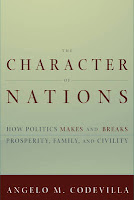
The Character of Nations

"The Character of Nations" is about far more than the fact that there are different behavior patterns in different countries-- that, for example, "it is unimaginable to do business in China without paying bribes" but "to offer one in Japan is the greatest of faux pas."

The real point is to show what kinds of behaviors produce what kinds of consequences-- in the economy, in the family, in the government and in other aspects of human life. Nor do the repercussions stop there. Government policies are not only affected by the culture of the country but can in turn have a major impact on that culture, for good or ill...

While nations differ, particular kinds of behavior produce particular kinds of results in country after country. Moreover, American society in recent years has been imitating behavior patterns that have produced negative-- and sometimes catastrophic-- consequences in many other countries around the world.

Among these patterns have been a concentration of decision-making power in government officials, an undermining of the role of the family, a "non-judgmental" attitude toward behavior and a dissolution of the common bonds that hold a society together, leading to atomistic self-indulgences and group-identity politics that increasingly pits different segments of society against each other.

- Thomas Sowell, 'The Character of Nations'.

Sphere: Related Content

Tuesday 16 June 2009

What's behind Consumer habits?

Sumaa Tekur on being a 'Creature of Habit', 'I confess. I'm a creature of habit too. When I wake up, I sit still for a minute before getting out of bed. I always brush my teeth starting left bottom and then make my way to right top in very systematic, organised brush strokes.

I like my morning cuppa from the same mug. I wipe my wet hands with a towel starting, always, with the left hand in the same manner, in the same direction every single time. While driving to MG Road, I use only one route, not wanting to change or try, maybe, a faster way to get there. When I get to work, I draw the blinds, unlock my drawers and switch on the comp -- in the exact same order every workday morning with a scary lack of deviation.'

Habitual patterns of consumption that consumers form over a period of time is the best thing that can happen to a brand. But for habits to form there are two consumption conditions to be satisfied. One, the brand in question must fall into a product category that elicits a low level of involvement from the consumer. That is, the consumer engages in minimal cognition while considering purchase in that category. Two, the consumer should have, after minimal consideration, bought the brand in question and turn into a satisfied customer. That is, the brand should deliver on what was promised.

Let me illustrate. The first time around, one could look for a toothpaste that promises fresh breath. Then one buys a particular brand of toothpaste. And if the brand delivers, the first time around, in all probability, then on, the consumer buys that very same brand out of habit. Such habitual purchase of a low involvement category brand is termed 'inertia'.

Consumer habits are characterised thus because the consumption act is an outcome of inertia. The consumer falls into such a state of inertia because the cognitive activity he engages in whilst buying a second time around is close to zilch. For a brand to be part of a consumer's habit, the critical requirement is delivery of value on the first purchase. Repeat it a few more times, and you will have the consumer eating out your hands. Without a thought.

I mean, buying your brand out of habit.

Sphere: Related Content

Monday 15 June 2009

What is the truth?

At times I am flabbergasted at what I hear on TV talk shows in India. If its NDTV and the show's hosted by Barkha Dutt, in all probability Barack Obama would be mentioned. In glowing terms. I get to hear characterisations like 'transformational figure' and 'consensus builder'. Most Indian audiences seem to agree and join the paenic chorus. It irks me no end. But then I realise, just as I think Barack's a disgrace, the others think he's the saviour! And we are all steadfast in our beliefs.

Now, where does the truth lie? Or what is the truth?

The answer; for you, the truth is what you believe. Because in most contexts, there isn't anything called the truth. Of course, as usual there are exceptions. There exist unquestionable truths. But they are few and far in between. Most contexts fall into shades of grey. The 'black and white' scenarios are rare. Greys rule.

Marketing's where the characterisation of truth the way one believes it, applies. What's the truth about a brand? Its what the consumer believes. That's the gospel truth. Great marketers are ones who can either construct this truth for consumers or align it with what's by default already believed and can't be shaken. When Dove tells you that it 'creams' your skin, do you believe? Does the target segment believe? Of course, they did and they do. That's why Dove's one of the iconic brands around. Contrast that with a brand that tells you that it cares, and the only response to that is a smirk on your face.

Brands that win with consumers are brands that are believed. Consumers believe, not necessarily because its the truth that the marketer lays bare. Instead its a truth that's constructed keeping in mind the consumer. Its only a stroke of genius that can conjure up this truth for one who then turns a believer.

That's why despite what I feel about Barack and the disaster that he is, I marvel at his ability to have constructed a truth that a majority fell for, hook, line and sinker. After all, didn't he win the contest to the White house? Folks, that's what marketing genius is about.

But then again, is the 'real' truth dawning?

Sphere: Related Content

Saturday 13 June 2009

The all-important transition

Transitions are called for when there's a change in scenery. And there's always some change that hits any landscape. Politics included. The Bharatiya Janata Party is facing a torrid time trying to make a transition at a time when the Indian economic landscape's altered beyond recognition. Gone are the times when there was only misery around, a result of India's obsession with socialism.

Those were depressing times. When Amitabh Bachchan and his rants against the system on silver screen was lapped up by an eager audience wallowing in personal misery. No jobs. No future. The Hindutva card found takers amongst the masses who thought maybe that could change their fortunes for the better.

Then Liberalisation happened. The rotten government and the system didn't matter as much. The Global economy to which we opened up, brought in a promise for a better future. Almost overnight, firms like Infosys culled millionaires from the masses. The Middle Class cocked a snook at anyone who tried to play at the fears of the masses. Hindutva didn't work as much. Two elections and the BJP bit dust.

All of this called for a transition that the Congress Party handled better. Rahul Gandhi became the face of that transition. The BJP still flounders. Their last two defeats has opened up dissensions and the party doesn't know how to make this all important transition, though it knows it must.

Marketing Landscapes too call for transitions. Some marketers respond well and handle it with aplomb. Take an image like Betty Crocker's for example. She changed with the times. Her attire. The way she wore her hair. And so she made sense to consumer audiences across the years. The trick here is to alter in a manner where the core identity remains intact, but the image makes transitions.

For the BJP, the question is, should the core identity remain intact while the image alters? Something tells me their identity is no longer relevant. In a changed India that cares more for progress than resolutions to real or imaginary 'wounds', its difficult to connect with a theme centred on fear. So making cosmetic changes (read image transitions) just wont do.

That's the way I feel. BJP listening?

Note: Images courtesy of Susan Marks.

Sphere: Related Content

'In the Midnight Hour'

Sphere: Related Content

Dear Great Comic Genius

'Tell us, great comic genius, how tacking on four years to the target daughter makes it funny? We unenlightened dim bulbs who live outside of Manhattan's boundaries don't get the joke.

Will you be able to explain it to your son?


Face it: David Letterman, late-night entertainer turned partisan hack and hit man, has a deranged obsession with Palin and her family that has crossed into rank bigotry and hatred. If the CBS network cares about basic standards of decency on public airwaves and if it cares at all about bolstering its shrinking audience, the network honchos will get Letterman a therapist pronto.'

- Michelle Malkin, 'Dear David Letterman'.

Sphere: Related Content

Friday 12 June 2009

The wisdom of 'Balance'

Having Jaden with us is amazing. He's now nearing three and its so much fun watching him grow and take on new attitudes that just pop up overnight. He's grown more perceptive, seems to exhibit a greater streak of independence and has a mind of his own. Our old tricks fall flat.

Parenting is such a responsibility and I know I will mess up at times. What I know will get the act right is steeped in what I call the 'wisdom of balance'. The act of getting the 'proportion' right. Let me explain. As a parent the question that will pose difficulty is not one where I have to choose between a Yes or a No. That dichotomy is easy to handle. For example, if the question is, 'Should Jaden learn to be disciplined, say in his sleep habits?, the answer is pretty easy. Its a Yes. 'Should he learn his thank yous and pleases?', again, its a Yes. So, on an issue of discipline, the answer is always a Yes. But the more difficult question, that calls for what I call the wisdom of balance is, 'How much of discipline?' In what proportion?

'Should he always be bound by rules?' The answer is No. Therefore the difficult issue is to find a balance between letting him 'free' vis-a-vis subjecting him to 'restrictions'. 'How much of restriction, how much of freedom?' If I can get that proportion right, I can get parenting right.

Its the wisdom of balance.

In Marketing too, the difficult question is not, 'Should I or shouldn't I?'. Its 'How much?'

'Should I advertise?' Yes. But how much of my communication budget should go into advertising? Fifty percent? Forty, perhaps? Should I automate my service delivery? Yes. How much of it should be automated and how much should retain the personal touch? Difficult one. If there's a mess up on the shop floor, should I address the issue? Of course, yes. But how harsh must I be? Too harsh, and I affect employee morale, too lenient, and I am setting the place up for another mess up.

So you see, the 'balance' is the key. Its the wisdom of balance that's behind every successful decision.

Get the 'balance' right, you get the act right!

Sphere: Related Content

The Liberal tragedy

Liberals are truly pathetic.

They can make and laugh at the crudest of jokes about a young girl, yet go bonkers when they hear the likes of Carrie Prejean say that marriage's between a man and woman.

Note J Robert Smith; 'Letterman's trashy, ham-handed humor at Palin's expense demonstrates again the unabated contempt and fear that liberals have for a woman who established an immediate, powerful rapport with voters last year. His subsequent disingenuous apology to Palin only adds an exclamation point.

Intriguingly, Letterman's jabs, and the continuous stream of invective and ridicule aimed at Palin, speaks volumes about what the left thinks about America's Joes and Janes.

Evidently, not much. Not much beyond harvesting their votes.


East and left coast elites have a beau ideal, and that's President Barack Obama, the elegant, cosmopolitan, smooth apologist for America's foibles and mortal sins. The Big Spender and soon-to-be Debaser of the Dollar. The Savior of Detroit who's Amtraking automakers. The compassionate fellow who wants to ration healthcare. And the man who claimed he'd deny Miranda rights to terrorists, only to, well...

Sphere: Related Content

Thursday 11 June 2009

What agendas to suspend for Marketing success

Great organisations have cohesive and competent teams within that ride together to take it to success. Teams within a firm not just need to operate cohesively as individual units, but also need to perfect cross-functional unity. And that's a possibility only if members within teams suspend personal agendas to keep the team agenda as priority. Similarly, at a macro level, teams need to suspend their own agendas to give the organisational objective utmost priority. Once the organisation succeeds, teams get rewarded, and so do members within.

I have seen firms trip, because teams refuse to forsake their agendas for the firms'. I've seen teams go down as members refuse to put the team ahead of their own personal desires. I've sat at team meetings where I watch in horror members present initiatives that further their own selves in the guise of furthering the team's fortunes.

Marketing success too is a result of teams working together with just one agenda in mind. That of the consumer's. Any marketing chain could consist of Manufacturers, Channel partners, Retailers, Advertising agencies, Market research firms and so on. If a product needs work as a solution for the customer, every entity in the chain must suspend their personal agendas to give the customer agenda its primary due. For example, a channel partner mustn't push for unreasonable margins, because that means higher prices to customers that may then make the product impotent against competition. Channel players together must cull out any entity in the chain that isn't focused on the customer. Letting them be, can spell doom for the product in question.

Just like, if you were to know someone on a team's furthering his own self, ease him out. Else the team's going down. If a Marketing chain entity doesn't have the customer as the focal point, I bet, the outcome to that chain (read product or service) would be rejected. By the customer.

Sphere: Related Content

Wednesday 10 June 2009

Is a Rose is a Rose is a Rose?

Alphy's always inclined to pick the Smith & Jones Ginger-Garlic paste over Dabur Hommade. And its got nothing to do with the paste and everything to do with the name.

Smith & Jones works for her. Neither Dabur nor the Hommade name is strong enough an allure. Having lived most of her life in Dubai, she's grown up with Western brands. And so Smith & Jones rings a familiar bell. It fits into her world. She was pretty disappointed to note that Smith & Jones is made by an Indian company called Capital Foods. And she got to know that because I told her. I couldn't conceal the grin that followed. On my face.

Consumers look to brands that are in tune with the world that they know. Brands that fit in. If one's lived an anglicized life, if I can call it that, one seeks anglicized brands. Local ones won't do. So if you want the Alphy-kinda consumers, you better get the name right. Of course, the visible identity too.

Sphere: Related Content

Tuesday 9 June 2009

The 'context' dicates the 'decision'

Dale's got a great blog on Context-Driven Qualitative Research which he believes is the best way to understand "consumer decision-making," or why people buy certain products and services.

I quote, 'Context-Research is disgusted with both Rational and Conspicuous. He says, “If we are going to catch Consumer Behavior we need to get him where he lives - - then we can trap him with his own words.” He continues:

Here’s how to set the trap. Forget about traits and profiling, this is not a problem for psychology, it’s a matter of context. Find out what Consumer Behavior wants and how he goes about getting it. In short, picture the scene. Draw it up in a series of pictographs and let him explain himself as he goes through them. He might get emotional. So much the better. Keep your yap shut because he knows and you don’t.'

Here's where you can read about it.

Sphere: Related Content

Monday 8 June 2009

Government's the problem & the solution?

Amidst the expose on malpractices and misuse of autonomy by medical colleges in Tamil Nadu, its interesting to note that government is trying to act tough. The HRD ministry has now issued notices to errant colleges asking why their deemed university status should not be withdrawn and action be taken under law.

But what most people miss out on, is the fact that 'selling' of seats, though an unlawful act, is actually a result of government policies. Anything can only sell for a premium only if there exists a demand in the marketplace for whatever it is that's selling at those prices. A medical seat can sell at such an exorbitant rate because there are buyers out there ready to pay the price. And such prices are sustainable because the supply of 'education' is scarce. Guess who's responsible for that scarcity? The Government!

I remember talking to a friend of mine who tried to start and run a school. The government virtually ran him out of this endeavour by ensuring that he faced hurdles in everything that he did, while trying to set up and run the school. The government-dictated policies out there virtually dashed his hopes of operating a school. And the man in question, was honourable, ethical and truly believed in education as a noble service.

Of course, the institutions who 'sold' their seats have violated the law. But what's more important to note is that the problem of 'selling seats' is a creation of the government itself. And now that very same government is trying to find a solution. I'll bet there's none. Such scams will continue unabated. The only way to stop such rackets is by easing governmental control on the sale of any product or service, education included, and by letting market forces dictate the supply of solutions to consumer demands. Of course, this doesn't sound well, especially when it comes to services such as education. Plus the transition from government control to letting market forces dictate, initially, will throw up problems. But tell, you what, that's the only way to plug the flow of 'scams'.

Take it or leave it.

Sphere: Related Content

Sunday 7 June 2009

Has the recession changed consumers?

P&G and Home Depot fret that recession has forever changed consumer spending patterns. Is their fear real or unfounded?

Yes and No, to either.

Anita and I had worked on a research which attempted to find answers to this very same question, and what we uncovered is a must-know for all marketers. Our study was restricted to three categories, namely, Apparel, Leisure travel and Entertainment/Eating out. The study was restricted to Bangalore and quizzed three sets of consumers; ones who have had a drop in their salary, ones who haven't, and ones who haven't but speculate a dip. The study focused on whether consumer spending behaviour had altered since recession.

Summing up, these were the findings. Consumers across the board have cut down on their purchase quantum. That is, if they ate out once a week, now its once in two weeks. If they travelled for leisure every six months, now they do so only once a year. The most interesting finding that should bring cheer to the likes of P&G and Home Depot or any other brand out there is that, consumers still haven't switched to a 'cheaper' brand to save money. That is, if one were used to wearing Levi Strauss denims, one still buys the brand, albeit in lesser quantities.

The study also found that consumers stayed true to those brands that they believed delivered value for the money spent. It didn't matter if it were a mass or a premium brand. Enhanced value delivery through price cuts and discounts were welcome. In fact consumers looked forward to the same.

The Adage article too paints a similar picture, at least when it comes to describing the consumer as having turned frugal. Its important to note, based on our study, that frugality is a not result of brand switching, instead of lessened consumption, in categories where it was possible for the consumer to do so.

The future of consumption has not been altered dramatically when it comes to brand landscapes. What's happened is, consumers have turned into beings who more careful with their money, and therefore are looking for better bang for the same buck. Brands that deliver, stay.

Sphere: Related Content

Saturday 6 June 2009

The Gladwell effect

'By proving methodically that ideas spread from the ground up and are transmitted by peers one trusts — rather than being dictated top-down by pundits and ad men to be passively received — he switched the locus of power to the absorber or consumer of ideas and products (and inaugurated a vast trend for marketers to “seed” a product with “influencers” in a way that would hopefully “go viral”. He also anticipated the community-building and opinion-making power of the internet.) Adieu, unquestioned authority of newspapers, historians and Madison Avenue.

In Blink, to my mind his least successful book, he nonetheless proved that there is no such thing as a human being without bias. So long, myths of a post-racial, post-feminist, post-class-structure society. And in his most important book, the new Outliers — which could actually be called “Inliers” because it is about how perfectly ordinary people or garden-variety geniuses either do or do not get the breaks that will catapult them to the heights — he gives a sweeping, scorched-earth annihilation of the Western world’s delusion that there is such a thing as a functioning meritocracy; and he punctures for good America’s favourite fairytale, that anyone with grit and pluck can haul him or herself up by the bootstraps and succeed.
'

- Naomi Wolf, 'Malcolm Gladwell: 'I was an outsider many times over'.

Sphere: Related Content

Please don't turn me on

Sphere: Related Content

Why Yahoo extensions work

The latest hit wise News and Media category weekly report on the top 10 News and Media category websites ranked by US market share of visits puts Yahoo news above Google, CNN, MSNBC and the Drudge Report.

Now that's good news for Yahoo, enduring a rough time in its combat with Google on searches. In fact, tell you what, it isn't easy for consumers to associate Google with news as much as they can, with Yahoo. That's because Google's identity as a search engine is deep and enduring. That makes it harder for Google, when it comes associating with news as a category with the same name.

This demonstrates the relevance of stimulus and its generalisation or discrimination, depending on associations. Any brand that's an iconic one, with a certain association that's strong will find that extending the brand name (read, stimuli) into another category may not work for it. And so instead of an extension, its better to move into a diffrent category with a completely new name. Like what Google did with Social Networking, calling it Orkut (after its creator), rather than having it christened with a Google related named.

The fact that Yahoo's more a portal with no strong associations is why the brand name (read, stimuli) can be generalised. Yahoo News works better for consumers in terms of identity than Google News. It shows. Yahoo News' No. 1.

Sphere: Related Content

Thursday 4 June 2009

It isn't soap, its the soap story

President Barack Obama called for a new beginning. With nothing new. Except for some rhetorical babble. Which by the way went down well with all those in awe. And didn't go down well with the likes of me. That's because he reminds me of brands that win awards with their advertising but give the consumer a deal that's worth zilch. So there's always the first buy and none after. Just like there's always the first term and none after.

The only lesson Marketers can learn from the American President is the lesson of superlative communication. Its one of the Ps of Marketing, Promotion. The American president can quite hold an audience. Especially if that audience consists of people with a low degree of 'need for cognition'. Its like selling soap to idiots. It isn't soap, stupid, its the way you tell the soap story. You can have them hanging on every word, and then they buy the soap.

Don't believe me? They lapped up every word the messiah spoke. And then they voted him in. What's changed? When you figure that out, do let me know. I am waiting, all ears.

By the way, how can you characterise the Obama babble?

'He talked and talked and talked and talked.

And then kept talking.

Vacillating between a lecture-some professor and a talk show therapist, Obama started out numbering the grave and important issues he wanted to discuss. After a half-dozen, he junked the whole numbering system.

Or, lost count.

The problem with talking so much is that you eventually just start babbling and saying a bunch of stuff that makes no sense.'

Sphere: Related Content

Can India be Donut country?

I don't know about South Korea, but if Dunkin' Donuts wants to take on India it has to get its target consumer segment right. And that segment in India must not include consumers who have been conditioned to a taste that's savoury and hot. That then totally excludes a populace above, lets say, the age of thirty five. Because any one who's that old has had his tongue used to a taste that's hot and savoury. Dunkin' Donuts don't fit in.

If DD's got to make it big in India, it must go after the crowd Cafe' Coffee Day's mesmerised. Because that crowd's already into coffee. CCD has brilliantly got them hooked. Now its a combination of Coffee and Donuts that must connect with them. My bet is, it will, assuming the rest of the P's are managed well. Especially pricing and lifestyle based Cafe' format hangouts.

What I'd like to dwell on is why Dunkin' mustn't go after the 'older generation' in India. Its got everything to do with the concept of 'Consumer Learning'. The theory of Instrumental Conditioning driven learning is based on consumer responses to stimuli that result in the most satisfactory response. The greater the satisfaction with a certain stimuli, the better the response in terms of repetitions with that very stimuli. The stronger the subsequent learning. The level of conditioning is enhanced as one ages. Take food habits for example. The older you are the more fixated you are on certain kinds of food. That's because your tongue's conditioned to a certain taste, that you liked, accepted and repeated. Not so when you are young. That's the age at which one 'tries' different cuisines, is more open to tastes that are alien. For the older generation in India, a snack's supposed to be hot and savoury. At least for most of them. The Donut taste's alien. So is the Cafe' format. That's a direct contrast to the younger uns. Donuts will do fine. Cafe hangout's most welcome.

for Dunkin' Donuts, Korea's the company's top foreign growth market. Something tells me, there too, its the youngster they're after. Korea's going to be easier than India, due to a history of American influence. In India, it will tougher. For now, the only crowd that will take to Donuts in India will be the young uns, who live in cities, are from upper middle class families, and are the kind that can be seen lounging at Cafes.

Sphere: Related Content

Wednesday 3 June 2009

The more I can't have, the more I want

Amidst the consumption gloom, the weekend launch of Palm Pre should brighten things up. Both for Palm and Sprint Nextel, its exclusive provider. The Palm Pre's been attracting a lot of attention since its its debut at the Consumer Electronics show in January. Analysts are now warning of Palm Pre shortages post launch.

The Palm Pre may not be the iPhone and so may not witness the kind of frenzy the Apple phone generated. Yet, it surely is good enough, with its touchscreen control, a slide-out keyboard and an operating system designed for trendy Web services such as social networks, to pull the crowd in. Plus the fact that a stock out's expected, will only add to the lure.

One of the best things to happen to a newly launched brand is stock outs, engineered at times, especially if it piles on the 'pull'. After all, if something runs out, maybe its because everyone's after it. The desire to possess can thus be strenghthened. But it also must be seen that sufficient stocks make way to shelves, so waiting consumers can buy. Push the wait a tad too much, and you may come to rue the brand's unavailability, as by then, consumers walk off, disgusted.

The 'enhanced' desirability reminds of me of the 'girl scenario' that I see play out so many times. The more she can't be charmed, the greater the lure. The more the boy tries. It makes lovesick loonies out of many.

Funny. To me. :)

Sphere: Related Content

From the vast business mind of President Obama

'The President is lying thorugh his teeth. And because he has a nice smile and a charming manner…we overlook this? We give him a pass? Has Bush Derangement Syndrome gripped the American populace into some sort of mass hypnotic psychosis?

But the GM CEO took to the cameras today and reassured that the restructuring plan will work. It will be hard. It will require ‘sacrifices’. . But it will be dedicated to making smaller cars. It will innovate ‘green’ technology to make better-mileage, more environment-friendly cars. It will make cars that provide high wages and provide comprehensive health and retirement benefits to union employees. It will make cars that the President has told us we need to be making to help save the planet.

You know…cars that people don’t want to buy.

But if you don’t want to buy the cars they’re making, the government is going to Change your mind. You see…you need to get your mind right. You need to be convinced that it’s in your best interest to let the government make the important decisions for you. Decisions like deciding which sort of car to drive. What sort of light bulb you use. What extent you must go to by recycling and, hence, save Planet Earth. What sort of health care they think you should have. What food you can buy. Where you can travel. What school you’re allowed to attend. What sort of profession you may ‘choose’ for yourself.

Oh, I’m sorry. I apologize again. I was thinking of Communist China. '

- Gray Graham, 'From the Vast Business Mind of President Obama'.

Sphere: Related Content

Like Two Ships Passing In The Night

Source: 4 Block World/ Via: Carpe Diem

Sphere: Related Content

Tuesday 2 June 2009

One half America voted Government Motors

I guess a part of my nightmare is over. Though I will only breathe a sigh of relief when my nimble fingers run over my new passport. For the past two days I have spent the greater part of the day at the Bangalore passport office moving from one counter to another applying for a fresh passport as my older one runs out on its validity.

Sample this. The first day, I reach the office at eight, stand in a queue for almost an hour and a half because the damn counter opens only at nine thirty and I have to be there early enough to get a token that reads a sufficiently lower number. Because that means at the next counter where they verify my documents I would be somewhere up front. I reach the second counter only to know some document isn't in order. I have already spent three hours at the office. I leave, then go back today. They tell me yesterday's token's good enough. I reach the first counter only to be told it isn't, so I am told to wait my turn based on what the number was the previous day, and that's at 71. So much for reaching early. I go through the blessed counters that number five, yeah, five counters that I have to go to, so I can submit my documents and pay the charges for a new passport. Let me tell you what these five counters do. One gives a token, the other verifies documents, the next scrutinises and okays the documents, the fourth one decides the payment and fifth one collects it. And almost all of this is done by government servants, who take home a paycheck that comes out of my tax remittances, with an attitude that makes me feel as if they've almost granted me the goddamn moon.

Two days wasted for something that could have been completely done online and through snail mail. Welcome to government systems and their functioning.

I think one half of Americans must really have been on something to have voted Barack in. Barack, the messiah who believes government's got the answer to consumer problems. General Motors is now Government Motors. And what's Barack predicted? 'The humbled corporate titan will emerge from Chapter 11 "a stronger and more competitive" company within months.' This from someone, the only time he's come any close to understanding organisations was when he played the role of a community organiser. Imagine, one half America voted for a community organiser who's now going to decide what kind of cars must be built and sold.

God save America.

But then, knowing the crafty methods he uses, for all you know, Barack's going to engineer things in a manner where consumers will be forced to buy small cars that GM now plans to make. He will ensure the SUVs can't be made, or if they are, they turn so pricey, it wont be affordable to the masses.

I can't for the life of me understand why a tax paying citizen would want to give more money into government hands or support government deciding what's good for consumers? If you really want to know how unproductive the government is or what a mess it makes with running companies, you just have to visit a passport office in India, or buy an Ambassador car. As the Indian government runs clear off making cars, the American one decides its time to make them.

Pity.

Sphere: Related Content

Monday 1 June 2009

Why Star Bazaar's lost my patronage

The last time I went to Star Bazaar, they charged me a parking fee. And so I said, I wouldn't go back. Its more than a year now. I went back yesterday. I was still charged a parking fee, but that was then refunded at the payment counter.

But it wasn't all hunky dory. The place was packed to the hilt. I couldn't find an empty trolley amidst all the din. When I did find one, it was being pushed across the store floor by an employee. With Jaden at my shoulder, I asked the shop floor guy if I could take it from him. He refused. He said he needed it for some work. I was polite and so walked away to find another. I did, outside the store. I had to wait for shoppers to empty theirs after their purchases.

Star Bazaar seems to be doing well. I know it was a Sunday evening, so the crowd was expected. I spent almost close to half an hour at the check out counter. That was pretty hassling. Add to that, my not being given a trolley by an employee who should have been more concerned about me than whatever it is he needed the trolley for, plus no apology for not parting with the trolley, you think I am going back?

Fat chance.

Sphere: Related Content

It isn't the economy, its the customer, stupid!

Joel hits the nail right on the head when he states, 'So it was no surprise to me that Circuit City failed. The chain's CEO, in an e-mail, blamed the demise on "poor macroeconomic conditions" -- an assertion that was repeated by The Associated Press, which cited "the expanding financial crisis" for the liquidation. You know what? I don't buy the argument that the economy caused Circuit City's failure. Take one look at its competitors, and you know that the market for consumer electronics and computer equipment remains strong, even in this economy. You can walk into any Apple Store and see large crowds of people lining up to buy computers and iPods.'

Dead on right. If business firms are folding up, its because their customer patronage has dried up. And if patronage's down, they only have themselves to blame. Remember, as much as there are firms closing down, there are others that are doing just fine. And that's because the latter made customers their central priority.

Bailing out firms that are folding up, is akin to watering a plant with dead roots. Its wouldn't matter how much of water you're going to flush down. The plant's as good as dead.

Its important that business firms don't get complacent when consumer consumption is at its peak. In fact, what's witnessed at such times is the arrogance with which these firms treat customers. The deal then is, 'take it or leave it'! I am not the one to shed tears for such firms as I see them folding up. In fact its a shame to see these very firms traipsing around with begging bowl that's been filled to brim by the political establishment. A bowl that will empty soon. My bet then is, you'll still see no branches and leaves. Remember, no root!

Sphere: Related Content