Saturday 28 February 2009

Twittering nonsense

'I admit, I tried to be Twitter hip. I even wrote a blog about how Twitter could be a useful political tool under the notion that hearing voters twitter a debate could provide unique, real-time insights into their behavior and thinking.

But I’m giving it up. I know I’ll get roasted for being anti-tech. But, what I really am is pro meaningful communication. And somewhere along the Internet highway we fell under the spell that more communication is better communication. Sometimes more communication is just noise.

Which links up to the idea that more friends means better and more meaningful relationships. I’ve come to believe the opposite is true. I hear of people bragging about breaking the 1,000 friend mark in Facebook. I challenge them to name 100 of those friends.

Because of a good deal of luck, I have a job and live a life that creates opportunities for intersections with a lot of people. But, I realized the more I tried to maintain links to the ever expanding universe of acquaintances in my orbit through the ever increasing number of tools to connect with them, the less I was spending real quality time on the people who really matter to me.'

- Mark McKinnon, 'Twitter Jumped the Shark This Week'.

Sphere: Related Content

These Days

Sphere: Related Content

Friday 27 February 2009

To sell to the white man, you gotta be one

To the question raised as to whether Indian directors can pull off what Danny Boyle's managed to, the answer, lies steeped, incidentally in another question. Do they understand Marketing? If Yes, in all probability they will!

Let me repeat, its always marketing. To be a marketer, you must disconnect from yourself, so you can walk the psyches of your consumers. That in turn requires high levels of emotional intelligence. Take Sutanu Guru for example. His tirade against Slumdog is a clear reflection of how he is so engrossed in his own 'hurt', that he fails to see what the movie's really about. If that's the attitude, you bet its gonna be a marketing disaster should you ever try and sell. I mean, to sell to the white man, you must think and become the white man. if you can't, I guess its all right (its a free country the last I heard), its just, don't try and ever sell to him. You will make a mess of it, 'cos the products you conjure would be ones that suit your skin, not his!

The lesson here is, you don't matter, the consumer does. It doesn't matter what you think, its about what the consumer wants. Lemme give you a simple example. To sell chicken tikka masala to the Britons (its almost the national dish there), the dish has to turn into something they like. I mean less spicy...and so on. Hold on to your original recipe, and I bet you ain't taking the bird in the curry anywhere. Sure, the illegitimate creation ( I mean the recipe) will have the likes of Sutanu breathing down your neck, but why should you care? After all, you're laughing your way to the bank.

So you see, the naysayers have to be the naysayers. That's their birthright. You must however be smart enough to get out of your skin and get into the customer's. Danny did that, and of course it came naturally to him. He's white, if you can see. That's why he laughed his way across all the coveted award ceremonies. Someday if you are smart, you will too.

Sphere: Related Content

Tata Nano luanch on March 23

The much awaited Tata Nano rolls out on March 23. Hope it kick starts a purchasing spree that's so required in the bleak business landscape of today.

Sphere: Related Content

Can you spot marketing in Slumdog?

I can understand all the angst at Slumdog winning the coveted prize. The reason is, the ones complaining, don't really understand Marketing. Marketing success requires you get two of your initiatives dead right. One, get the target segment spot on, and two, ensure you know everything there is, about that segment, so you can design and develop your product just for them.

Danny Boyle did that. He made a movie for a consumer segment. He got both the segment and the movie made for them, spot on. Note, Slumdog Millionaire was not made for the Indian public. It was made keeping in mind the Western audience. Danny ensured the movie had everything to mesmerise that audience. That's why the adulation came pouring in! Adulation, remember, from the Western world.

All those Indians complaining about why the movie doesn't deserve what it got, please do me a favour. When you have the Indie awards on, make sure Slumdog goes away with zilch. You would have made your point then.

Sphere: Related Content

Thursday 26 February 2009

21 reasons for optimism on economy

Irwin Kellner, chief economist for MarketWatch, provides 21 reasons to show that the worst of the recession may be behind us.

Read it here.

Sphere: Related Content

Don't ship jobs overseas?

Of course, I've heard it before. Am now hearing it again. But then the disbelief at what's being said is intact. Note what Obama said in his address to Congress, 'We will restore a sense of fairness and balance to our tax code by finally ending the tax breaks for corporations that ship our jobs overseas.'

I am surprised that the American President can't get it. That shipping jobs overseas is done so as to capitalise on the efficiencies that flow out of the concept of 'location economies'. That value chain activities must be performed at that location where its most efficient. If that means shipping value chain activities to India. so be it. It ends up making that business firm more efficient. The reverse, that is, keeping the activity in the US only renders the value chain inefficient, and that's a no-no when it comes to the buyer. 'Cos the buyer out there is not willing to pay for those inefficiencies.

Sure. its great rhetoric for Obama. But then, isn't it time to drop it, now that he's in the White House? Isn't it time to embrace fundamentals principles of business and get on with it? I am surprised that there are Americans even now, who are still mesmerised by Obama's empty rhetoric. Pity!

Sphere: Related Content

Wednesday 25 February 2009

Youth Homogeneity a myth?

I am not surprised that the new Coca-Cola India commissioned research study is titled ‘The Truth About Youth: Exploding the Youth Homogeneity Myth’, and is even labelled 'a good descriptor of young people’s consumption styles today'.

I am not surprised that they are calling 'Youth Homogeneity' a myth, 'cos they fundamentally misunderstand 'Human Motivation'. A cursory glance at the Maslowian theory is enough for one to understand that needs are decked up in a hierarchical order. And in most cases people move from a lower order need to a higher one. Its natural they do that, though I admit there could be exceptions. But note, they are just that, exceptions.

What I mean to say is fundamentally what motivates us all at some point in time has to be one and the same entity. We start with basic needs and then move on to social needs. It would erroneous to conclude that you and I are different, just 'cos at a given point in time you seek basic fulfillment whereas I seek social ones. You will in fact catch up with me once your basic needs are fulfilled. Thus what motivates us both are one and the same things (tho' at different points in time), thus making us similar.

It highly erroneous to conclude that Indian rural youth are different from their urban counterparts just because they exhibit different aspirations. Take for example the differences the study states, among urban and rural youth, when it comes to the desire for freedom. Urban youth seek enhanced financial and social freedom whereas their rural counterparts look for financial independence and a a reasonable degree of freedom. Granted there are 'differences', but does that really make one group different from the other? The truth is, there are no differences. Its just that the youth exist at different levels on the motivation hierarchy. And so the implication is, marketing communiques must be cognizant of this varying level of motivational existence and conjure communiques based on that understanding.

Youth all over, are the same. It doesn't matter much what appeals to them. It only matters to the extent that marketing communiques must be designed keeping in mind what it is, that motivates them in the present. The difference in the factors of motivation don't necessarily make urban youth any different from their rural counterparts. That's something marketers mustn't forget.

Sphere: Related Content

Consumers & the sense of entitlement

If its a repeat or a second-time usage of a service by a consumer, the provider must beware. 'Cos the consumer comes in with a sense of entitlement, a default set of expectations. Meet it or better it, you have a satisfied consumer, else its a litany of complaints. Note that it doesn't matter whether the sense of entitlement is justified or not.

A similar scene plays out in my office many a times. Students walk in complaining about the grades they receive. The sense of entitlement they come with is, 'I deserve better grades'. Doesn't matter that the work turned in just doesn't meet standards that call for better grades. As Prof. Marshall Grossman at the University of Maryland states, “I tell my classes that if they just do what they are supposed to do and meet the standard requirements, they will earn a C. That is the default grade. But they see the default grade as an A.”

The difference between students and consumers is limited to me not having to change grades if I think the work's shoddy, and you, the service provider having to capitulate to the expectations of consumers.

There are exceptions, of course.

Sphere: Related Content

A Fatal Trajectory

'How did we get to this point? It was no single thing.

The dumbing down of our education, the undermining of moral values with the fad of "non-judgmental" affectations, the denigration of our nation through poisonous propaganda from the movies to the universities. The list goes on and on.

The trajectory of our course leads to a fate that would fully justify despair. The only saving grace is that even the trajectory of a bullet can be changed by the wind.'

- Thomas Sowell, 'A Fatal Trajectory'.

Sphere: Related Content

Going Down

Source: Gallup

Sphere: Related Content

Tuesday 24 February 2009

The Problem With 'Nationalization'

'All that government has done thus far has only scared private money off. As bankers now realize, when you turn to the government for financial assistance you take on an untrustworthy partner. Outside money will not come in only to see its investment diluted later on when the government injects additional funds.

Rather than focusing on ways in which we can further involve the government in the financial system, we need to find ways to extricate banks from government's deadly embrace. Banks, at least the behemoths, were public-private partnerships before the crisis. Deposit insurance, access to the Fed's lending, and the implicit (now explicit) government guarantee for banks "too big to fail" all constituted a system of financial corporatism. It must be ended not extended.

If a bank is too big to fail, then it is simply too big. Those institutions need to be downsized until their failure would no longer constitute a systemic risk. Then we can discuss how to untangle the government and the major banks, and create a banking system of genuinely private institutions.'

- Gerald P. O'Driscoll Jr., 'The Problem With 'Nationalization'.

Sphere: Related Content

Nimbu ain't premium in India

The good thing about a lemony drink in India is that it'll find a lot of takers. That's 'cos the limey taste works here plus the drink will be perceived as a healthy refreshing one vis-a-vis the colas. In fact, the lime-lemon category is the fastest growing segment of the Rs 7,000-crore aerated soft drink market, with both competing brands Sprite from Coca-Cola and PepsiCo's 7-Up registering healthy growth rates.

The problem a limey drink will face is its 'downgraded view' when it comes to Indian consumers. Lime juice in India is most often made at home. Paying a premium (in comparison to the costs in making it) for such a bottled drink may not be acceptable. Naming the drink Nimbooz does raise its status at bit. But is that good enough? Me predicts 'immediate consumption' (at a retail store with the200 ml returnable glass bottles and 350 ml PET packs) as viable for the product, but not so for 'future consumption'. I wonder how many would buy a 2 liter bottle of Nimbooz (Pepsi has not yet rolled out this SKU), take it home for consumption?

Me says, not many.

Sphere: Related Content

Dangers of Social networking

DailyMail: Social networking websites are causing alarming changes in the brains of young users, an eminent scientist has warned. Sites such as Facebook, Twitter and Bebo are said to shorten attention spans, encourage instant gratification and make young people more self-centred.

The claims from neuroscientist Susan Greenfield will make disturbing reading for the millions whose social lives depend on logging on to their favourite websites each day. But they will strike a chord with parents and teachers who complain that many youngsters lack the ability to communicate or concentrate away from their screens.

More than 150million use Facebook to keep in touch with friends, share photographs and videos and post regular updates of their movements and thoughts. A further six million have signed up to Twitter, the 'micro-blogging' service that lets users circulate text messages about themselves. But while the sites are popular - and extremely profitable - a growing number of psychologists and neuroscientists believe they may be doing more harm than good.

Sphere: Related Content

Monday 23 February 2009

What's changed about our money-habits

'This is the new paradigm that manufacturers and retailers are going to have to accept and deal with: that we’re learning to stretch our dollars, and while we have no problem with them making a profit, we aren’t about to pay 10 times more for their goods than they are worth. As our budgets shrink, their profit margins have to as well, and not just in the short term. The days of inelastic demand are over. We’re no longer willing to pay whatever it takes to get what we want. If businesses want our business, their first task is to address consumer demand for higher quality. And our task, as consumers seeking to avoid another recession, is to hold out until they meet our demands by holding fast to our dollars, spending them only when profit margins don’t exceed the value we get for our bucks.

Vote with your dollars in favor of products and services that are worth their asking price while you have the power, folks. Corporations will get it, or they’ll go out of business and make room for those which do. Just ask
Wal-Mart.'

- Katherine Berry, 'On Saks and Starbucks: Demanding Value in Tough Economic Times'.

Sphere: Related Content

Smile Pinki, literally, smile!

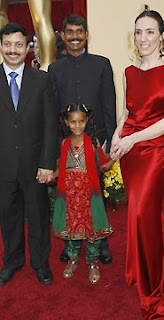
Amidst all the Slumdog mania, don't forget a 39-minute documentary called 'Smile Pinki' that has won the award for best short documentary.


The documentary tells the real life story of Pinki, a six-year-old Indian girl who was born with a cleft lip in the village of Rampur Dhavaia village in the northern Indian state of Uttar Pradesh. Directed by Megan Mylan, an American, it documents Pinki's transformation from an introverted social outcast into a vivacious local celebrity after a 45-minute operation in 2007 funded by a US charity called The Smile Train.

Sphere: Related Content

Why Slumdog's hit paydirt!

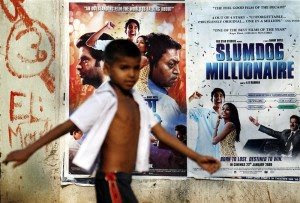
In India, many wonder what's it with Slumdog Millionaire that's had it winning almost all the coveted awards? After all, its just a really good movie. Nothing extraordinary. What they can't fathom is the fascination for the movie in the Western world.

The answer of course, lies steeped in the concept of 'Sensory Adaptation' (or Neural Adaptation). In India, slums, beggars and the whole Mumbai backdrop is nothing out of the ordinary. In fact I bet, every Indian worth his salt has had his tryst with Sh*t! Falling into it may be rare, but cohabiting with it is commonplace. So any of what's considered normal in an Indian's daily life isn't met with any sense of surprise when its transported on-screen. The Indian senses have so adapted to the reality around, that, when that reality climbs on to a screen, no one gives it a second glance. In fact its the running around trees that works on silver screens in India. 'Cos that's something you would never see anywhere in India. Especially with the likes of the Ram Sena around.

But to the West, the whole slum-beggar-sh*t package is something that's incredulous. They haven't seen anything like it, ever in their lives. So on screen it works a magic like nothing else can. The Western senses get exposed to stimuli they have never encountered in their lives. What's the resultant response? A string of awards, of course!

Sphere: Related Content

Resul & Rahman

Resul and Rahman's win is about the 'triumph of talent'. Pure and simple.

That's not easy to come by in India, where many a times its everything other than talent that matters. Its who you know, what influence your folks wield, the lineage you sport, and similar such inconsequential details that take precedence.

Resul and Rahman are also not about Bollywood. They are about people coming out of places in India that are ignored when it comes to mainstream movies. In short, their win must be seen as a beacon of hope for true talent that languishes in the most forgotten of places in India. This sorta talent lies hidden in schools and colleges that find no consideration because no one's even heard, let alone been to such places. Just so you know, Resul hails from a village called Anchal near Punalur in Kollam district of Kerala.

Resul and Rahman's win is truly a triumph of talent. That's so refreshing and so rare. Kudos!

Sphere: Related Content

Saturday 21 February 2009

Angel

Sphere: Related Content

Wednesday 18 February 2009

The will to believe & a loss of faith

When can a cult brand loose its sheen? When dissonance levels rise to an unmanageable level. When can that happen? When the brand, not just fails to deliver on promises made to the consumer, but does it to the extent the consumer suffers a loss of both the investment he made in the brand, and a subsequent loss of faith.

Are we now seeing such a scenario playing out in the future as far as Brand Obama goes? I am willing to bet on that.

Note Thomas Sowell, 'Not even the most Alice-in-Wonderland actions will arouse the suspicions of those who have what William James once called "the will to believe."

Nowhere was that will to believe greater than in the election of Barack Obama to be President of the United States, not on the basis of any actual accomplishment, but as the repository of hopes and symbolism. His supporters among the voters and in the media are not going to stop believing now.

It will take a lot more than blatant inconsistency for the faithful to lose faith. It may take catastrophe— and there may well be catastrophe.'

Sphere: Related Content

Indian Consumer in these times

'But the Indian consumer, nourished on dreams of double-digit growth, is consumed by nervousness. Suddenly, urban families are confused about where to trim fat—is meeting friends at a restaurant a luxury or a necessity? Should Saturday be spent trolling a multiplex or drinking at home? Rising retail liquor sales and dipping alcohol sales in five-star hotels seem to show which way consumers are going. The tiding is worse for low-income families, who are more vulnerable to the slightest market fluctuations...


If "spending consciously" has replaced conspicuous spending, industry is also betting the conservative Indian consumer has saved enough money to make him a confident spendthrift for a couple of years...

The barometer has changed in India. Aspirations are pulling down prices of even the most reputed brands. No one will pay top prices for last year's collections, and that's no different from Shanghai, Singapore or Hong Kong. But then, the outlook has also dulled...'

Read the complete article here.

Sphere: Related Content

Markets ain't blind unlike voters

Doesn't matter if half of America can't see what a disaster Obama policies are. The Stock Market ain't blind!

Forbes Blog: The results are clear. The market hates Obama’s stimulus package and just about everything related to Obamanomics. Or shall we call it Obeynomics? (I'll explain in a minute.) Stocks are down 27% since the Nov. 4th election. Stocks have plummeted more than 40% since Obama sewed up the Democratic nomination in June.

Capital is on strike. And why wouldn’t it be? Private capital has no idea what future holds in terms of taxes, regulation, trade, deficits and the value of the dollar. None whatsoever.

Capital has figured out one thing, however. The politicians in Washington most hostile to private investment are running the show.

Sphere: Related Content

Monday 16 February 2009

Customer contact & Physical evidence key to Image

When you are in Services, that too, B2B services, your image in the public domain remains stodgy, if not even invisible. Two reasons as to why building images becomes an uphill task. One you rarely come in contact with the end consumer and two, the contacts you establish have nothing 'tangible' to it.

The route to building an image for Service B2B firms therefore lies in getting in touch with the end customer and also tangibilising at least some part of that contact, by setting up a physical evidence to your existence.

Now, that's what Microsoft intends to do by setting up its own retail stores, a strategy shift that borrows from the playbook of rival Apple Inc. It remains to be seen whether the effort can add some pizazz to Microsoft's unfashionable image, which Apple has sought to reinforce with ads that mock its competitor.

Sphere: Related Content

De-Programming Students

'Yet most students who have read and heard repeatedly about the catastrophes awaiting us unless we try to stop "global warming" have never read a book, an article or even a single word by any of the hundreds of climate scientists, in countries around the world, who have expressed opposition to that view.

These students may have been shown Al Gore's movie "An Inconvenient Truth" in school, but are very unlikely to have been shown the British Channel 4 television special, "The Great Global Warming Swindle."

Even if we assume, for the sake of argument, that students are being indoctrinated with the correct conclusions on current issues, that would still be irrelevant educationally. Hearing only one side does nothing to equip students with the experience to know how to sort out opposing sides of other issues they will have to confront in the future, after they have left school and need to reach their own conclusions on the issues arising later.

Yet they are the jury that will ultimately decide the fate of this nation.'

- Thomas Sowell, 'De-Programming Students'.

Sphere: Related Content

Venezuela, going Cuba!

Why am I not surprised that Chavez has won the referendum and is now firmly enroute to taking Venezuela socialist, and to ruin by curbing private initiative?

After all, didn't one in every two American vote Barack?

Also, read the scary comparison between Chavez and Obama, here.

Sphere: Related Content

Sunday 15 February 2009

'Protecting' Culture

'The controversy over 'pub culture' is ultimately about an inability to trust one's own judgments over others. Why seek to protect women from making their choices about their lifestyle? Why seek to protect young people (both men and women) from going out and mingling? This is because the 'moral police' believe that : first, their prescribed ways of behaviour are not likely to prevail by consent alone because people will not like them or because they will not make rational sense to others, and second, because they do not trust the capability or conscience of others in how they will lead their lives. As a result, they resort to coercion, and in the case of Mangalore, outright violence against young women and men who choose to be different from them.'

- Nitasha Kaul, 'Wine, Women, Valentine.'

Sphere: Related Content

Saturday 14 February 2009

The Marketing Lesson in 'Pink Chaddis'

The last I heard, The 'Pink Chaddi' campaign, launched by the Consortium of Pubgoing, Loose Forward Women, had attracted hordes of members, in fact, the number has now touched 34,032 and still counting, making it one of the most popular sites these days.


The marketing lesson in Pink Chaddis? It's a lesson in Viral Marketing. Why did the Pink Chadddis go viral? One, its the issue; the more emotive, the better. Surely, every sane Indian citizen was outraged at what happened in Mangalore. Each in his own way, wanted to vent what they felt about the whole issue, and the Pink Chaddi provided some of 'em with that avenue.

Two, the nature of response (the message). Cloaked in humour the Pink Chaddi tackled the issue at large, in a manner that left us grinning, yet thinking, what a brilliant way to shame the perpetrators.

Three, the target segment for the campaign. This segment, though included people from all walks of life, was primarily carried forward by a set of people who were young, enthusiastic and the kind that were not willing to take things lying down. Viral campaigns better work if they are aimed at such a demographic. The Pink Chaddi was embraced wholeheartedly by this group.

Four, the medium. the primary medium was the Internet with the Blog being the initiator. Viral campaigns spread exponentially if Internet is used. Subsequently, it helped that mass media picked it up and the resulting publicity added to spreading the word.

The lesson for marketers watching this campaign are many. What's interesting to note is that many a times, viral campaigns are conjured up by people who aren't specialists at such campaigns. And therein lies the greatest lesson. That its a level playing field available for anyone out there. In all probability its the common man who will play the viral game the best.

Sphere: Related Content

Why don't You & I

Sphere: Related Content

Friday 13 February 2009

The expansion travails of a Cost Leader

Me thinks Subhiksha made the mistake of turning into a 'Cost Leader' when it should have stayed at being a 'focused Cost Leader'. Focused on southern Indian states where its business model was perfect for retail conditions prevalent.

As stated in WSJ, 'Even though demand among Indian consumers remains strong, Subhiksha and other major Indian retailers are paying the price of over-expansion. Some are struggling to stay in business now that financial backing has dried up, a sharp swing in a matter of months from an era when they were viewed as perfectly poised to ride the wave of consumption among India's rising middle class.'

Hope we see the likes of Subhiksha back in the Indian retail space, at a time where organised retail in India is poised for growth, despite hiccups.

Sphere: Related Content

Thursday 12 February 2009

Bovine Brew

Read about a bovine brew which is in its final stages of development by the Cow Protection Department of the Rashtriya Swayamsevak Sangh (RSS), here.

Sphere: Related Content

'Correction' is welcome, not the 'sentiment'

Sure, Devita may have point regarding the 'correction' that recession has brought into the 'frenzied global market place'. But to characterise the 'hyper-activity' as 'capitalist preening frenzy', at least in India, is taking it a tad too far.


Sure, again, marketers who made gross miscalculations, counting on a flood of consumers, may now have been hit on the heads with a dose of realism. But then again, those miscalculations are what rationalise prices in markets where they have hit the roof.

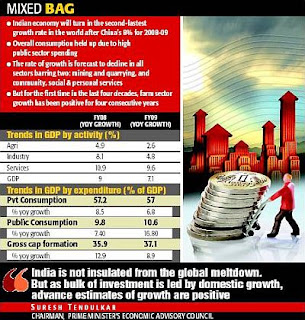
Just so that Devita knows, what she calls 'markets built on hype' aren't exactly the ones you see in a country like India. Private consumption is down, but not down and out. The decline in the rate of growth in private consumption is projected at 6.7% in the current fiscal from 8.5% the year ago (CSO estimates). That ain't drastic.

Also, Devita falls prey to the bias of 'representativeness'. That is, the assumption that the Indian urban buyer, works at an MNC or a Software firm, has had access to easy money and now is being forced to cut back on his shopping indulgences, is simply not true. That the average urban buyer surely could afford what he did in the past was simply because he worked at a company (MNC or otherwise) that sold whatever it is, to other Indian consumers. The salary he took home thus, was what he then went on to spend. And he spent it wisely too. In almost formats of retail, what's done well in India has always been the 'value-offer' from a 'value-seller'. Take cars for example, Its the 'Alto' that's always been the Indian No. 1, a true 'value for money' brand. Or FMCGs, the 'value for money' brands have come out trumps. Would that ever have been the case if the Indian Shopper had engaged in what's termed as 'indulgence'?

I fear the biggest fallout of this recession would be on consumer sentiment. People, cutting back on purchases, on speculating on a depressed economic future. That would be dangerous as it would then 'down' disposable incomes , down consumption and that cycle surely will lead to a catastrophe.

So instead of looking at the recession as a correcting mechanism, at least in India, it should be feared as a phenomenon that can depress consumer markets with repercussions that will send the economy into an even worse spiral!

Sphere: Related Content

Tuesday 10 February 2009

Amidst recession, the burger booms

AP: Cash-strapped consumers in the U.S. kept buying McDonald's burgers and breakfast items in January, helping the fast food company post a 7.1 percent worldwide increase Monday in same-store sales for the month.

The nation's No. 1 hamburger chain has been posting strong sales as the economic downturn in the U.S. spreads overseas and people turn away from pricier restaurants to grocery stores and fast-food outlets. In the U.S., sales at locations open at least a year rose 5.4 percent. The Oak Brook, Ill.-based chain said strong sales of its breakfast offerings and "value across the menu" boosted the U.S. results. Those results proved the 'recession-resistant' mantra is still strong, according to one analyst.

Sphere: Related Content

Value creation is a colloborative process

During times of economic downturn, when the consumer turns cautious, the best way to get him to spend is by delivering enhanced value. This may come in the form of lowered prices/discounts.

The lesson to be learnt in trying to do this, is that, the onus of this delivery does not just lie on the shoulders of the business entity (read, retail firm) that merchandises and sells the product in question. Instead the initiative must be driven by every business entity in the value chain.

Take the case of Aditya Birla Retail. As much as they are shutting down a few of their non-viable stores, they are also opening up new ones with a new format. The ones that don't face a shutdown are the ones that have their property owners willing to renegotiate rentals. A dip in rentals can help Aditya Birla run their stores with a lowered cost structure that could in turn render their retail operations viable. A store where the property owner is not willing to budge could be one that's shut down. The process of creating retail value for any retail customer lies equally in the hands of property owner as much as the retailer.

This is in stark contrast to what Subhiksha is facing. Several landlords who gave Subhiksha retail space have taken the discount retailer to court to recover rent allegedly not paid for months. I guess this may have happened because of their patience wearing thin at non-payments, but I also wonder how many of these landlords would have tried to sort things out for Subhiksha so as the keep their retail act from folding up?

Sphere: Related Content

Recession: Hayekian or Keynesian?

Read contrasting views, here and here.

Sphere: Related Content

Monday 9 February 2009

The 'Slumdog effect' in Branding

Two people I know, who've watched Slumdog Millionaire, and whose judgement I trust, have characterised the movie as an entertaining one. No platitudes like 'superb', 'extraordinary' or similar such terms were used by them to describe the movie.

Note what Bishaka Dutta has to say about the movie, 'I loved Danny Boyle's earlier film Trainspotting. But Slumdog Millionaire just doesn't cut it for me as a film.

What didn't work for me was the treatment; three things in particular.

The episodic construction: 33 horrors and a happy ending (Shit. Acid blindings. Child prostitution. Begging. Rape. And so forth. You get the drift...)The characters: cardboard and one-dimensional. (I've never seen a film before where every single adult is uniformly nasty, if not downright evil.)

The 'garbage tourism' feel, which some have called 'poverty porn': I have no objections to porn per se - there's good porn and bad porn. It all depends on the perspective. And on the treatment. The reason this has the touristy feel (as opposed to the travel feel, which is about curiosity, exploration and discovery) is because it is so singularly uncurious. If Edmund Hillary famously said he climbed Everest because it was there, this films a garbage can because it is there. But it doesn't do anything interesting with the garbage can. Yes, we all know begging, rape and child prostitution exist, not to mention acid blindings - but surely they need some treatment beyond, "They exist so let's shoot them."

Well, if the movie ain't an extraordinary one, why all the acclaim? Just yesterday, the movie swept the Baftas winning seven categories including best film and best director.

Slumdog Millionaire has had its tipping point. A point at which the first set of people (a Western audience) so gushed about the movie, their platitudes spread viraly, thick, and fast. What followed is what I term the 'Slumdog effect'. A state achieved by a brand due to its advocacy by its first set of consumers, wherein their platitudes ensured the rest that followed parroted what they had just heard. Remember the Emperor's clothes? No one thought it fit to say that the emperor was naked, except for a li'l boy. Slumdog will be praised, even by those who think it ain't an extraordinary movie, 'cos that's what everyone's expected to say. Imagine saying otherwise. You would be branded the country bumpkin!

Once a brand acheives a 'certain status' at the behest of its first buyers, subsequent consumers will confirm that status so they can conform to what is popular belief. This despite the fact that they may not have felt that status while experiencing the brand. Now why did the people who I trust tell me what they 'really' felt? Notice the word 'trust' in my earlier sentence?

Sphere: Related Content

Sunday 8 February 2009

Should morality guide Advertising regulation?

Listening to the discussion on 'Regulations on Advertising (on NDTV), I was surprised to find that almost all of the 'experts' on the panel seemed to agree on 'social morality' being used as the guide to dictating regulation.

I find the idea totally flawed. As long as no laws are broken, I believe all's fair! You may ask, who then regulates marketing communiques? The actions of the consumer, of course; not your, mine or society's sense of morality. What 'actions' am I talking about? Of course, consumption behaviour!

Marketing communiques must aid or abet in consumer purchases. If they don't, the marketer himself's gonna pull the plug on the communique'. Take an obscene Ad for example. Sure the, Ad may aid in brand recall but if it sows the seeds of negative attitude towards the brand due its obscene content, I can tell you, no consumer is gonna touch the brand, even with a bargepole. Piling up stocks in retail stores will then force the manufacturer to take a look at what's going wrong. When he finds its the Ad to blame, guess what's he gonna do? Throw the Ad and the Agency out.

Once again, lemme ask you, who was the regulator?

We don't need morality as a guide to regulation. Because no one knows what's moral and what isn't. And even if a society can't make up its mind on what's moral and what isn't, it scarcely matters when it comes to Marketing communiques. 'Cos the best regulator is the consumer himself. He and his consumption behaviour.

I rest my case.

Sphere: Related Content

Saturday 7 February 2009

The Obama Age beckons...

'The Age of Obama begins with perhaps the greatest frenzy of old-politics influence peddling ever seen in Washington. By the time the stimulus bill reached the Senate, reports the Wall Street Journal, pharmaceutical and high-tech companies were lobbying furiously for a new plan to repatriate overseas profits that would yield major tax savings. California wine growers and Florida citrus producers were fighting to change a single phrase in one provision. Substituting "planted" for "ready to market" would mean a windfall garnered from a new "bonus depreciation" incentive.

After Obama's miraculous 2008 presidential campaign, it was clear that at some point the magical mystery tour would have to end. The nation would rub its eyes and begin to emerge from its reverie. The hallucinatory Obama would give way to the mere mortal. The great ethical transformations promised would be seen as a fairy tale that all presidents tell -- and that this president told better than anyone.

I thought the awakening would take six months. It took two and a half weeks.'


- Charles Krauthammer, 'The Fierce Urgency of Pork'

Sphere: Related Content

'You give me something'

Sphere: Related Content

Engaging mass media communiques aid recall

As a part of their 'Women & Heart' initiative, Wockhardt hospitals had through media campaigns exhorted people to turn February 6 into a 'Wear Red' day; a day dedicated to creating awareness about heart disease in women.

I scanned my classroom yesterday to see if I could spot red. Sure enough, two of my students had red in their attire. When quizzed, they told me the red was incidental. On being asked if they were aware of the 'Wear Red' day and if they cared about it, both replied in the affirmative. Its just that they had forgotten all about it.

Brings me to my point. For a campaign to move the consumer to a state of unaided recall, it must engage them in manner where they initiate a 'move' from their side. I mean, they participate. Mass media if used in a manner where the communique remains a one-way street activity, with no opportunities of consumer engagement, in all probability the consumer would forget, to the extent he wouldn't recall the brand when it matters. Most low-involvements products get away with it, despite the fact that their communiques are one-way streets, because, at the store the product on the shelf turns into the aider of recall. Not so for someone like Wockhardt. Who aids the consumer to remember that February 6 is supposed to be a 'Wear Red' day? None.

That's why in my class, red was just incidental. Though it surely was, I must say, beautiful!

Sphere: Related Content

Thursday 5 February 2009

Teen time

'Where is it written that teenagers must necessarily speak to their parents as if we were pond scum or, worse, middle-aged adults? Everywhere, it turns out. Pick up a parenting magazine or Google the words "teen attitudes" and you'll find a million "experts" claiming that hormones, coupled with an age-appropriate desire for independence, understandably causes teenagers (and even tweens) to treat their parents rudely...

When parents feed that myth by consoling one another for enduring our children's teen years, we do our youths a disservice.

Instead, we ought to raise the bar of our expectations so that as they grow, they gain the maturity and genuine self-esteem that comes from treating others with courtesy and respect.
Do my teenagers make me feel lucky? Every day of my life. Just not because they refrain from talking to me like I'm a potted plant.'


- Marybeth Hicks, Teens Not With 'Stupid'.

Sphere: Related Content

The 'connect' & the 'divide' on Facebook

'Adults are all over facebook, which isn't quite what the kids had in mind. Call it the attack of the elders, call it cultural appropriation or just call it a rip-off. But isn't that how it always goes? Some kids in the ghetto start wearing their pants a certain way, and next thing the style has been branded by a fashion designer, and the industry is all gaga over it. Or someone coins an unconventional phrase, and it ends up a jingle for a TV commercial. At which point, needless to say, whatever edginess is lost.

My sons and I adore each other, but they've warned me not to try being their facebook friend, which would give me access to too much information. Ironic, when anyone else can "friend" them and see it.But that's OK, I've got my own "friends."

Facebook gives new meaning to the concept.'

- Rekha Basu, 'Facebook connects, but generations divide'.

Sphere: Related Content

Tuesday 3 February 2009

Clothes maketh the Professor?

Price cuts as much as they hurt are a must. That's the only way out to get the consumer to loosen his purse strings so a few pennies tumble out. Oh, and yes, that goes for the 'designer stuff' too. Every morning listening to FM Radio, I am greeted by Indian fashion designers talking about a 'sale' at some swanky designer clothing store in Bangalore. They keep harping about the 'sale'. Don't blame 'em, after all, some one's gotta buy!


This story ain't just in India. Its across fashion capitals of the world. Shunned by scrimping shoppers amid rising unemployment and fears of a long, deep recession, retailers across the board have cut profit forecasts and marketing budgets. Even larger luxury goods groups are feeling the pain. Richemont, the Swiss firm behind Montblanc pens and Cartier watches, announced earlier this year it saw no signs of a recovery after third-quarter sales missed forecasts.

Magazine publishers from Conde Nast, which owns Vogue, to Time Inc are seeing advertising sales dive, and the New York Times has said it expects sales to deteriorate further. At the January fashion shows in Paris and Milan, a prime advertising opportunity for luxury brands, designers hired fewer models than last year. Models and agents are feeling the pinch.

What can I say? I guess its time for non-fashionistas like me to go get some decent clothes. But, then again, would it make a difference? :)

Sphere: Related Content

Will Consumers abandon the Mermaid for the Clown?

The worst nightmare of a premium brand is a value player entering into its space with an offering as good, if not better, at lower prices.


The question that begs to be answered is, will consumers abandon the Mermaid for the Clown? Most reports seem to indicate in the affirmative. McCafes now seem to have not just a cheaper speciality coffee drink, but one that also tastes better. This is what Maudie West, an 86-year-old resident of Kansas City has to say about the Iced Mocha at McCafe, "I just absolutely love them. They're much richer-tasting than Starbucks."

Now how does Starbucks take on such a competitor? Should it lower prices? Should it get better at its beverages? The answer to the former, No, the latter, Oh Yes! Does that mean Starbucks must never get into 'value' offerings? Not necessarily. It can, as long as it spins that business off as an offshoot of the 'original' Starbucks. This is so that the original equity remains intact. After all the recession ain't here forever.

Going ahead, will the going be tough for the Mermaid? You bet!

Sphere: Related Content

Monday 2 February 2009

The mark of 'care' is sacrifice

In services, consumer loyalty can only be the result of an overwhelming (in a good way, of course) experience. Consumers are most often 'touched' when they see the service provider try and provide for something outside of what's deemed 'normal'. Consumers are 'overwhelmed' if they see a service provider 'sacrifice' his own comfort, go out of the way, to help. Most often than not, if it were to happen, an ensuing loyalty to the service provider is a guarantee.

The greatest mark of caring is sacrifice. The greatest exhibition of love is sacrifice.

Note what Eli Bernstein has to say about a man who he once thought was a 'stupid stooge who was undeserving of power';

'In the Middle East and throughout the world, freedom is on the march.” His ally John Howard backed this view up when he stated that “these things wouldn’t have been thought remotely possible a year ago and I have no doubt that … one of the reasons … was the overthrow of Saddam Hussein.” Even old foes like Walid Jumblatt, the leftist Lebanese Druze leader, shared the view: I was cynical about Iraq. But when I saw the Iraqi people voting three weeks ago, eight million of them, it was the start of a new Arab world. The Berlin Wall has fallen.

The Berlin Wall has fallen once again while your news reporters were looking the other way, counting body bags in Iraq and actively embroiling themselves in partisan politics. And so I bid farewell to the man who sacrificed his legacy to protect America’s greatest asset, freedom and democracy. Ironically, he had become the defender of the asset I had once accused him of robbing.'

Sphere: Related Content

The dirty li'l secret about Capitalism

'But here's a dirty little secret about capitalism: consumers, not corporations, run the show. If you find something about the marketplace objectionable, it would be more appropriate to blame those who actually call the shots: the ruthless, cutthroat, and disloyal American consumers.

Don't believe it?

Ask a large corporation, Coca-Cola, about the power of consumers when it introduced "New Coke," and the product promptly flopped. Then talk to the owners of the more than 600 Michigan businesses that filed for bankruptcy in 2001 and ask them who controlled their destiny? Then visit the International Supermarket Museum in New York, and view the 60,000 products that have failed in U.S. supermarkets, a convincing testament to what economists call "consumer sovereignty."

Consumers are the kings and queens of the market economy, and ultimately they reign supreme over corporations and their employees. When corporations make mistakes and introduce products that consumers don't want, which happens frequently, you can count on consumers voicing their opinions forcefully and immediately by their lack of spending.'

- Dr. Mark Perry, 'Consumer, Not Corporate, "Greed" Is Ultimately Behind Layoffs.'

Sphere: Related Content

Can Brands manufacture credibility?

As much as Sugata Srinivasraju scores a point when he states,

'This manufacturing of credibility is comparable to the meticulous exercise of branding that takes place all the time around us. If you buy a branded shirt, the belief is that you'll never find the stitch overlapping or its colour bleeding. If you buy a soft drink produced by a multinational company you are not supposed to find pesticide residues in it. If you break the chocolate bar of a reputed company, you can be assured that there will be no worms embedded. If you go to a speciality hospital, the doctors will always remember to take the scissors out before they sew up your stomach on the operation table. What branding does is it pushes you to blindly consume without constantly verifying truth, while truth is something that needs constant interrogation. Branding also clouds reality. For instance, the moment you brand Bangalore as an 'IT City,' you tend to erase the existence of other cities inside this seemingly single city and forget people who live outside the ambit of the hi-tech industry',

he misses out big time, I'm afraid, on a 'branding point'.

Sure, Branding may blind you, but it ain't absolute, total blindness. In fact it is with varying degrees that we a turn a blind eye. And that 'varying degree' is dictated by what we term in Consumer Behaviour, the 'level of involvement' with a purchase. The greater that level, the lesser the blind eye.

Consumer's involvement with products and services purchased, in turn, is dictated by their perceived risks associated with that purchase. The greater the risk, the greater the involvement. So I may be blinded by the Soft Drink brand, but I am definitely keepin' an eye out, when I wash that expensive branded shirt, to see if the colour runs. And if it does, that shirt's never gonna adorn my torso!

Brands don't necessarily blind people all the time, though I admit, at times they do. Brands make it easier for consumers to make choices about products and services they wanna buy. If it weren't for the brands, I wonder if I could ever be able to sink into that favourite chair of mine and watch the epic battle, that I did, between Roger and Rafa yesterday. I would've been busy ruminating about those umpteen things I needed to buy, just so that I could have a move on with life.

Oh, and by the way, when Sugata talks about Indian firms 'manufacturing credibility', I agree, Lock, Stock and Barrel!

Sphere: Related Content

Sunday 1 February 2009

In rantin' yer missin' the Marketin', mate!

For all those rantin' against Arindam for his controversial article on Slumdog Millionaire, I got some news. Yer missin' the Marketin', mate. If you care to know, I'll tell you why.


Of foremost importance to any brand is to always remain in consumer memory. But then, consumers don't wanna remember you, period! Despite all your Cleo winning Ads and commercials, consumers are 'trained' to ignore you. And it ain't rocket science, why. 'Cos they don't care about what you wanna sell. But then, there are times when consumers remember, and they do so as they seek out the marketer communique themselves. Its an act termed, 'Active Learning'. Information gathered through active learning is remembered as it reaches the consumers long term memory. Not so when it comes to advertising, where learning is passive and information fades away from the consumer's short term memory.

I too don't agree with Arindam's view. But the difference is, that I ain't rabid in my opposition and so I can spot the marketer behind the article. It doesn't matter what he says. What matters is how people take to what he says. And people have taken to what he's said. Either they agree or they've gone berserk. Even the media around the world has picked up on what Arindam's said. That's what Arindam wants. Keeps him and his endeavours alive in the minds of people around. Sure the ones that went berserk may not have any positive inclination towards the brand. Yet, tell you what, the next time Arindam writes an article, they will be among the first ones to read and then repeat the rant. Funny, but true.

Marketers out there, take note. Don't let the rantin' blind you to the Marketing that's evident in what Arindam does. Instead, observe, and I may even venture to say, Learn!

Sphere: Related Content