Monday 30 November 2009

Fiction fuels Reality

'First of all, most fiction is not just fiction, and this is certainly true of Twilight. Fantasy aside, fiction still communicates ideas, values, and messages, and these in turn, affect the day-to-day activities of readers and movie watchers. Throughout The Twilight Saga, both Edward and his family, and some werewolves too, are depicted as living absolutely awesome, exciting lives. The "coolest" thing is that they all have specials powers beyond average mortals. It is this lure of power, and the promise of it, that tempts real teenagers and adults today to explore the mysterious world of occultism.

They're doing it now, in record numbers.

- Steve Wohlberg, 'The darkness of Twilight: Hidden perils behind today's vampire craze'.

Sphere: Related Content

Is Brand avoidance anti-Brand?

Brand avoidance supposedly is a phenomenon where consumers choose to stay away from established brands, to move to a 'local' establishment even if the 'movement' means a rise in price. Its so done as consumers are beginning to 'worry about the larger social and economic impact of brands'.

Does that mean we are seeing the beginning to the end of brand domination? This should have Naomi Klein delirious with joy. But I say, bunkum. Consumers don't care for anything other than themselves. The supreme quest for any consumer is to maximise personal payoffs through acts of consumption. And just so you know, there's nothing wrong with it. In fact, its their love for themselves that's good for society in general, because it propels consumption. Consumers spend, so they can better themselves, in turn generating income for others to spend.

Consumers moving to 'local' shouldn't be looked at as an anti-brand act. Instead it should seen as a lesson to brands that their duplication of a standardised format breeds fatigue. It makes consumers seem as if they are part of a faceless, nameless herd that tramps into such formats. It seems to them as if there's a loss of identity.

The cycle of brand to non-brand to brand is only to be expected. Right now in the US, its brand to non-brand. In developed countries, brands have hit the 'fatigue' wall. Not so in developing countries where brands are making their entry. The 'move' in such places is non-brand to brand. Brands are sought. Non-brands are abandoned.

Its like what's happening to malls. In the US, they're kickin' the bucket, in India, that's where everyone is.

Sphere: Related Content

Sunday 29 November 2009

Throw the boor offstage

Alphy flipping channels, with me taking a peek saw the screen fill up with an award function. Cyrus Broacha seemed to be in charge of 'announcements'. The supply side scarcity that I mentioned in the post below seems to be true for comedy too. In India

The guy is worse than horrible. But I guess he gets away with his brand of disgusting humour thanks to the concept of 'supply scarcity'. Guess we have only the likes of such boors around. But then again, I take comfort in the fact that I have the POWER! To change channels. To log on to SNL online and watch what I call real comedy.

I wish more Indians do that. Because then we can finally throw the boors off stage.

Sphere: Related Content

'Regulated' Quality ain't 'real' Quality

That the servers crashed on the first day of the CAT shouldn't come as a surprise. After all, Murphy's law has a way of sneaking in. But the fact that there is still a horde of aspirants (note, there's been a drop in CAT registrations this year) looking to get into the IIMs should be of concern. Because it points to an artificial supply side scarcity when it comes to Post Graduate business education in India.

In defence one can say that the 'horde' is a pointer to top quality education services being offered. But tell you what, in a regulated environment, competition-driven quality is hard to come by. The 'quality' available for purchase is thanks to government driven regulation. In fact, the ones that rule the roost do so in manners, unchallenged.

Change that and you will have even better quality to products and services for consumers. That includes Post Graduate business education. And for once there won't be the hordes 'pining' to write an exam, and surely, there won't be a media screeching about server crashes.

Sphere: Related Content

Saturday 28 November 2009

Dept. of No Energy vs. Mark Levin

Sphere: Related Content

Is the Shorba thin, or grainy?

'The Dal Shorba, which came first, was refreshing but once I began sipping on it, a bit of the grainy texture typical to pulses hit my palate. I reckon they could have made it a bit thinner for the right consistency'.

Well, that's a food critic writing in DNA newspaper about the soup served at Lobby Cafe in Bangalore. So, should the shorba go thinner?

I think not. Drop it any thinner and you will have idiots fuming as to why they have to pay a bomb for flavoured water. This is classic 'food dilemma'. Should the shorba stay grainy, upsetting the likes of a food critic, or go thinner, risking being labelled gutter water?

The answer is, the critic and idiots can got to the blazes. So can 'purist' authentic food. It ain't about either of them or about authenticity. Its about who your target consumer is and what he wants. If he wants the damn shorba thin, oblige. If he wants it grainy, repeat the former.

Critics are paid to say what they have to (or maybe they aren't). But I can tell you, they haven't the foggiest of idea about how products and services are sold. In the 'real' world, what sells, is what customers want. So figure that out and give it to them. Even if it means doing the 'classic' shorba to death!

Sphere: Related Content

Parallel Universes

'Fakery and chutzpah, ruthlessness and greed, made an amazing emirate and a £30-million human brand. Both dazzled, confused and glinted with moral ambiguity. The world approved of neither, but at least they were better than the alternative. Dubai was built by migrant Indians and Bangladeshis, virtual slaves, passports confiscated, living in distant labour camps, who frazzled and fainted with heatstroke off the sides of the Sheikh’s skyscrapers...

Dubai is to freedom what Jordan is to feminism. She might represent the worst excess of porn culture, a sad and sordid role model for womankind. But you can’t deny she’s rich. She’s one sister who’s done it for herself...'


- Janice Turner, 'Jordan and Dubai, parallel universes collide'.

Sphere: Related Content

China in your hand

Sphere: Related Content

Friday 27 November 2009

Look the part, Learn from a stumble

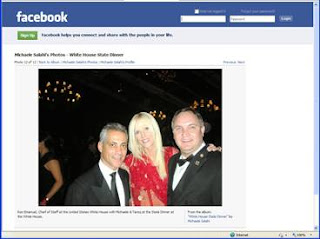
I think it funny. I guess, others think so too. That a couple of aspiring reality-TV stars from Northern Virginia crashed the White House’s state dinner Tuesday night. They got through layers of security with no invitation, to mingle with the likes of Vice President Biden and White House Chief of Staff Rahm Emanuel.


Smart. Funny too.

The lesson in their 'breakthrough' is twofold. One, that if you appear classy and confident, the best are fooled and convinced that you must be someone big. That you should be let through. Two, even the best systems in the world are susceptible to a clever someone who knows exactly how those systems work and react to 'incidents'. The clever uns know if they play the 'pretend' part to perfection, systems lose their ability to detect something's amiss. Of course, in the long run, fake will be out. But till it lasts, its so much fun.

Brands too must always put up that 'confident face' to consumers. If brands appear the part, consumers believe. Again, I am in no way suggesting that its enough to get the 'appearance' right and fail when it comes to product evaluations. What I am emphasising is, its important to get perceptions right with consumers.

Brands must also know that mavericks (read, a consumer or a competitor) may emerge out of the woodwork to upset their applecart. Its wise then to leave the maverick be, and to learn from the stumble, to strengthen the system. Going after the 'deviant' would mean bad press. Staying quiet and learning, is the better option. Its best for Apple to leave its iPhone hacker kid alone. Taking the legal route only makes Apple look bad and kid look the victim.

Summing up, these are the lessons. Look & Learn. Look the part. Learn from a stumble.

Pic: msnbc

Sphere: Related Content

Then & Now, and Toys

'Personally, I think a child needs two dolls - so that they can go on adventures together - a pencil, and a notepad. That's it. Everything else is decadent Western corruption. When I was a child, we made our own amusements: drinking vinegar pretending it was whisky, flooding the garden with a hose, spitting contests. Punching each other really quite hard. Permanently mentally disturbing each other with constant, low-level psychological warfare. We didn't have Hannah Montana wigs, or Pixel Chix, or, or ... Puppies In Our Pockets. We made bows and arrows out of Rosebay Willowherb (that were rubbish), glue out of flour and water (that was wholly ineffective) and papier mache objects that, for some reason, never really dried out, and rotted on the windowsill, emitting horrible, oddly turnip-y odours.

That's why I want to - throw all the kids toys away! Genuinely. Well, everything except the Polly Pockets and Barbies, which they play with very nicely, and the dollshouse, which Dora has recently re-wallpapered very nicely. Everything else - off to the charity shop. There's so much that the kids don't have a clue what they've got, and it's always all over the floor. If they only had three things each, they could just neatly place them on an otherwise empty shelf at the end of the day- like Laura Ingalls Wilder used to, with her paper dollies - and the house would, finally, be tidy.'

- Caitlin Moran, 'These kids have TOO MANY SODDING TOYS'.

Sphere: Related Content

Thursday 26 November 2009

Our Thanksgiving

'This is the day which the LORD hath made; we will rejoice and be glad in it.' (Psalm 118: 24)

Happy Thanksgiving Day!

Sphere: Related Content

Give, to one who doesn't seek

'There is one more duty...that I ask of you before you go home.

What would you have me do, Caesar?

I want you to become the protector of Rome after I die. I will empower you to one end alone---to give power back to the people of Rome...and end the corruption that has crippled it. Will you accept this great honor that I have offered you?

With all my heart, no.

Maximus...that is why it must be you.

But surely a prefect, a senator...somebody who knows the city, who understands her politics.

But you have not been corrupted by her politics.

And Commodus?

Commodus is not a moral man. You have known that since you were young. Commodus cannot rule. He must not rule.'

That's Caesar asking Maximus to shoulder the responsibility of giving Rome back to its people, in the movie, 'Gladiator'. The exchange is a brilliant demonstration of why someone who doesn't seek power should be the one entrusted with it. Its the very lack of lust for power that made Maximus, in the eyes of Ceaser, the one to be entrusted with it.

In the business world too, when it comes to a single minded focus on consumers, brands must be entrusted with people who are dogged in their pursuit of creating value for consumers. The stakes that they have close to their heart will be the brand's, not theirs. Which means they will do whatever needed, to make the brand matter to its consumers.

Consumers alone.

In organisational terms, that would mean acquiring resources and building competencies that translate into consumer value. Everything else is non-value add. Now in no way am I suggesting that this be an activity bereft of emotion. I am only saying, this be an activity that's led by someone who isn't on a trip of self-satisfaction. That it be someone who's focused instead, on Customer satisfaction. Because the latter's what keeps businesses and brands, alive and kicking.

Sphere: Related Content

Lest we forget

Remembering the lives lost on 26/11.

Sphere: Related Content

Why mind matters

I've always been one who's believed in 'consumer sentiment' and how that has an impact on consumption patterns, which then have macro repercussions.

Note an earlier post, 'I fear the biggest fallout of this recession would be on consumer sentiment. People, cutting back on purchases, on speculating on a depressed economic future. That would be dangerous as it would then 'down' disposable incomes, down consumption and that cycle surely will lead to a catastrophe.

So instead of looking at the recession as a correcting mechanism, at least in India, it should be feared as a phenomenon that can depress consumer markets with repercussions that will send the economy into an even worse spiral!
'

Niranjan Rajadhyaksha, writing in HT Mint reinforces the importance of understanding the workings of consumer minds and its implications. He writes;

'Another recent provocative piece on a similar issue is by Paul De Grauwe of the University of Leuven in Belgium. He argues that economists could not anticipate the financial crisis because they made extraordinary assumptions in their macroeconomic models about the cognitive abilities of human beings. Modern psychologists and behavioural economists have shown that humans can understand bits and pieces of the world, and hence depend on simple rules or heuristics to make choices. Correlations in such beliefs tend to create waves of optimism and pessimism that we see above all in the financial markets.

But standard economic models assume that humans are perfect calculating machines. De Grauwe calls for a bottom-up macroeconomics. “The bottom-up model has agents who experience an informational problem. They do not fully understand the nature of the shock or its transmission. They use a trial-and-error learning process aimed at distilling information. This process leads to waves of optimism and pessimism, which in a self-fulfilling way create business cycle movements. Booms and busts reflect the difficulties of economic agents trying to understand economic reality,” he says. In this way of looking at the world, economic cycles are caused by endogenous factors rooted in human cognitive limitations.'

Read Niranjan's complete article here.

Sphere: Related Content

Tuesday 24 November 2009

Credibility Sells, so does Cute


I can’t help but feel proud when I hear and watch Dr. Manmohan Singh talk at the White House. Here’s someone who’s the finest specimen of a thorough gentleman. To me, Dr. Singh epitomizes what a leader should be. In fact, according to me, he’s the best we’ve had as Prime Minister, since independence.

But what interested me even more at the bilateral talks I witnessed, was the contrasts in the two men involved. Both hold top jobs in their respective countries. One’s the President of the United States and the other’s the Prime Minister of India. Both are study in contrasts. Especially for the reasons behind their respective rise to the top.

To understand this contrast better, one has to look to the concept of brand endorsements and how the choice of endorsers is the key to building right brand attitudes. Let me explain. If the brand in question provokes lower levels of ‘elaboration’ on the part of consumers, the endorser must be one who’s highly attractive and so can garner ‘identification’. With him. Thus, with the brand. If on the other hand, the brand drives high levels of 'elaboration', the key’s to get consumer to ‘internalize’ the message. This requires the endorser be highly ‘credible’.

Let me illustrate. If it’s a soft drink you want to sell, and the target audience is youth, rope in an attractive celebrity. The star in the message (read commercial) gets the young viewer to identify with him/her, which in turn leads to the right attitude being formed towards the soft drink brand. On the other hand, if what you want to sell is an automobile fuel pitched as one that gives extra power, it’s important you get a race car driver in the Advertisement. Because the racer brings with him credibility when it comes to talking about fuels. This credibility then provokes ‘internalization’ of the message. Which leads the biker to believe the fuel’s good for his mo’bike.

Attractiveness leads to ‘identification’. Credibility leads to ‘internalization’. Both help build the right attitudes towards brands, thus help in a sale.

Barack was sold to a voting audience on an ‘attractiveness’ plank. A community organizer with zero executive experience is no good as a president. Yet, Barack won. Because his long winding gas bag speeches delivered with panache mesmerized air-headed liberals and college going youth. They ‘identified’ with Barack. Voted for him and gave him the top job.

Manmohan Singh’s a contrast. He sold on ‘credibility’. His present and past is near spotless. It shone for the dignity and decency with which he lived both his professional and personal life. And so when Indians voted Congress, they partly voted for the man who was most credible as a politician. What he said, they ‘internalized’. Then voted, for him, and his party.

Both Barack and Manmohan won, albeit for different reasons. One for cute, the other for credibility. One because of ‘identification’, the other, for ‘internalization’.

Sphere: Related Content

The Psychology of Warranties

'So why, asks a paper published in the December issue of the Journal of Consumer Research, do so many consumers still buy extended warranties?

... They concluded that the decision to buy a warranty had a great deal to do with a shopper’s mood.

If a customer is about to buy something fun (ie, a plasma television rather than a vacuum cleaner), he will be more inclined to splash out on extra insurance. This is because consumers value “hedonic” items over utilitarian ones, regardless of the actual price tag. This is especially true if the item is on sale, as finding an unexpected bargain leaves buyers feeling flush and pleased. The study also found that poorer consumers are more likely to buy “potentially unnecessary and overpriced insurance”, because they are more worried about the expense of replacing a product if it breaks.

The popularity of warranties should logically depend on the likelihood of a product’s failure, says Mr Kalra. But although most policies go unused, he admits that the emotional tranquillity that comes with buying a new warranty is not in itself without value, even if “rationally, it doesn’t make sense”.'

- 'The psychology of warranties' (Economist)

Sphere: Related Content

Monday 23 November 2009

Image is Everything, almost!

I surmised it was the Hobson's choice for her. An image or none. And I thought for a successful corporate career, it had to be the former. At least to make it past the first set of assessment tools, namely the Group Discussion and Interview. But then there's a tinge of remorse for my recommendation. Because I told her, a change in image would mean changes in exhibited personality. It would mean a stronger tone for the voice, a stiffer body language, maybe even piling on a few more pounds. Recommending the superficial doesn't come easy to me. But then again, the consolation is a greater possibility of a job offer.

Some people are born with a physical form that's great default material for the 'right' image. Some aren't. Some among the former make best use of it and appear on silver screens. Many cheer. Many swoon. And riding on the adulation they go on to advise us on how we must live our lives, when they themselves walk deviant lines.

The latter, sans great physical forms get advised on piling on the pounds, strengthening their tones and so on.

Some products too have an advantage of default stimuli that contributes to a 'right' image. For example, the parent country of the product. If its consumer electronics and the manufacturing firm's Japanese, perception's positive. Engineering and Germany go together. Precision and Switzerland are bedfellows. But what if the Electronic or Durable good's Korean? What about Korean cars? Tell you what, at one time that would have been a drawback. Not so today. The Koreans have topped the Japanese, the Americans and Germans. It surely was harder for them, considering the 'country of origin' effect they were susceptible to. Yet they made it. They got to the top. Kudos to them. Kudos to the likes of LG, Samsung and Hyundai.

Now, back to what I started with. I know, it will be difficult for her to get the tone, weight and body language right. But if she can, and I know it can be done, it would be like what the Koreans did. She'll beat the Hollywood types.

And I for one, will be pleased.

Sphere: Related Content

As always, 'Old Wine, New Bottle'

'Actually all assertive messages in the media that seek to relaunch a backward area as a newly arrived miracle require a serious rethink. Relaunching anything from a flagging product to a failing state in India, mostly turns out to be an exercise in pouring old wine in attractive and expensive new bottles by clever copy writers.

Flights to all state capitals today carry tieless, fast-talking young ad agency reps, summoned to devise a saleable product relaunch. They then congregate to enact an expensive ritual behind closed doors in the best hotel in town, also known as a “presentation”. Despite their utter lack of ground knowledge or of the local languages, their presenters deliver hypnotic sermons in English, to an audience of Hindi or Bhojpuri or Maithili-speaking clients in all high seriousness using mysterious abstract terms such as— “brand identity”, “brand value”, “market share” and “core value”, just as the wily Brahmin priests once used terms such as swaha, swadha and namo namah!

The clients, by now happily soporofic after the substantial “working lunch” that must accompany each ritual in India, are usually quite pleased with the linguistically enhanced and flattering image of themselves and so the “relaunch” package is okayed. The success of bagging such contracts hinges on how convincingly the client’s goals can be made to “look” like a radical departure from their predecessors, even though substantially they may be no different. And how can they be, given the specific caste calculus and financial compulsions that drive state government formation from Chandigarh to Patna?


- Mrinal Pande, 'Rethinking relaunches'.

Sphere: Related Content

Sunday 22 November 2009

Rebel to Reckless is a thin line

According to publisher HarperCollins, Sarah Palin's memoir sold 300,000 copies its first day, among the best openings ever for a nonfiction book. Pretty impressive considering it even topped first day sales of Hilary Clinton's 'Living History'.

Its only fair to assume that the Palin book will remain on the bestseller list for some time to come. To me, this is the 'real' launch of brand Palin. The earlier exposure of Palin to America and the rest of the world can at best be called an 'introduction'. One that didn't go down well with many. As much as well with many others.

Hence on, its a different ball game. This is Sarah Palin's 'blockbuster' entry into mainstream politics. Its bound to get tougher with greater scrutiny. And for Sarah Palin to come off it looking like a Presidential nominee, will require as much of managing perceptions as being who she really is.

Its best to remember that most judgements are made on perception. Not reality. Else, why did a community organiser get elected president? So its important Palin manages perceptions well. I for one, admire everything she stands for. But I don't make the voter population. Palin's connect with conservatives is pretty much established. Not so with fence-sitters who take time to make up their minds. To hit it off with them, one thing's crucial. Palin can be the 'anti-establishment rebel' (read, maverick) but must never get smeared as 'reckless'. Its a thin line between rebel and reckless. Rebels question Status Quo, which is good. Reckless on the other hand jeopardise status quo, which isn't acceptable. Voters would rather have status quo than put it to jeopardy, even if it means living with something that isn't hundred percent acceptable.

How Palin manages her image will depend on how carefully she chooses and manages her public engagements. Where and what she talks will be of utmost importance. Note that Obama got college going nitwits eating out of his hand simply through long-winding gas-bag talk that sounded like it was the heralding of universal nirvana. Of course, that isn't a recommendation. But Sarah will have to get her 'talks' right. Oprah was a good start. My gut tells me this time around Palin will be more cautious and choosy.

Certain business brands too hit public consumer spaces as mavericks. Which is very well. Because that gets them an audience. Take Nando's chicken based in South Africa, for example. Wacky and irreverent they elicit grins. Its worked for them. Contrast that with Brand Mike Tyson. It was his 'hell to high places' story that almost made him boxing legend. But then came the breakdown. Rebel turned reckless, even pathetic. And now, I am not sure if people care enough to even want to know how he's faring. Though I must add, the Oprah appearance with Holyfield may have helped.

Its a thin line from rebel to reckless. Maverick to rabid. Mass following requires brands stay on this side and not the other. For Sarah Palin, the test for the future will be one which requires she keeps the rebel tag alive without going too much 'rogue'.

Sphere: Related Content

Saturday 21 November 2009

Dawkins gets a taste of Divine Justice


Now Prof. Dawkins and the Humanists' ambition in life may be to 'push' people as far away from God as possible. And so they do what every other brand does. Use Marketing communiques. Though I must add, unlike Dawkins, brands look to creating a 'pull'. Dawkins through his communiques tries to tell people to keep kids off religion and let them choose for themselves.

Call it divine justice (The Prof. would call it an unhappy coincidence), or whatever, the kids featured in the Dawkins Poster happen to be Christians. The idea was to get kids who look happy to be featured on the poster. Unwittingly, the pictures of the 'happiest' of kids (Charlotte, 8, and Ollie, 7) turned out be pictures of kids of a former drummer of a popular Christian band.

Note what the dad, Brad Mason had to say, “It is quite funny, because obviously they were searching for images of children that looked happy and free. They happened to choose children who are Christian. It is ironic. The humanists obviously did not know the background of these children. Obviously there is something in their faces which is different. So they judged that they were happy and free without knowing that they are Christians. That is quite a compliment. I reckon it shows we have brought up our children in a good way and that they are happy.”

Beyond what I would call divine justice, there's a marketing lesson. That if you aren't careful in crafting your communiques, you may end up promoting the exact opposite of what you intended to.

Dawkins tries to take people away from God. But anyone reading the news story on his 'poster bungle' may be tempted to consider the faint possibility that God may have had a hand in the 'bungle'.

Sphere: Related Content

'All I need is a Miracle'

Sphere: Related Content

Friday 20 November 2009

Why its Sniffles for me, not the Rumba

The sniffles I've had for what seems like an eternity is getting worrisome. A fever seems to be round the corner. Looking back, I have only me to blame. After all, this is sniffle season. The onset of winter brings along ailments that are all too common. Its a pity I didn't take the right precautions when the transition happened. From higher to lower temperatures. From dry weather to one heavily laden with atmospheric moisture. In fact, I now know its the wobbly transition, that is fluctuating temperatures and weather that did me in

Transitions are difficult times. For it needs a shedding of the old for a new. What worked for the 'old' now has to be abandoned for what is necessary in the 'new'. In my case what was important was a change in clothing that could have warded off the incoming cold.

For Businesses too, transitions are difficult times. And transitions come in varied ways and hues. For example, a business could face a transition in terms of a changing demography. An aging populace could be replaced by young uns. This means business models will have to be tweaked. The conservative store that you had, will now have to be done with one bursting on colour and product types. Where once you had coffee being served, cappuccino makes an arrival. Where once you had toned down lighting, the store's now big on neons. Shut down the soft piped music. Let sounds boom.

Another transition could be in terms of technology. And this has happened once too often. The arrival of Internet, for example, revolutionised the way business was done. This added interface radically changed the way customers were engaged with. The Amazons, Ebays, Paypals, Googles, Pricelines, Drudges made it big. Because they understood and capitalised on the transition.

Transitions can also be driven by a change in political philosophy. Socialism giving way to hesitant capitalism changes a business landscape. Like the way it did in India. Soon you have competition like never before. Consumers have choices they never had and their bargaining power skyrockets.

Businesses that can't handle transitions that sweep their industry, like me, soon are bound to fall ill. But the ones who see it coming, and prepare for it, can ride the transition in a manner they emerge unscathed. They even come out of it, raring to capitalise on new opportunities that the new climate brings. The Tatas, Bajajs, Birlas are good examples of companies that rode the 'socialism to capitalism' transition well, in India.

On a personal note, if I'd been a bit wiser, rather than nursing the sniffles, I'd be navigating the dance floor doing the rumba.

Sphere: Related Content

Thursday 19 November 2009

Boon n' Bane in Vertically Challenged

Being 'vertically challenged' has at times been a problem. But at other times its such a blessing. Like when I was young, some girls thought it cute. But now that there's 'greying at the temples', and 'perking up at the sides', cute's out.

Hold on. Comfort's in.

Travelling out of Cochin by train last night saw us huddled on what's known as the 'side' seats. The ones reserved for us was Side-Lower and Side-Upper in the compartment. Now I guess the railways didn't have any basketball players in mind when they came up with these seats. 'Cause they wouldn't fit. But Alphy and me did. Barely. Thanks to the 'vertically challenged' state I was talking about.

So much for 'short' perks.

What's interesting is, at times for brands too, not 'standing tall' (read, minimal marketing communiques) stands in good stead. Here's how. One, it keeps the attention of the biggies in the market, off you. And two, you are left to your own consumer audience that could turn loyal. They may even stick by you, should the going get rough. Take the magazine, Reader's Digest for example. Compact in its look and presentation, RD remains strong in its circulation figures worldwide. Though I must add, in the US, its filed for bankruptcy. But according to Walter Beyleveldt, the managing director of Reader's Digest Australia, "The filing is a balance sheet adjustment. It's a financial transaction rather than something that relates to the core running of the business. The actual health of the business is strong. The magazines and ad revenues continue to be strong. Overall the company actually posted only a 2 per cent decline in total revenues year on year."

The scene's grim for most print publications, at least in the US. Amidst such impending ruin, the likes of RD, though hit, will continue on. Goodness as they say, comes in li'l packages. And I say, such goodness must find ways to hang on. After all, we'd be better off with it, than without.

Sphere: Related Content

Wednesday 18 November 2009

Its the system, stupid!

The David Headley affair in India has been a worrying one. To have an LeT operative roam the streets with impunity surely sets off alarm bells. Yet the response of the administration to its aftermath reminds me of similar responses, in the organisational context. How most organisational administrative systems respond to crisis.

The response almost always is focused on the outcomes. Never on the 'root cause'. That is, the mad scramble by the authorities, post the Headley fiasco, has seen them target the 'usual suspects'. Business places he visited (read, cyber cafes, health clubs, hotels) and people he engaged with (read, at places he was at). Now I am no expert at investigations, but common sense tells me if a suspect were to roam the streets with legitimate documentation that bails him out, how are business places and people supposed to know he's the dangerous kind?

The 'real' problem lies deeply embedded within failures in the intelligence and law enforcement community. Systems or people messed up. And they must be set right. Trying to increase vigilance at a social and business level is a good thing, but that isn't where the core problem lies.

In organisations too, the above mentioned practice is rampant. A crisis is almost always succeeded by a bout of fit that sees most, except the perpetrating system administration, being admonished. I remember while at the hotel I used to work, almost two decades ago, there was this incident regarding a customer complaint on coffee. Coffee, from the customer complaint, seemed to have been served lukewarm. In response, the Food & Beverage management jumped to the conclusion that it was the serving stewards at fault. And so all the F&B Department personnel were ordered to undergo a training on coffee and how to prepare it. Little did the ignoramuses at the top of the F&B administration realise that coffee wasn't being served lukewarm, because the steward was screwing up. It was because of a variety of other reasons. One, the decoction used in coffee preparation (constituting 15% of the prepared coffee) was kept lukewarm in double boilers in the kitchen. Two, the milk and coffee pots used in the service of coffee would be made of EPNS which when kept in the pantry, would turn deathly cold when not used. Therefore when the lukewarm decoction and the hot milk were poured into these EPNS pots (when there's an order), temperatures automatically dropped further. Three, the distance between the kitchen area and the restaurant, though not much, meant the steward had to walk some distance to reach a guest table. In an air conditioned environment such walks are again responsible for drops in coffee temperature.

All of this meant the steward wasn't at fault, or even if he was, his role was negligible. To arrest coffee temperature declines the administration had to look elsewhere. Just like, to arrest a Headley scenario from repeating in the future, a hard look has to be taken at intelligence and law enforcement systems in India.

Because that's where the problem lies. And should such comprehensive analysis be undertaken, its akin to what's known as 'Root Cause Analysis'. A must in preventing the present from playing out in the future.

Sphere: Related Content

Tuesday 17 November 2009

The limits to a Regional Identity

There's a marked difference between regional brands and niche ones. Before I get to what sets them apart, let me state what makes them similar. Its just one count. Both attract a limited audience.

Regional brands play into geographic variables and appeal to consumers of a particular region. That's what limits their appeal. Their choice of geography as a variable. Not so for niche brands. What limits them isn't geography. Instead its income, lifestyle and other such socio-economic variables. This in effect ensures their appeal cuts across geographies. Let me illustrate. A Rolex or a Ferrari may not command a wide audience, yet in a way they do, across countries and regions. The rich and powerful desire it, buy into it. Doesn't matter where the rich reside, its a Rolex they sport, its a Ferrari they drive.

Contrast that with a Kerala based soap brand like Manjal. It takes its name after turmeric, that's good for our skin. Yet its identity limits its appeal beyond the southern peninsula in India. For Manjal to make it big, it must adopt an identity that's beyond southern geography.

Regional political parties in India too remind me of the concept of 'limited' regional brands. Born out of a regional opportunity, regional political parties in India can't and don't have pan-Indian visions. And even if they do, they don't have the wherewithal to craft a national identity. Their petty leaders can't break their local mindsets to free the party from its regional shackles. A classic case in point is Shiv Sena based in Maharashtra. No matter, what transformations it has in mind for the future, it can't break out of its 'local' thinking. The party supremo's comment on Sachin Tendulkar is a clear demonstration of its 'caught between the Devil and deep Sea' existence. MNS's rise forced the supremo's hand. Therefore the anti- Sachin statement. The fallout? Neither here, surely not there. When I say 'here' I mean Maharashtra. I can't think of Marathis being happy at what Bal Thackeray wrote. What about Indians across various states ( the 'nor there')? I bet, they too are fuming at him having taken on someone who's closest to an Indian National Icon. In fact, I can't think of any personality that commands the kind of immense respect across India than Sachin Tendulkar. A gifted cricketer, he's been exemplary both in his professional and personal life. Taking on him is akin to taking the road to doomsday.

Regional Brands, to turn Pan-Geographic brands, have to undergo a comprehensive change in identity. And for that, the paradigmic shift called for has more to do with mindset than marketing.

My guess is, its a long shot for local players.

As they say, You can take the man out of the method.

The method out of the man?

That'll be the day!

Sphere: Related Content

Monday 16 November 2009

Why is this man bowing?

'Obama's breach of protocol is of a piece with the substance of his foreign policy. He means to teach Americans to bow before monarchs and tyrants. He embodies the ideological multiculturalism that sets the United States on the same plane as other regimes based on tribal privilege and royal bloodlines. He gives expressive form to the idea that the United States now willingly prostrates itself before the rest of the world. He declares that the United States is a country like any other, only worse, because we have so much for which to apologize...

Ashamed of his country but arrogant about himself--what a disgusting combination.'

- Scott (Powerline Blog), 'Why is this man bowing?'

Sphere: Related Content

Sunday 15 November 2009

Stoop, for the Bow's back!

I am not surprised servility comes easy to Obama. His pathetic bow, repeated for the umpteenth time is but natural to someone who's a flag bearer to BIG government. After all if you believe in more government, you should also cultivate with it, the skill to bow, umpteen times.

Having lived through what was socialist hell in India, I know the value of a 'bow'. Wanna buy cooking gas so you can have food on the table? Bow to the government babu at the Agency. Wanna get an electricity connection, water running through your taps? You know who to bow to. They sit at the hallowed electricity and water board offices. What about a passport so you can spend your own hard earned money to buy a ticket to fly to another country, that's if you get a visa? Again you know where to go and who to bow to. The list was endless.

Bowing was your ticket to whatever it is you wanted, in the Government Raj.

Obama's knows it, so practices it. Makes a spectacle out of it.

In an economy where products and reach consumers via the government, because its them who've taken on the task of producing it, bows will find their place in the sun. Countries that won't need bows are those that will have private citizens engaged in the act of production and distribution of goods and services. In such places, Buyers will trade with Sellers with deals of their own. Buyers will have the liberty to buy, as much as not to. It will be their choice.

Not so for countries where the likes of Obama preside. Its the bow that will be a citizen's ticket to rationed prosperity. And just so you know what's expected of you and how its done, the President sure shows it best.

Sphere: Related Content

Jesus the Capitalist

'Who is this capitalist exploiter of workers who thinks he can pay people whatever he wants?

Most theologians will tell you this landowner represents none other than Christ himself. The names, currencies, and exact quotes have been changed, but the essence of the story Christ told in Matthew 20 hasn’t. It’s a helpful story to remember when Michael Moore is out telling us that capitalism is anti-Jesus.

Moore’s statement is one of two grave theological errors that liberals commonly make when recruiting religion to their cause. At best, he’s doing eisegesis, where, rather than trying to figure out what stance the Bible takes on an issue, the debater comes to the Bible with a point of view and then cherry-picks scripture to support that view, ripped from any context.
'

Adam Graham, 'Jesus the Capitalist'.

Sphere: Related Content

Saturday 14 November 2009

Love's good, Hate's better!

Sarah Palin's book in the 'real' is almost here. The book's legend already, because on Amazon its raked up most pre-release sales. I am looking to read it too, though I know it may be some time before I can do that. I will read it for the reason I can get to know someone who I deeply admire, better. Here's a woman who's everything she shouldn't be, in liberal eyes. Especially I may add, liberal lady eyes. She hunts, talks her mind, takes on the establishment, chose to have Trig, her baby with Down's syndrome. Which means she refused to abort. All that's taboo for the bra-burning kind.

But that's my heroine.

It can't be hard for anyone to guess that it wont just be the likes of me buying the book. Palin haters will also make merry. They will buy, read the book and spew venom. They have done it in the past and will be at it, post the book launch.

Brings me to the point I want to make. The best thing that can happen to a brand is what's happening to Sarah Palin. That people love everything about her and others can't stand the sight of her. This means they'll either spew venom or sing paeans. Either's a good thing. Because either means a buy. And even if there isn't a buy, there's sure publicity (read, the venom spewed and paeans sung). Which means, listeners get curious. That's again a good thing, because then there would be more buys.

Brands, hated and loved, have a good thing going. A good thing in their fan and hate brigade. Fans buy into the brand. Haters too buy in for a different reason, or shriek hoarse enough, so hitherto neutral listeners turn inquisitive enough to buy in.

All round, its a win-win.

Sphere: Related Content

Sailing

Sphere: Related Content

Wednesday 11 November 2009

Vegetarian by choice?

Ribbing vegetarians comes easy to me. I know, that isn't nice, but the wicked me can't control the urge. Like yesterday a student was telling me she was vegetarian. My ribbing got her to retort it was 'out of choice'. That she enjoyed being a herbivore. That the sinful pleasures in being a carnivore wasn't strong enough a temptation. That she wouldn't budge no matter how much her carnivore friends tried.

Fair enough. In fact, I think beneath the ribbing I have this grudging sense of admiration for ones who can keep off, what's staple for the likes me.

But then again, was her choice truly hers?

The 'Theory of Reasoned Action' suggests that, a person's behavioral intention depends on the person's attitude about the behavior and subjective norms (BI = A + SN). If a person intends to do a behavior then it is likely that the person will do it. Furthermore a person's intentions are themselves guided by two things: the person's attitude towards the behavior and the subjective norm. Behavioral intention measures a person's relative strength of intention to perform a behavior. Attitude consists of beliefs about the consequences of performing the behavior multiplied by his or her valuation of these consequences. Subjective norm is seen as a combination of perceived expectations from relevant individuals or groups along with intentions to comply with these expectations. In other words, "the person's perception that most people who are important to him or her think he should or should not perform the behavior in question."

The student in question told me she was a Jain. Now I may not know too much about them, except that they steer clear off stuff that's even remotely carnivorous. Moreover, even as herbivores they have their reservations with certain kinds of food (Wikipedia calls it, the most radical form of religiously-motivated diet regulation in the Indian subcontinent). Therefore guess what happens if you grow up in such a diet regulated environment? Your diet attitudes will for sure be fashioned by your family that acts as a normative reference group. Plus the subjective norms that kick in reinforce what then turns into exhibited behaviour.

One of vegetarianism.

Termed by Herbivores as a choice that's 'deeply personal'.

Convinced?

Sphere: Related Content

Tuesday 10 November 2009

The Myth of Unconditional Love

Discussing the merits of my previous post on 'Faith & Belief' with Prof. Asha led to another, on 'Unconditional Love'. My colleague's view was that the closest we can get to such an 'unconditional expression' is when we experience a mother's love. In other words, a mother loves her child unconditionally.

At the cost of sounding improper, I must say that isn't the case. If you were to ponder carefully, you would discover that most expressions are far from unconditional. Even that of a mother's. They are in fact very much the conditional kind. I would even go so far as to say that most contexts out of life are pretty much transactional and therefore unconditional applications are a myth. Its just that it may seem like a one-way act of 'giving' only because the give-take exchange may not play out at the same time. I mean, the 'give' happens much earlier than the 'take'.

Most parental love is conditional. The giving of love in larger quantum plays out towards the early age of a child. Its the 'give' phase. As the child blooms into a youngster, 'returns' are called for. Expectations are set. And then, are articulated. In rare cases, the vocalisation is withheld, though expectations remain within. Most parents can't but put forth expectations from their children. It could be an expectation in terms of choice of vocation, choice of mate, choice of lifestyle, or similar such demands. Parents who articulate expectations do so as either demands, or at times even as threats. Call the latter emotional blackmail.

Contexts like I said earlier, are mostly transactional. Non-transactional 'one-way' acts require the courage to sacrifice. Most, including me, lack it. And so I am sorry, despite how depressing it sounds, I have to declare the paucity of 'unconditional love'. Though I must hasten to add, that a reading of Ephesians 1:4-5 should bring in lots of cheer;

'For he chose us in him before the creation of the world to be holy and blameless in his sight. In love he predestined us to be adopted as his sons through Jesus Christ, in accordance with his pleasure and will.'

Now that's pretty much as unconditional as it can get. In fact, I must say, its 'unconditional'.

Amen.

Sphere: Related Content

Bigoted Notions

'Dream-makers have always projected idealised and unattainable images of women - to create insecurities and stimulate desires. That's what they do. And, sadly, countless non-white women can't resist their pernicious influence. They believe that skin colour can make or break you. And that can even include what shade of brown or black your skin is.

Surveys in the U.S. have long shown that all things being equal, lighter-skinned black people get more job and life chances than do those with darker skins...

...now we have a world where American morality and media impose their standardised Western notions on every corner of the globe. And a surge in 'ethnic' self-loathing and self-mutilation has emerged in its wake. What is different now is the absence of any political or social fightback against this. The message seems to be that race is dispensable, can be wiped out if you can pay for the privilege. Then what?

Do Jet and Umi and all those other young women think they will be good enough to please the bigots of the BNP?

When, oh when, will we stop being our own worst enemies?'

- Yasmin Alibhai-Brown, 'Why are so many black and Asian women desperate to be white?'

Sphere: Related Content

Monday 9 November 2009

Faith gets the first Buy, Belief seals Loyalty

An interesting discussion had me thinking about Faith and Belief. Especially in religious matters that have a 'God' implication. Faith is what takes one to God. Belief is what keeps him there. Belief is the post experience outcome. Faith is what leads to a trial.

In India religion is big. I mean its practice is varied and widespread. Crisscrossing the country are various religious places of faith. In fact religious places in India are known for particular reasons with particular practices. For example, the practice of Attukal Pongala sees more than 1.5 million women throng the Attukal Devi temple, where they prepare a concoction called Pongala (rice cooked with jaggery, ghee, coconut and other ingredients) in the open, in small pots to please Goddess Kannaki (the deity at the temple). This particular religious practice has its own reason. What's fascinating is, the throng only seems to get bigger by the years.

A consumer's dalliance with a brand too has parallels to religious practices. Parallels to Faith and Belief. Faith on a brand is an outcome of right perceptions formed. About the brand. All credit must go to the brand's communiques. Belief on the other hand in the brand is a result of either positive personal experiences with the brand or faith on a reference group's belief. That is, I believe in a brand because I have used it, and so know it to believe it, or because my colleague who's an expert on products in that category, has been a user himself, and vouches for it.

Brands that seek loyalty must first engineer that 'leap of faith' which translates into a first buy. And then deliver on hitherto perceptions (read, via outcomes) in a manner where the buyer comes right back, and also is instrumental in getting others to come.

All because the buyer's traversed the path of faith, and turned the corner. He's now a believer.

Sphere: Related Content

Sunday 8 November 2009

Is Boo Hoo, Boo Hoo a good idea?

I am glad the Karnataka crisis seems to be petering out. Though yesterday's blubbering Chief minister on TV has done neither himself nor the party any good in terms of image. In fact, I think a weepy Karnataka state CEO has only furthered an image of weakness.

That brings me to an important question. Is blubbering in full public glare a good idea? Forget what new age pop psychologists say about having a good cry, I say, Perish the thought.

Save for one condition. Let me explain.

Blubbering souls that come to my mind when I think about it are, Kapil Dev, Vinod Kambli and Paul Gascoigne. All sportspeople. Two of them messed up. One got it right. Kapil's blubbering came across as pathetic. Because it seemed as if he wanted his tears to have us believe he couldn't be bought. Vinod's blubbering was again ill timed. His crying when India forfeited the stopped match against Sri Lanka seemed to suggest he needed our sympathy. I guess we didn't do him that favour because we knew he was on his way out of the team, thanks to his lousy batting. And so we didn't care if he howled.

The man who got it right was Gascoigne. His weeping turned him into a celebrity, overnight. Remember Gazza mania? Here was someone who cried because England's loss really seemed to have got to him. Hey, we almost had all of England wanting to put a hand or whatever out to comfort him.

Why did Gazza make it where the other two messed up? The answer is that 'one condition' I was referring to, earlier. For blubbering to hit home, make sure the tears don't come across as 'plotted'. I mean don't cry as part of a script. Most people are lousy actors, and so the tears would only result in smirks from the ones who witness it. Cry, off the cuff, because its natural. Because you are overwhelmed. Gazza's was such a cry. Another who cries because of pure emotion is Roger Federer. The moment overwhelms him. Such cries are fine. No smirks earned.

But if you ask me, don't cry at all, if you can. If you still think you want that howl to get you off your stress, I'd say, go to your room, pad the walls and give it a go!

Sphere: Related Content

Saturday 7 November 2009

How Capitalism Will Save Us

'Nations that liberalize their economies, that allow people greater economic self-determination, end up moving, sooner or later, toward democracy. Since the nations of the world began to liberalize their economies in the mid-1980s, the percentage of democratically elected governments has surged from 40 percent to more than 60 percent today. China, for example, is not yet a Western-style democracy. But the nation is freer today than it was during the era of Mao Tse Tung and the repressive Cultural Revolution.

Despite all the gloom and doom voiced by its critics, the free-enterprise system is--and has always been--the best way to unleash the creativity, inventiveness, and energy of people and mobilize them to meet the wants and needs of others. That's because free-market transactions, far from being driven by greed, are about achieving the greatest possible mutual benefit, not only for the parties directly involved but eventually for the rest of society.'

- Steve Forbes & Elizabeth Ames, 'How Capitalism Will Save Us'.

Sphere: Related Content

Language or Prejudice?

Note Debarshi Dasgupta's two questions (to Genesis Global School);

'Why can’t Kantabai be my child’s guru?
And why should some opinionated and prejudiced faculty member at Genesis be instead my child’s guru?'

My answers; Of course, Kantabai can be your child's guru and, sure, some opinionated and prejudiced faculty doesn't have to be your child's guru. That's your democratic choice.

But also note, it doesn't have to be any other's. I mean, its a free country we live in and so we are free to choose. Now, I have no idea if the school intended the Advert in question to denigrate Kantabai's choice of language. But one thing's for sure. The Ad agency behind the communique has crafted smart, though in poor taste, copy that sears into the psyche of Indian parents. Again, let me state, I am all for languages of the varied kind flourishing, but I am not too sure if I appreciate moralising on choices made either by marketers or by consumers.

Debarshi shouldn't be taking the school to task. That's shooting the initiator. That's poor choice of target. The real target must be society. For having perpetrated the 'myth' that certain languages can get you better off for the future. But wait a moment, is society surely at fault? Or is that the way things really are? That your command over certain languages surely gives you an edge over others and so there's greater guarantee for a better future?

Think about it.

No society is perfect. Which means people that make up society in many ways are flawed too. Yet, one must appreciate the fact that choices people make in a society are intended at better futures for themselves. At least that's what they believe. And so they must be left to that, so long as no law's broken. Moralising is good for people who haven't sold a dime worth of goods any time in their lives. Theirs is the 'social task' (or is it?) of chasing a pipe dream that ain't gonna fructify anytime in the next million years.

In closing let me quote what junkcafe posted on , 'How Capitalism will save us';

'Free markets do not exist to promote perfection or even eliminate social ills, but to deal with a dynamic world in a rational manner.'

Also, Genesis Global School is in no way going to contribute to the popularising of Kantabai's language.

But Debarshi Dasgupta can. Its a 'free' choice.

Sphere: Related Content

Shopping Emotions

'There are a couple of emotions that determine shopping behavior. The fundamental of them are greed, altruism, fear and envy. Greed drives a customer to purchase more than what he or she needs. A wide range of options, better products and lower prices generate that increased desire to purchase. Often, a customer would consider it a good opportunity to buy more than what she needs and to gift others as well. Higher purchase is also driven by the fear that the current offer may not be available for long and so the product has to be purchased right away. And envy sets in when one sees others buying and making the best out of a deal. 'Sabse Sasta Din' was successful because we were able to effectively capitalise on all of these emotions. The prices were great but they were on offer only for a day. Customers noticed everyone else - friends, colleagues, neighbours heading to Big Bazaar and they didn't want the opportunity to pass by. With all these emotions working in complete harmony, the stage was set for a huge response.'

Kishore Biyani, 'It happened in India'.

Sphere: Related Content

Midnight Train To Georgia

Sphere: Related Content

Friday 6 November 2009

Is it the rolls, or is it me?

Breakfast today needed me to dig into Paneer rolls that Alphy had packed, to take to work. Unwrapping the silver foil and taking the roll out saw a minor disaster unfold. The stuffing spilt out. The li'l mess it created irked me. And I wondered why Alphy couldn't have sealed the roll on any one side which would have prevented the spill.

A moment later something else struck me. Maybe I could have held the damn thing other than in the bazooka style. Maybe that could have prevented the mess that had irked me. Maybe I could have been more careful rather than have expectations of Alphy.

Its instinctual for us the believe the other's the transgressor. Because that protects us from our own frailties. Its helps keep the illusion that we have about ourselves alive. Pity, because such foolish behaviour is what stops us from truly knowing ourselves. And our lives turn into a quest towards finding who's wronged us, rather than searching within.

Now, such attitude is no-no for marketers too. Because it limits the ability to assess a context from other than our point of view. Meaning we can't see the customer's point of view. The only 'view' that should matter. The point of view that helps find answers to consumer behaviour. In fact, if we fail to do so, that is, assume the customer's at fault for what's happened, we perpetuate our inability in finding solutions that could otherwise help find favour with the one who keeps our business alive.

Now, I am in no way suggesting that other's can never be at fault, Of course, they can. But I only hope that comes after some soul searching. In fact, the next time around, before the rolls hit the kitchen table, I will have a talk with Alphy about sealing any one side.

Maybe even participate in its making.

Should be fun.

Sphere: Related Content

Thursday 5 November 2009

Passion can do what Onida can't

Brands supposedly take consumer experiences beyond what's functional. That is, functional performance is a taken. Its the psychological that's the add on, that blooms on purchase. I mean brands connect on the emotional front.

But what if the brand goes kaput on functional performance and what's almost a non-brand does well on that very parameter? Let me illustrate. A few years ago, we bought an Onida DVD player with assurances that it will play all formats, even scratched DVDs. Tell you what, it didn't. Recorded DVDs had a hard time playing. On our part, we didn't heap any blame on the brand thinking its a DVD problem.

A few weeks ago, visiting parents brought with them a DVD player that they had received as a gift for having subscribed to a Cable channel. The player was a brand called PASSION. Never heard of it. It didn't even have the sleek look Onida had. But guess what it did? It played all those 'recorded' DVDs that were gathering dust. More than being happy at this, we were surprised. How can Passion do what Onida couldn't?

The kiss of death for a brand is when it fails on what its supposed to. When I buy I a durable, I say, to hell with the emotion, the brand must do what's it bought for. If it can't, I give it the Medusa look. My warm embrace is taken elsewhere, now reserved for the likes of Passion.

After all the name though corny, backed up performance. In fact I can even feel the emotion creeping in.

Welcome, ladies and gentlemen, to the birth of a brand.

All rise.

Sphere: Related Content

Wednesday 4 November 2009

Bangalore Weather & Sales Promos

The Bangalore weather reminds me of Sales promos.

Neither does the weather leave me be fully well (been down with the sniffles for what seems like forever) nor does it strike me down. Promos too are similar. They don't give you anything substantial though they make it seem as if its the deal of a lifetime. Nor do they leave you empty handed. I mean it isn't just the product that you get for your money. There's always something that's close to worthless that comes along.

Its the 'neither here-nor there' syndrome. Better off because of the promo? No. Worse off? No again.

Sick? No. Well? NO!

Sphere: Related Content

The mobile phone lesson

Its seems the four metros in India have crossed 100 percent mobile teledensity mark. Meaning, the number of mobile phone connections in these cities are higher than the number of residents. Now, despite the fact that in India statistics are always shaky, this one has important consumption behaviour implications.

Two, in fact.

That if technology creates products that enhance our lives, we will take it to it wholeheartedly. Mobile phones personalise conversations. Plus they help us communicate without the limitations of geography. And of course, they let us talk.

Also, if technology ensures that costs to consumers drop, they will up consumption. In India, falling rates see people talking more. Falling handset and connection costs see people taking to more than a single phone and connection.

The lessons? Its ain't 'new' products that are needed. Its products that understand our ways of life and help us enhance our experiences that will see mass adoption. Also, its products that fit within our means that again see an explosion in terms of adoption. And so if you keep those prices down, you will see greater levels of consumption.

Sphere: Related Content

Monday 2 November 2009

Questions with no Answers

At times, people ask me questions, and then before I can gather my wits and answer, they lapse into a monologue that tells me what the answer should be. If I take the cue and answer the way they expect me to, its a 'win-lose'.

Win for them, because they hear what they want to. Lose for me because I feel like the idiot. Though there are times, when I have this wide grin in my head. Guess then I should tag it a 'win-win'. They've got their answer and I am grinning.

Customer exchanges too can at times, turn out like the exchange above. The customer gets into a retail store to buy a product and then lapses into a monologue, telling the shop floor person what's the best buy. This calls for 'smart' judgement on the part of the sales person. If the choice of the customer is a good one, breathe a sigh of releif. If it isn't, decide whether to correct or not. I'd say, in most cases, don't. After all, there's no guarantee he will heed to you and even if he does, God forbid, there be a problem later, the customer will squarely place the blame on you.

So I say, let him talk. And let him buy. His choice. Just like I let the other person have the answer he's told me. The one he seeks.

Sphere: Related Content

Who gets the lion's share of dessert?

At work, for a change check this out. When at an informal place like the cafeteria, notice who the servers respond to with a sense of urgency. I mean, who do they bend backwards to serve? There's gotta be some people at your company who command that kind of response. Tell you what, these important Uns may not necessarily command greater power via the organisational hierarchy, yet they manage to call the shots, especially in places like the cafeteria.

Why is that?

The answer lies in what's called perceptual interpretations. That is, the servers at the cafeteria may have no clue about what's on the hierarchical chart. Yet, they know some people are more important than others. They infer that because they see these people hobnobbing with powers that be and overall, their demeanour will seem to exude power. They move about purposefully, adopt commanding mannerisms and so on.

Never mind reality. In corporate life, despite what formal hierarchies dictate, some people tower over others. Its the order of the corporate world. What's interesting is, such orders extend everywhere, even into the world of brands.

Despite the fact that two brands are dead alike, in our minds, one will tower over the other. Or others. Thanks to perceptions. We see the 'higher-up' brands on TV presented in a manner where our minds register them as superior. And so if our consideration set features a few similar brands, our perceptual interpretation will 'up' one above the rest. The resultant effect may be a purchase in its favour.

Its similar such favours at cafeteria line-ups too. Watch carefully and you will see a generous helping of the dessert go to the powerful one. You sadly are left with a meagre spoonful.

Pity, huh?

Sphere: Related Content