Wednesday 30 June 2010

The Idolatry of Family

As a reference group, a family's normative influence on behaviour, as well as consumption behaviour is acute. At times we are aware that our choices are a result of this influence, at times we aren't. For example, our choice of our morning cuppa may be because that's what we've been taking to since we were kids. We may never even notice such a choice, and therefore never bother to try a different brew. It is taken for granted, that's what we'd drink.

For marketers breaking such consumption habits that are set by familial influence is difficult. Because such habits are deeply embedded and taken for granted without questioning by its followers. Its an unconscious default practice that isn't noticed by its proponent. Marketers at times may even have to wait a generation to break into a family driven practice, to change it.

Now it isn't that a family's influence is all good. In fact many people live their lives out exhibiting behaviour that's been dictated by their family, especially parents. The ones who notice and try and change what they believe isn't 'right' behaviour face a struggle of epic proportions. Dr. Peck sums this all important wrestle well by pointing to a phenomenon he terms, the 'idolatry of family'.

'Two thousand years later millions upon millions of individuals must continue to struggle against it. The idolatry of family occurs whenever family togetherness becomes an idol, when it becomes more important to do or say what will keep the family matriarch or patriarch happy than it is to do or say what God wants you to do or say. This idolatry has posed a problem with which the majority of my patients have had to wrestle in course of psychotherapy. Remember the christian theology holds that God covenants with individuals, and not with organisations, including families. But it is not necessary to speak of this in religious terms. Secular psychotherapists for decades have been instructing their patients that allegiance to their personal growth properly supersedes allegiance to family norms.'

Sphere: Related Content

Tuesday 29 June 2010

Why the Free Market argument is relative

'Cynical it may sound, but for someone like me with a very modest understanding of economics, it seems clear that the pursuit of profits (the sole reason of existence of companies in a capitalist system) will always cause human misery and deprivation. It also seems to me that the word ‘Free Market’ is a farce because a truly free market means all participants have access to information. You must be joking if you still think the underprivileged have access to information in a capitalist system wile making transactions. I know; one cannot dismiss Capitalism and Free Markets completely as evil because they have actually lifted hundreds of millions out of poverty. And yet, I wonder if free markets can ever swat away the stench of human misery.'

The problem with Sutanu Guru's cynicism is its assumption of absolutes when everything's relative. Sure, free markets may not swat away the stench, but it surely goes a long way in dimming the awful rot that's so prevalent in places where regulations rule.

But the more important question is a relative one. What can guarantee better levels of prosperity (read, access to products and services) to a populace? Socialism or Capitalism? Regulated markets or Free markets? The answer is starkly out there for all to see. Regulated markets bring in greater misery because it curtails the power of human ingenuity and replaces it with inefficient and slothful government bureaucracy. Why that happens is almost daftly simple. Governments have no reason to be inventive or productive, after all its public money. Where's the accountability or the incentive to be fruitful? Private entrepreneurship on the other hand, though allegedly seeking after profits, is our best bet to lifting a citizenry out of penury into modest if not considerable wealth. This happens because there's that sole incentive that spurs private entrepreneurs on. Creation of wealth. Call it profits, call it what you want. This act is at the heart of prosperity because it puts income into the hands of producers for them to then save or spend.

What other formula exists to put money into the hands of people? Socialism, Communism and Big Government takes money out of the hands of hard working private individuals in the name of prosperity causes. The sad reality is, none of the money reaches where it must. We Indians should know. After all, if there's one country that stands testimony to it, its the one we live in.

Surely, free markets will not guarantee Sutanu's utopian dream of all round-equitable prosperity. But that's no reason to junk it, because its our ONLY hope for enhanced prosperity.

Sphere: Related Content

Monday 28 June 2010

Scary Soccer

'Too many watch the game, too few play it. The situation is comparable to the gladiatorial days of the Roman Empire, except that it is the spectators now who give their blood and not the participants. The crowds that jostle - flock is only appropriate when we consider the sheepheadedness of many - seeking to have their aggressive instincts whipped by the thrill of contest are vast and capable of control only by an armed militia.

There is something wrong with a society that is forced to become scared of a mere game. In ancient Greece thousands filled the amphitheaters to watch Aeschylus and Sophocles. They watched games, too, but with something like the dispassionate interest they would bring to an art. At least, so we like to believe. But in Britain we have watched a progressive deterioration of spectator manners allied to a manic augmentation of spectators' numbers.

With a major game - semifinal or cup final - one always expects disaster of some sort and breathes with disbelief when it does not happen. One feels like saying: The game has had its day; let it join the other discarded perils of history. But for soccer to be banned by Government fiat would provoke a bloodier revolution than France knew just 200 years ago.

Shall it be, as it is already for millions, a mere television spectacle? No, for there is no great thrill in watching a gladiatorial combat on a small screen. One needs the curiously heady feeling of abandoning the burden of one's week-day personality in order to assume the irresponsibility of being a mere cell in a primitive collective. Television sport is a kind of fiction; one mistrusts those colored images; the shifting eyes of the cameras are not human eyes.'


- Anthony Burgess, 'Circus Maximus, Birtish Style'.

Sphere: Related Content

Sunday 27 June 2010

One man's insanity is another's normalcy

I think its downright insane to line up outside a store for almost twenty four hours so you can get the latest iPhone. But for the ones who do it, its perfectly sane. What's more, they'd think me crazy for not doing it.

Mala Bhargava thinks this is because of what Apple's done to its gadgets. She thinks its Apple's ability to combine design with functionality while retaining a seductive simplicity that is at the core of its product appeal. She also throws in Apple's ecosystem and the Steve Jobs factor as the other contributing reasons to this frenzy.

Though I agree that these factors do play a role, I think the Apple frenzy has moved into a territory that's beyond its own products. Its now more about the buyer experience. Remember, Apple products are not just gadgets. They are lifestyle accessories. As an accessory, there's a 'possession' factor that kicks in big time, for a buyer. Who then talks about it. That becomes part of a buyer's personal story. Read Mala's article and you know what I am talking about. She remembers the whole story abut how she first got her iPod and the rest of the details. Imagine that. The recall here isn't just about the brand. Its about the buying and usage experience.

Apple freaks aren't just after an Apple device. They are after a peice of buying history that they can personalise. That they can then repeatedly talk about to whoever cares. So the next time you see this frenzy again, know its isn't about a gadget, but about nourishing a certain consumer psyche through a distinctive yet disturbing buying act.

The larger question is, is it healthy? I personally don't care. After all, to me its also the triumph of a marketer who isn't selling a gadget but a personal consumer story.

Wow.

Sphere: Related Content

Saturday 26 June 2010

To do Emotion or not to

When it comes to emotions, our problem isn't as much knowing how to keep it in check, as knowing when to exhibit it and when not to. Scenarios that call for calm may see us blowing our top, and times when legitimate anger is called for has us staying mum. The ability to rein in emotions or let 'em loose depending on the reading of a context and knowing what is apt, is indeed rare. In fact this is part of what emotional intelligence is about.

Marketing contexts too call for such discernment. Take communiques for example. Having it drip with emotion may be called for at times. Because the connect to be established with the consumer runs on emotional lines. The extraordinary Pantene commercial tries to do that with its content and strap line, 'You can shine'. But at other times keeping emotional content in check and presenting the brand on cold calculated rational appeals makes sense. Especially when the respondent is at his rational best. This may be because he's evaluating the brand on a 'value-for-money' plank. A retail chain like Wal-Mart drives such a rational argument exteremely well with its 'Every Day Low Prices' stance.

For men as for marketers, discernment is the key. To do emotion or not to, 'tis the question. The one who gets the answer right, gets the response right.

Sphere: Related Content

'What a Wonderful World'

Sphere: Related Content

Thursday 24 June 2010

What Hath Harvard Wrought!

'What has Harvard wrought? Perhaps it is time to rethink our notion of "smart" -- both in education and the world outside. Perhaps the small people (also known as dumb people) are the smart people...and the smart people are the dumb people. When you see the wreckage that is Washington, the lack of respect for individuals, the rejection of constitutional principles that have produced unparalleled freedom and prosperity -- "he's a Harvard man" takes on new meaning...

Smart people may, in fact, be the ones without the pointy heads. No great thoughts, no radical theories to remake society and our relationships. Just belief in the God-given rights and talents of individuals who, through the collectivity of individual decisions, are smart enough to come up with evidence-based solutions.

What hath Harvard wrought? Too much I-know-better-than-you over-thinking, for one thing. There comes a time when doing trumps thinking.

To use an example from the global warming debate, there comes a time when even a Harvard man or woman should recognize cow flatulence for what it is: excess gas. Not the severe environmental threat that the great minds at Cornell University seem to think; nor evidence of global warming, as Harvard-trained Al Gore and various Obama officials claim; and not even a metaphor for human mating rituals, as at least one deep thinker on the faculty of University of California, Berkeley appears to suggest.

Maybe it is time for the president and his Ivy League transformers to understand what Sigmund Freud, who did not attend Harvard, understood so long ago:

Sometimes a fart is just a fart.'

- Stuart Schwartz, 'Obama's Washington: What Hath Harvard Wrought!'

Sphere: Related Content

Why brands must engage in Social Engagement

When Mark Zuckerberg says that 'ad industry should build great products in a social way' and that 'everything will revolve around people and being social and facilitating is key', he's got a point worth noting.

Here's why.

The 'social' part being the key to engaging people aka consumers is because marketer content is going to be drowned out by people-consumer driven social content. There are two reasons to this. One, consumer content will explode because consumers in droves are taking to content creation which is then easily accessible to everyone else who is connected to a 'network' via a device. But the more important reason as to why social content will drown marketer content is because of a perception of greater credibility. Who'd you like to listen to before you buy a product? The marketer or a user-consumer? The latter, of course.

Social media content credibility will soon displace marketer content credibility. Which is why its time brands engage consumers on this space, and be genuine and truthful while at it.

Sphere: Related Content

Why Public Services & Brands exist

Three days of grappling with bureaucratic requirements so my parents, former Armed Forces personnel, can buy a refrigerator, and we give up. Because we're convinced the damn pen-pushers won't move a muscle so a fellow peer can benefit. Welcome to the world of public services.

How pathetic. The people who need to be celebrated (because they earn out of productive hard work, save and spend) are the ones standing in queues to be lorded over by pen-pushers whose salaries come out of taxes collected from the very same queuing citizenry.

Reminds me of arrogant brands and brand makers (read, Ad. agency folks and their like). Brands amount to nothing sans those who make a brand what it is. Consumers. Its consumers who make or break brands. Not brands themselves or agencies behind them. If a brand amounts to something its because consumers fete it through consumption. If consumers go back on their buys, kaput, the brand's dead as a dodo.

Great public services are ones that respond to those that are the very reason why the services in the first place exist. Tax-payers. Similarly, great brands are those that don't preen about on the communiques their agencies craft, instead focus on delivering value to the only entity that matters.

Consumers.

Sphere: Related Content

Misplaced Activism denies us Toys

Sure, kids love toys. Sure, they either buy or prompt the buy of a McDonald's happy meal because of the toy. But is that reason enough to sue McDonald's?

After all, despite what the Centre for Science in the Public Interest says about McDonald's unfairly influencing kids or even us, we still have it in us to NOT buy. For example, don't take your kids to a mall with McDonald's. Or if you go, don't go into McDonald's store despite the kids insisting.

Its asinine for anyone to go after McDonald's because they give kids toys with their meals. For a moment, lets assume the toys are stopped, will kids stop eating burgers and fries? Tell you what, what will happen is, the burger chomping ain't gonna stop. Plus this time around you would have lost out on a toy, with no decrease in prices.

Centers like the Center for Science in the Public interest do us consumers who want the toy a disservice by going after McDonald's so irresponsible consumers who can't control their binge eating benefit. How fair is that? I've said this before, am saying it gain. The responsibility of consumption lies with consumers. The best way to show your displeasure at a firm's marketing tactic is by not responding to it. If all consumers were to do that, give it some time, the tactic will be yanked from consumer space by the firm concerned.

If a toy as a sales ploy works, its because consumers take it to. Willingly or unwillingly. Either way, its the consumer who responds. Taking to task a toy peddler for what consumers do isn't fair. In fact I'd say its misplaced activism.

Sphere: Related Content

Wednesday 23 June 2010

Predicting Consumer Behaviour

Reuters: Brain scans may be able to predict what you will do better than you can yourself, and might offer a powerful tool for advertisers or health officials seeking to motivate consumers, researchers said on Tuesday.

They found a way to interpret "real time" brain images to show whether people who viewed messages about using sunscreen would actually use sunscreen during the following week. The scans were more accurate than the volunteers were, Emily Falk and colleagues at the University of California Los Angeles reported in the Journal of Neuroscience.

Sphere: Related Content

Tuesday 22 June 2010

Mani's Mistakes

Raavan the movie is on its way to meeting the very same fate as the mythical character in the epic. At least in the rest of India. That's other than the south. Here's why (sure, its wisdom of hindsight...).

Before I list the mistakes, keep in mind the fact that Hindi-Raavan was supposed to be for the rest of India. That's a mass audience Mani was after. Tamil-Raavan's for the south, and initial reports suggest its hitting big time south of the Vindhyas.

Mani's mistake No. 1, he's made the movie with an actor because he's made other movies with the same actor. Bad idea. Abhishek neither has mass appeal nor is he good enough as an actor to play the character he plays. Never mind his father's complaints.

Mani's mistake No. 2, he's tried this urbanish mish-mash of shades of grey in two of his central characters, showing everyone that in fact both characters are made of the same stuff. That is, the hero's as much a villain, as vice-versa. Now who in their sane senses tries such philosophical hocus-pocus on a mass audience?

Mani's mistake No. 3, he's made the film a tad too long without the regular masala stuff, hip-dislocating dances are rare, below-the-belt slapstick stomach churning humour is absent, eye-candy is concealed under a lot of mud; so what's in it for the masses?

Mani's mistake No. 4, he's made a movie without a story. He's made one that puts on screen a display of behavioural metamorphosis that nobody wants to witness or ponder upon. Mani should simply have made a movie based on a story.

After all, isn't movie making about story telling, albeit in a manner different?

Sphere: Related Content

Sunday 20 June 2010

Happy Father's Day


Now we know Fathers struggle as much, if not more, trying to balance work and home responsibilities.

NY Times reports that, several studies show fathers are now struggling just as much — and sometimes even more — than mothers in trying to fulfill their responsibilities at home and in the office. Just last week, Boston College released a study called “The New Dad” suggesting that new fathers face a subtle bias in the workplace, which fails to recognize their stepped-up family responsibilities and presumes that they will be largely unaffected by children...

The research highlights the singular challenges of fathers. Men are typically the primary breadwinner, but they also increasingly report a desire to spend more time with their children. To do so, they must first navigate a workplace that is often reluctant to give them time off for family reasons. And they must negotiate with a wife who may not always recognize their contributions at home.


To the great dads we know, Happy Father's Day!

Sphere: Related Content

Saturday 19 June 2010

The Socialist Rot

Though Miriam's writing on Adam Smith Blog about Chavez & Socialism's mismanagment of Venezuela, it could well have also been about India. Because its the same scene here. As people starve, grain stocks rot.

Note the statistics:

Grain down the drain (Punjab: 2007-2010)-

•72 lakh metric tonne of wheat grain stored
•65 lakh metric tonne of wheat grain lying in the open
•Wheat grain worth Rs 500 cr to Rs 800 cr rotting

Note Miriam:

'Despite all outrage caused by this scandal, there is nothing really new here. How many times have we witnessed a similar scenario, replayed over and over again? The Soviet Union (both before and after the perestroika) and Cuba are just a few examples. Aside all ethical and theoretical discussions, the system has proven to be unsuccessful and impracticable many times over. We knew this during Adam Smith’s day and we know it now: free markets are the most efficient means of allocating resources. Government meddling, no matter how benevolent its intentions are, will always lead to miscalculations – simply due to the staggering amount of planning involved. Decomposing containers of food in the port of a starving country is testament to this very fact.'

Pity.

Sphere: Related Content

All I need

Sphere: Related Content

Blame the Burger or Blame Me?

Had the misfortune of missing a road sign that read, 'No Free Left Turn' and paid the price. The traffic police lay waiting for momentarily blinded riders like me. They pull me over and charge me. For a moment I protest because I genuinely didn't see the sign, plus I ain't the signal jumping types. But then I shut up and pay, after all I had transgressed. Though I must say, it felt like entrapment, the police lying in wait and all. Did they know they would get suckers like me on that bend? It sure felt so.

Consumers who complain of entrapment by marketers don't have a say like me. After all, the signs they needed to read were all there. Maybe on the package, in the store or even in the communiques. And even if the marketer weren't forthcoming, there's public sources that put information out there.

So the next time you complain about fast food making you obese, shut up. Because its you who's eating it. Wanna get McDonald's to shut down? Stop eating their burgers. As long as you can't do that, you've no right to complain. Just like if the sign weren't there, I could'ave ranted.

But the damn things are out there for us to see. If we can't see it or heed it, why fret it?

Sphere: Related Content

Friday 18 June 2010

Raajneeti with the Politics

The way it is with me is they gotta pay me to watch a Bollywood flick. No one's done it yet. So I figure I do the 'pay', and watch. Its Raajneeti. And its my first time.

I am not impressed but I ain't disappointed either. The movie's impressive and subject heavy. But what I am also impressed with is what they did to Raajneeti outside theatres. They positioned it smartly. Thus they got it to be talked about, for certain 'other' politics.

Positioning first, Politics second. The makers of movie figured correctly the masses don't want to see on silver screen, a heavy dose of political rigmarole. After all, its all around them in real life. So they pitch the movie on the romance between two of its stars, both I guess, in their twenties. After all, who in this Coke-Pepsi-Globalised age wants to see ageing stars like Ajay Devgan mouth menacing dialogues? They'd rather go week kneed watching boy-faced Ranbir and doe-eyed Katrina romancing round Swiss hilltops. And so the makers pitch the movie on this 'romance'. But then, the positioning move gets the geriatric stars who otherwise have substantial roles in the film seethe with anger. And so the oldies boycott all promos. Again, good for the movie, because that means Publicity. People now would be more curious to see what the hullabaloo is about.

On both the positioning and the publicity front, Raajneeti scores. Never mind the angst that followed. After all, what's Raajneeti without the politics?

Sphere: Related Content

Tuesday 15 June 2010

The Sound of Silence

'Soundscaping routinely takes place at a more intimate level as well. When we want to isolate ourselves from society’s ambient noise, we rarely think to seek out quiet spots. Instead, we just crank up our own personal volume knob. To make sure that we can drown out traffic noise during commutes, we upgrade the sound systems in our cars to include powerful amplifiers and subwoofers. Fighting fire with fire, at home we turn up our televisions and stereos to mask street noise—and the barking of the neighbor’s dog.

The most popular of contemporary sound-management tools is, by far, the ubiquitous iPod. As soon as we plug the cute white earbuds into our ear canals, we enter the refuge of a personally engineered soundscape. Aural experience becomes completely customized. The iPod doesn’t just shield us from the sound of urban infrastructure. It also, as Prochnik writes, blocks out “the discretionary din that got plastered on top of that layer”—the din created by people talking on cell phones, playing video games, and listening to their own iPods. All of us are now participants in a sonic arms race, with no end in sight.
'

- Nicholas Carr, 'Defeaned'.

Sphere: Related Content

The salvation in Anglicized Consumption

Ethnic strife is both shocking and disgusting. Slaughter in the name of ethnic differences is a blot on humanity. Sure, its a complicated maze of issues that are at the heart of such violence. But despite that, there must be way out. The world the way we know it today, is more advanced than any time in the past. Technology and its applications are almost magic. Yet amidst this dazzling array of the gizmos and the world they create, lies a primitive orientation that lives on.

Blame it on what otherwise is touted a miracle. Cultural Diversity. At the heart of social conflicts lie sub-cultures, their pulls and diktats. At times they are as benign as the desire for a certain kind of food we are used to. At other times they explode in violence that even takes 'cleansing' proportions.

Right now the Uzbek minority is fleeing an alleged Kyrgyz progrom. Hundred lives have already been lost. How disgusting. Again, right now Manipur is reeling under a blockade from the Nagas. Its been two months now. How appalling.

What or who's to blame? Culture and its consequences.

Is there a solution? Maybe not. Maybe yes. If one were to approach the problem by logic, the answer lies in erasing culture and its consequences, and replacing it with something that's universal and boringly standard. What would I call that? 'Anglicized Consumption'. The best bet we have in moving away from culture related madness is by bringing in a language that's universal, and an activity that's time consuming. That way I ain't different from you, because we speak English and think English, and I as well as you are dogged in our pursuit of work that gives us enough money to turn consumers. So as the lights go out, I am not on streets baying for blood, instead am curled up watching reality TV.

Places free of strife are those that have embraced a culture of anglicized entrepreneurship. Anglo-Saxon rules that govern the world of commerce and parallel world of consumption bring in social stability and decency. Sure there are exceptions. But like I said, the best bet for peace is if the Krygyz learned English and integrated with the rest of the world in the pursuit of production and consumption. Then maybe they wouldn't stoke a progrom. Similarly, if the Nagas were at home watching reality TV maybe they wouldn't out blocking highways.

I know, its a far shot. Maybe even a pipe dream. After all culture is like second skin. It isn't easy shedding it.

But it sure is a plausible thought. What say?

Sphere: Related Content

Monday 14 June 2010

The Myth of 'Renewable Energy'


'Thus my point — no technology in existence, either in the real world or in someone’s imagination, is exempt from the Second Law. There will always be necessary pollution no matter the technology. It’s just that the pollution will take on different forms and exist in different places. Some pollution like that in solar technology is produced far away from where the panels operate, masking its negative impact, an impact that the MSM has been slow to report on which in turn cloaks it from a public willing to believe in fairy tales painted green.

Truly renewable energy does not and cannot exist. Some technologies are more renewable, cleaner, greener, more sustainable, but none have zero environmental impact. In my opinion, the best way to compare all technologies on a level playing field is to account for all pollution created over its entire life cycle from mining raw material through manufacturing, construction, maintenance and finally decommissioning, and weigh that against the amount of energy generated by that technology over its lifetime. In all cases, the Second Law will be there staring you right in the face. Unless, of course, Congress tries to repeal the Second Law of Thermodynamics. With those running Congress these days, it wouldn’t be beyond them to try.'


- Chris Kobus, 'Renewable Energy: There Ain’t No Free Lunch'.

Sphere: Related Content

Working inside to stall outside influence

There's only some things we can do, raising a kid. Other things, from the outside we can't control. Like with Jaden, there's only so much we can do in influencing his inside-home and social behaviour. And then there's things he picks from behaviour he sees outside, when he's away with no us. But what we hold on to is the fact that our environment at home can surely fashion and embed civil behaviour that can't be shaken. Even if there's incivility from the outside.

Its the same experience marketers encounter. There's only so much brands can do in designing and communicating value. Then there's the socio-cultural environment that includes, reference groups, social class and culture that can fashion and even dictate consumption behaviour. That is, a brand can say what it wants, but the consumer may end up listening to someone ranting online about the brand. Which may mean an unfair non-buy. Of course, online rants may be the truth, but there's a possibility they aren't. What brands can do is what we do at home. Ignore the heckling form the outside and concentrate on giving Jaden a great environment within the four walls of our home. Brands on their part can listen to relevant consumers, adapt to changes on the outside, and keep designing and delivering compelling value.

That way, consumers won't stray. And that way, Jaden stays grounded and civil.

Sphere: Related Content

Food & Foodie Hell

On the one hand is the Indian foodie. A newly-minted creature, desperate to be part of a new snobbery, obsessed with the food pornography that is Anthony Bourdain’s TV show. So what if an Indian gastronaut is secretly haunted by the religious implications of consuming beef, pork—heck, even garlic? A gastro-tour operator in Paris recently related an anecdote about the only Indian customers she’s ever had. The couple asked for at least two Michelin-star restaurant reservations during their trip. At the first of the two eateries, the two looked at the menu, and the husband said, “Oh but we’re vegetarian, and we don’t eat onions and garlic.” To which, the Parisian tour guide says she replied: “Well, there’s not much you can do with lettuce and tomatoes in Paris.”

Read the complete story here.

Sphere: Related Content

Saturday 12 June 2010

Love & Narcissism

'While only a small minority of us are full-blown narcissists, it is essential to remember we all have significant narcissistic tendencies. For example, almost everyone has fallen in love. And, as Buber enthusiasts have pointed out, falling in love is a variety of the I-I relationship and a totally narcissistic phenomenon. When we fall in love, we do not fall in love with someone else; we fall in love with a fantasy we have of that someone else. It is an I-I relationship because we are merely in love with our own fantasy.

What happens then, after a couple of weeks or months, or even a couple of years after we have taken marriage vow, is that we wake up one morning to discover that our beloved no longer conforms to our fantasy, that we are left stuck there with a You, a stranger. That, of course, is when the work of real love begins-transforming that stranger, that You, into a Thou, despite the friction, with the friction, through the fiction.'


- Scott Peck, 'A World waiting to be born: The search for Civility'.

Sphere: Related Content

God Gave Me You

Sphere: Related Content

Thursday 10 June 2010

Indians & Adaptability in reverse

You must've have heard this. Even been proud of it. That we Indians are the most adaptable lot anywhere in the world. Sorry, mate, but I gotta break that bubble. We Indians don't adapt. Nah, not a bit. Instead we are adept at rewiring/reconfiguring a context that's new to us, so it adapts to us.

Its like the way we live abroad. Unlike what we believe there isn't too much of adaptation. Instead the foreign place we are in, gets turned into another mini India. Maybe not a mini-India, but surely a mini-Punjab (should I say Jalandher), or a mini-Andhra or something on those lines. You see that's our sub-culture exerting itself over our culture and over a foreign culture. After all, its embedded in too deep. Like I said, we are the least adaptable as people. And that shows in the way we live and behave, elsewhere to our domiciles.

Is this important? Sure it is, even from a consumption perspective. Our lack of adaptability requires that anyone trying their hand at selling to us must configure, according to our cultural psyches. Because we aren't going to adapt. And even if sellers don't, know what, we will do the reconfiguring ourselves. Like it happens with the spanking new roads laid down in India, the way its in the US.. Do what you want with the roads, put dividers and lanes, it doesn't matter. The lanes miraculously disappear once we are on them, the dividers get moved around so there's enough space for us to squeeze a turn right where we want it. We're not kind who want to go all the way to the end of the road so we can take an exit to get to the other side of the road.

Now, is our lack of adaptability here to stay forever? Of course not. But then don't ascribe any changes to a change in our psyches. Instead put it on the fact that the influencers bearing down on us have changed over time. And so a subsequent generation doesn't get wired the way we did. For example the kind of technology and media exposure that the next generation will be subject to, will be radically different from what we grew up in. And so their psyches will be different. They may take to lanes on roads. To standing in queues. To things we can't even dream of. Good or bad, I don't know. But I do know it'll be something I personally welcome. Because I've had enough of our cultural influence seeping into our behaviour. I'd rather go for one that's boringly universal. And safe and easy.

Maybe I won't see that change in my lifetime. But what the hell, the way I see it, we are on that road and getting there.

Cheers to that.

Sphere: Related Content

Wednesday 9 June 2010

Technology is rewiring our brains

Read about it here.

Sphere: Related Content

When PR engineers Publicity

The thing about PR is how one pulls it off. The best of the lot do it in a way it isn't noticed for the wrong reasons. Instead is identified with the right ones. For example, the 'Greenfection' (wish they'd found a better word) thing from Tata Steel. Smart idea. After all, when you are into steel, its a good idea to show you care for the environment. Tata Steel's PR gave them great publicity too. The media lapped it up.

This is a contrast to what BP's currently grappling with. An oil slick in the Gulf of Mexico is but a disaster. Publicity-wise too. So what does BP do? It engineers its PR to manage media material online. It does so (alleged) by trying to buy off terms such as 'Oil Spill', 'Deepwater Horizon' and 'Gulf of Mexico', so that when a user types these words into search engines, the results prominently feature a 'sponsored link' to BP’s official page on its response to the spill.

Now that's good idea till publicity takes over. When the media covers this alleged 'buy', what ensues is another publicity disaster. There surely will now be greater outrage. How dare BP try and manipulate what search I for online, people will say.

The lesson here is one of PR & Publicity. Great PR means great Publicity. Tata Steel's shown how. Lousy PR means publicity disasters. BP is the one that's bearing the brunt of the latter.

Sphere: Related Content

The Marketing Reach of Informercials

Sphere: Related Content

Tuesday 8 June 2010

Listening means Learning

What's super about academia is as much as there's an opportunity to teach, there's one to learn too. In fact, most of the time. What's even better is that the academic environment is most conducive to learning. Though I should add, it isn't always that academics, including me are open to such learning. At times we are blinded too.

Imagine my surprise when a student tells me our interactions have more or less been a monologue! What, me?! Yes, she tells me, its true.

So I step back, and realise she's right, its true. That means I've diminished my chances at learning. Because I am not listening. I am talking. Learning requires that I be willing to listen, and more importantly I be open to the fact that I too can learn.

Its the same with marketers. The best of them are listeners and therefore learners. Now this requires they accept two realities. One, that the consumer is the teacher and therefore 'listening' to him becomes paramount. Two, to learn, it must be accepted that there's much to be learnt. About consumers. And so every engagement of a consumer with a marketer is an opportunity for learning. Such engagements can't always be monologues. Its gotta be a dialogue. Which in turn again means the consumer be provided with a medium to revert, and that such responses be captured, analysed, acted upon.

Marketers that won't make it in the future are those that deny themselves an opportunity for learning from consumers. Of course, at times deciding what might be best for consumers without a dialogue may work, but surely it can't for all time. Just like, teaching means its gotta be a monologue at times, but again, it can't be for all times.

I for one promise to listen and learn. And that means tomorrow it'll be dialogue. Actually, looking forward to it.

Sphere: Related Content

Monday 7 June 2010

Chasing a Folly

"Don’t bother to examine a folly — ask yourself what it accomplishes."

- Ayn Rand

Sphere: Related Content

Sunday 6 June 2010

Robbing Peter to pay Paul

'It is only from the safety of the regulated economy, in which governments pick up the pieces when business screws up, that people like Dr Ridley can pursue their magical thinking. Had the state he despises not bailed out his bank and rescued its depositors’ money, his head would probably be on a pike by now. Instead we see it on our television screens, instructing us to apply his irrational optimism more widely. And no one has yet been rude enough to use the word discredited.'

George Monbiot tears into Matt Ridley for his tame desire for Government funds for a bailout. What can I say, George its your time in the sun!

But I have a question. Ridley aside, ever been in debt, George? Ever had the state bail you out? No? Why then should the government, fat on citizenry taxes bail out a business firm? Oh, I get it, because numerous livelihoods are at stake?!

I have another question, George. How many livelihoods do you think must be at stake for a bailout? I guess, One ain't the number because bet the government's never bailed you or me out. So, what's the number? 20....50....a hundred?

Bailouts are a shame. Because they use citizen money to prop up inefficient business firms. Socialist George can part with his money, build a trust for bailouts. The rest of his liberal socialist friends can join in. My problem starts only when he takes my money. Making me part with my money for a bailout in the name of saving livelihoods isn't just a pity, its daylight robbery.

Because it robs me of my rightful livelihood. One that I earned myself.

Sphere: Related Content

Rejoice for the Idiot Brigade

The thing about celebrities is, their idiocy is unparallelled. Over years the idiot brigade has only gotten bigger. The latest one to show off his lack of cognitive abilities and decorum is Paul McCartney.

Accepting the Gershwin price, McCartney took a cheap shot at former President George Bush. I am outrged. Didn't Paul know Bush was the first president with an MBA form Harvard? Of course, for the loony liberals Bush 'fixed' his way into Harvard. For a moment if that's to be believed, how in the blazes did he graduate? Did he fix his grades?

Liberals and Leftists sans brains are desperate to believe about Bush what's true about their own selves. And so the bashing goes on. Of course there's always a silver living. Such idiocy is perfect prey for marketers to make hay. Wanna have the liberal eating out of your hands? Use communiques with an overdose of some liberal cause. Plus, get a cognitively challenged celebrity to mouth the message. Make him/her say things like, 'Save the Planet' or 'Save the Moose'. Remember in India, some time ago, Abhishek asked us to switch our lights off. Such idiocy and voila, you have a mass movement, guaranteed.

Yeah, lotsa moolah too.

Sphere: Related Content

Friday 4 June 2010

How not to save news

The government should favor neither incumbents nor newcomers, but rather create a level playing field by helping every American get open, high-speed access to the Internet. That is the gateway to the real future of news and media.

I believe that future is entrepreneurial, not institutional. The industry's institutions have had 15 years since the start of the commercial Web and we've seen how far they can come. What we need now are innovators -- like my entrepreneurial journalism students -- to invent new forms, structures, efficiencies and business models for news.

But those entrepreneurs don't need government help. They need to be left alone with the assurance they won't be interfered with by the FTC -- or the FCC, which has its own hearings and reports on the future of journalism.

"Get off our lawn," I testified to both agencies in Washington. That didn't make it into the report.


- Jeff Jarvis, 'How not to save news.'

Sphere: Related Content

Toy Story

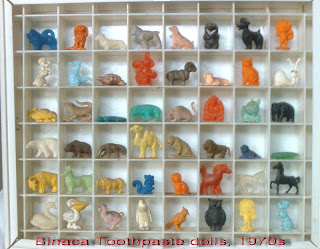
Keeping up with the subject of toys, I am reminded (by a friend) of Binaca toothpaste being the numero uno choice in India in the seventies because it had a li'l toy inside the pack, that everyone waited for, and coveted.

Wonder why the toy disappeared as did Binaca? of course, Binaca (acquired by Dabur) did operate in near monopoly then. Despite its failure, the Binaca story teaches us two things. One, to get a toothpaste into a home, repetitive commercials on TV isn't the only way to go. Neither are price-off promos. A promo like a toy can surely help. Two, a choice of brand at home can be dictated by a choice made by children. I mean, a family goes Binaca because the child at home covets the toy inside, and therefore makes sure the brand peddling it, comes home.

The Binaca toys are remembered by almost all I've spoken to. Maddy and Dinakar mention it on their blogs. I've borrowed Dinakar's Binaca Toothpaste doll collection (picture) to be featured here.

Sphere: Related Content

Wednesday 2 June 2010

The mantra of surprise has consumers hooked

Its something he's picked up recently. Jaden's choice of a chocolate is dictated by whether there's a toy that comes along. Two brands scored. Cadbury's Jems & Kinder Surprise (Egg). But since then, Cadbury's has fallen off his radar. Kinder Joy on the other hand blazes on.

Why? Because the toy that Cadbury's gave him, repeated. That is, he got the same toy a second time around. But Kinder Surprise, they've always given him a new one. Its incredible. He must have by now bought at least a dozen Kinder Surprises. The fact is, he's never got the same toy again. And so his anticipation about the next one remains sky high. Therefore its a Kinder Joy that he wants. Tell you what, its even got me hooked. I shouldn't be surprised, worldwide there's a minor collectors cult around the Kinder toys.

What keeps us hooked on as consumers is a sense of anticipation. After all, in our real normal lives there's so much of repetitive order. Surprises and out-of-routine events are rare. Brands that can keep us hooked by promising us surprises are ones that grab our consideration. For Jaden, it was the promise of a new toy. Perfected by Kinder Surprise. Cadbury unfortunately lost him because they got into a repetitive pattern.

The mantra therefore is the mantra of surprise. Not just in consumer life, but in out personal one too. Wanna keep the attention firmly on you? Promise and sustain a surprise.

Sphere: Related Content

Gore's divorce will warm the Planet

Now, Gore's divorce is none of my business, but what about the Green Messiah's ever-growing contribution to upping Global warming?

According to a study by Michigan State University, divorced couples use up more space in their respective homes, which amounts to to 38 million more rooms worldwide to light, heat and cool. And people who divorced used 73 billion kilowatt-hours more of electricity and 627 billion gallons of water than they would otherwise in 2005.

I wonder what Gore's going to do about that? After all, wasn't he trying to save the planet?

Sphere: Related Content